Bank of England Lifts Rates to 4% Amid Iran War Inflation
The central bank increased its benchmark rate for the first time since August 2023 to counter fuel price spikes driven by supply bottlenecks in the Strait of Hormuz.
By Robert Ward ·
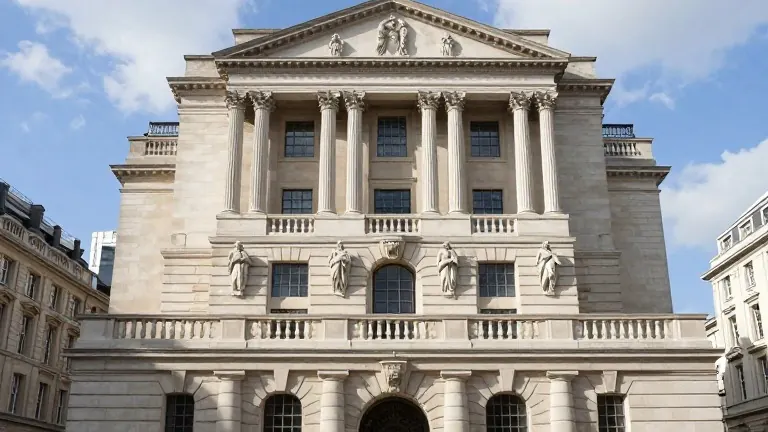
The Bank of England raised its main interest rate to 4% on Thursday. This marks the first increase in more than three years.
The Monetary Policy Committee voted to lift the benchmark from 3.75% to 4%. The move aims to curb inflation that has surged due to the ongoing conflict in Iran. Economists widely predicted this shift after prices climbed sharply in the preceding months.
Inflation reached an 11-month high of 3.5% in September. That figure sits well above the bank's 2% target. The spike resulted primarily from rising fuel costs. Supply bottlenecks in the Strait of Hormuz have squeezed global oil and gas supplies since the U.S. and Israel attacked Iran on February 28.
Ellie Henderson, an economist at Investec, noted that committee members likely had little patience for the recent price increases. She warned that if energy prices remain high, a temporary shock could become permanent. The bank's quarterly economic projections released alongside the rate decision are particularly uncertain because the outlook depends heavily on the trajectory of the war.
Recent political developments in the United States have influenced energy markets. Heavy losses by the Republican Party in U.S. midterm elections caused a sharp drop in energy prices. If oil and gas prices stay low over the coming weeks, the upcoming peak in inflation may be lower. This could reduce the likelihood of further rate hikes by the Bank of England.
Other central banks, including the U.S. Federal Reserve and the European Central Bank, have also raised rates recently. Their strategies largely depend on energy price movements. In the U.K., interest rates had been trending downward from a 15-year high of 5.25% before the conflict began.
More Business · Consumer Alerts · Report a business · Got a Story?