Rome dentist claims patient's mouth is 'a disaster' after finding deep cavity
A British tutor in his late twenties was quoted thousands of euros for immediate repairs after an Italian practitioner found a large cavity he missed in England.
By Ella Cox ·
A British man living in Rome received a quote for thousands of euros to repair his teeth after a local dentist declared his mouth a disaster. The assessment came after the man, identified as Sean, struggled to navigate healthcare in Italy while working as a tutor for a wealthy family. He had previously visited a dentist in England, but the Italian practitioner found a gaping cavity in one of his molars that the earlier visit had missed.
Sean, in his late twenties, was working in Rome to prepare a family’s son for entrance exams while writing his first novel. He described feeling isolated and anxious about a persistent pain in a left molar. The discomfort made him fear a root canal was necessary. Friends on Skype urged him to see a professional, noting that Rome had teeth. His employers, however, offered no referrals or assistance with the medical care.
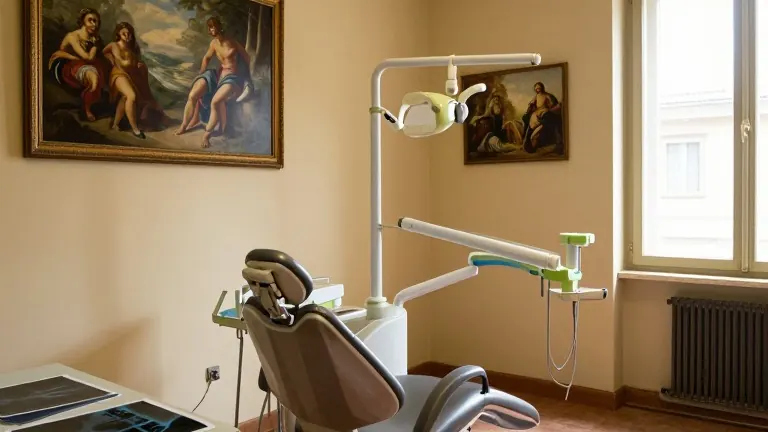
After sending inquiries to English-speaking practitioners, Sean connected with Rossi, a dentist who responded immediately. Her office is located on the ground floor of a historic building in a wealthy neighborhood in northern Rome. Rossi arrived late to the appointment despite having no prior patients. She is described as wearing scrubs with full makeup and carrying a cup of green liquid while discussing a recent juice cleanse.
During the exam, Rossi complained that Sean did not open his mouth wide enough and that his tongue interfered with the process. She identified multiple issues, including a crack, enamel problems, bruxism, and gum line adjustments. Learning that Sean is diabetic, she stated she would avoid risky gum procedures. After taking X-rays, she revealed a large cavity that had been growing for years. She attributed the missed diagnosis in England to other dentists waiting to make the problem worse for financial incentive.
Rossi offered to share the image of the cavity as evidence but withheld X-rays of the other forty-plus issues to keep negotiation leverage. When Sean said he wanted all problems fixed, Rossi began tallying costs. She stated a price, reduced it by an arbitrary percentage, then quoted a final figure she called non-negotiable. She told Sean, my hands are tied, while pantomiming bondage.
The treatment was expected to take months and cost thousands of euros. This amount would eat into the savings Sean had set aside to pursue a master’s degree the following year. He agreed to the full scope of work, describing the plan to replace flawed organic material with composite and amalgam as inspiring. The dental work coincided with his time living in a basement apartment at the family’s estate in the Italian countryside, where he spent days in a saltwater pool and attending family meals.
The agency that sourced Sean’s teaching gigs is led by a group of young women with Shakespearean names, including Ophelia, Cressida, and Rosalind. The firm offers a range of services to clients, from math tutoring to piano lessons for infants. Sean often described himself as unpolished and suggested he was the wrong person for the job, yet clients viewed him as a necessity. The arrangement in Italy was his first time living embedded with a family, a dynamic that remained ambiguous to both the staff and himself.