Middle East Conflict: Saudi Forces Reinforce Aden Defenses as U.S. and Iran Exchange Strikes
Yemeni military officials confirm troop buildup near the port city, while Iraq restarts oil exports to Turkey to bypass disrupted shipping lanes.
By Ella Cox ·
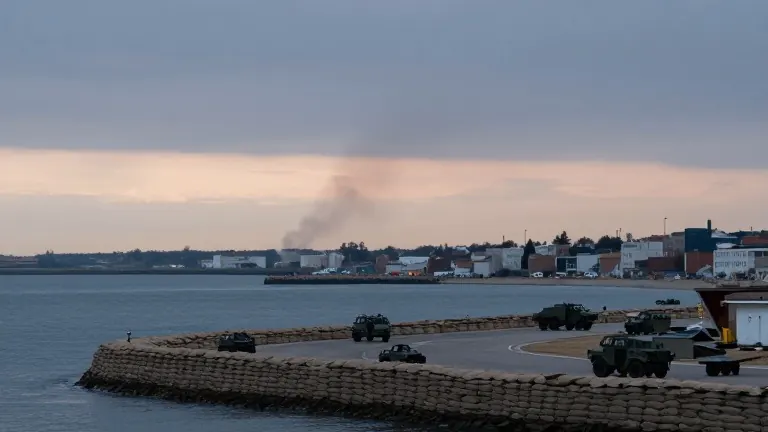
Tensions escalated across the Middle East on Tuesday as Saudi-backed forces in Yemen moved additional troops and equipment into the Tur al-Baha district. Two Yemeni military officials, who spoke on condition of anonymity because they were not authorized to brief the media, said the deployment is intended to counter a potential major offensive by the Iran-backed Houthi rebels. Tur al-Baha serves as the primary defensive line for the port city of Aden, located approximately 52 miles away. The Houthis had previously withdrawn from areas near the Bab el-Mandeb Strait over the weekend to avoid being encircled, a move that allowed them to tighten control over the key Red Sea strait while focusing on securing Aden.
In related developments, the United States and Iran continued to exchange strikes. A U.S. official stated that American forces retaliated with an airstrike on a missile launch site in the Strait of Hormuz. This site belonged to Iran’s paramilitary Revolutionary Guard. The action followed an Iranian drone attack on a U.S. radar installation in Bahrain earlier that day, marking the third such attack on American military assets in the kingdom in recent days. Bahraini officials confirmed that air defense systems intercepted the drones, and the U.S. military reported no damage to equipment or injury to personnel.
Oil Minister Bassem Mohammed Khudair al-Abadi announced that Iraq has resumed pumping oil to Turkey through a pipeline at an initial capacity of 120,000 barrels per day. He said the export volume will gradually increase to 500,000 barrels daily. This move aims to strengthen Iraq’s oil export infrastructure after disruptions to shipping through the Strait of Hormuz caused by the U.S.-Iran war. The pipeline, which has remained largely idle since 2023 due to legal and commercial disputes, connects to the Turkish Mediterranean port of Ceyhan. Iraq and Turkey signed a deal in August to boost exports through this route.
Houthi-controlled media reported multiple airstrikes in Yemen on Tuesday evening. Al-Masirah TV blamed Saudi Arabia for attacks on the capital, Sanaa. Anees al-Asbahi, a spokesperson for the Houthi health ministry, said an earlier strike on a sponge factory in Hodeida killed at least seven people and wounded nine. Two others died in a strike in the northern province of Saada, while 13 people were wounded in attacks on a shoe factory in Sanaa and a site in the Wadi Al Gabara district in Kitaf. The Associated Press could not independently verify the claims, and it was not immediately clear what specific targets the strikes hit.
Israel reacted to new U.K. sanctions by calling the move a hostile act. The British government imposed sanctions on Israeli property and development companies involved in West Bank settlement expansion, as well as the activist group Tzvav 9, which it says has blocked aid to Gaza. Israeli Foreign Minister Gideon Sa'ar stated in a statement that Israel views the decision with the utmost gravity and describes it as a hostile act targeting private, law-abiding companies. Foreign Secretary Ed Miliband had previously indicated in September that the U.K. would toughen its stance toward Israel to protect the viability of a two-state solution.
Australia followed suit by imposing sanctions on three Israeli individuals and four organizations accused of illegal settlement expansion and human rights abuses. Australian Foreign Minister Penny Wong announced the measures after similar actions by Britain and Japan. Among those sanctioned is 81-year-old Daniela Weiss and her organization, the Nachala Movement. Weiss has been a prominent figure in expanding Israeli settlements for years. Itamar Yehuda Levi and his construction company, Eyal Hari Yehuda Company Ltd., are also targeted by the Australian sanctions.