Trump's $5,000 Pledge: A Vote-Buying Gamble in Texas and the South
As polls open, experts and lawmakers question if the new 'Trump Dividend' is a sustainable economic plan or a high-cost incentive for voters.
By Ella Cox ·
President Donald Trump has pledged to send a $5,000 check to every adult American citizen if the Republican Party retains control of both the House and Senate in the midterm elections. The promise, dubbed the Trump Dividend, was made during a nearly two-hour speech at the Republican Midterm Convention in Dallas last week. As voters in Texas, Oklahoma, Louisiana, and Arkansas head to the polls today, the proposal has become a central point of contention, with critics asking if the president is attempting to buy votes with a payout that could cost the federal treasury more than $1 trillion.
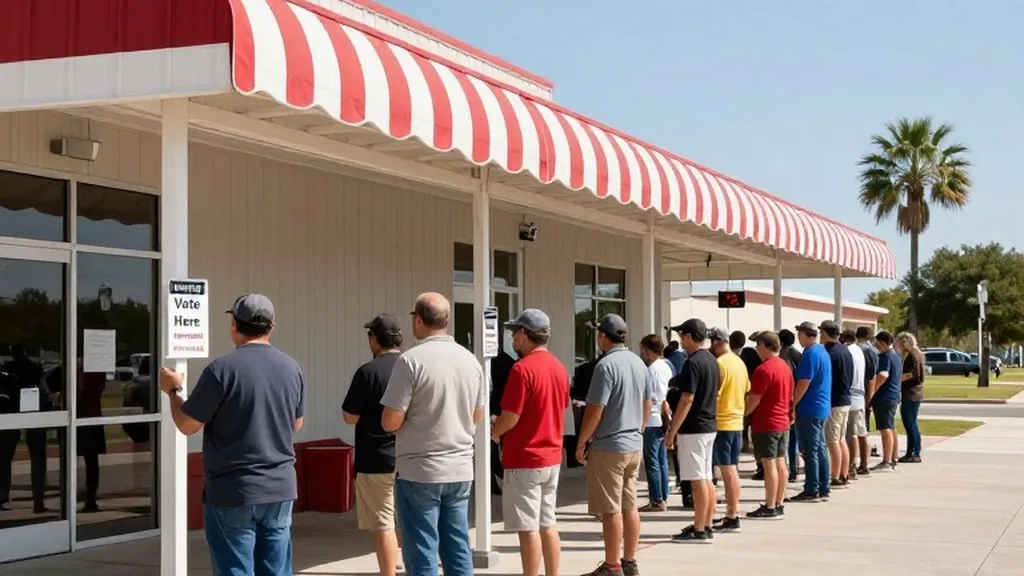
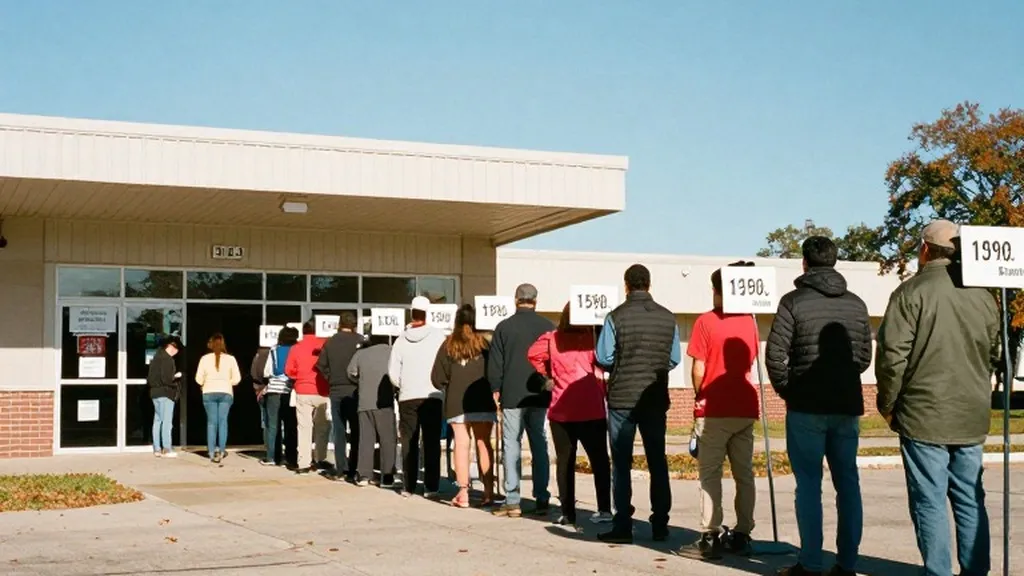
The stakes are particularly high in the South Central region. In Texas, polls are open from 7 a.m. to 7 p.m., where voters will decide the open Senate seat and the governor's race featuring incumbent Greg Abbott. In Oklahoma, polls are open from 7 a.m. to 7 p.m. for an open Senate seat and an open governor's race. Louisiana polls are open from 6 a.m. to 8 p.m. for an open Senate seat, while Arkansas polls are open from 7:30 a.m. to 7:30 p.m. for incumbent Senator Tom Cotton and Governor Sarah Huckabee Sanders. These states are crucial battlegrounds where the economic promise of the dividend may influence voter turnout.
House Speaker Mike Johnson, R-La., acknowledged the legal hurdles facing the proposal. Speaking Sunday, Johnson said that congressional approval is required for the payments to be issued. He stated that he would assume the president needs Congress to act and pledged to work through the process despite a small Republican margin in the House. Johnson called the idea creative and committed to finding consensus to implement the president's vision.
However, the president has expressed a different view on the mechanics of the payout. Trump told CBS News Texas that he did not think Congress would need to authorize the payments, though he did not specify how he could spend more than $1 trillion without lawmakers' authorization. Later, from Ireland, he told reporters that the $5,000 payments are going to happen 100%. This discrepancy has led to bipartisan criticism, with some Republicans questioning the price tag and others pointing out that the administration has announced no formal plan for how Americans would actually receive the money.
PolitiFact has found that the biggest payment is far from certain. The fact-checkers noted that the White House has provided no details on the distribution method and that fiscal experts cast doubt on the plan during a time of existing economic challenges. The payment could cost the federal treasury more than $1 trillion, putting further strains on the country's nearly $1.8 trillion annual budget deficit. Sen. Bernie Moreno, R-Ohio, said he would introduce legislation to fund the proposal, but political analysts say such legislation is unlikely to attain the required 60-vote supermajority in the Senate.
Democratic figures have been quick to highlight the cost of the proposal against the backdrop of rising prices. House Democratic Leader Hakeem Jeffries has outlined a 100-day agenda focused on the cost of living and oversight, should Democrats win a chamber. The AP-NORC polling shows that only 35% of U.S. adults approve of Trump's job performance, and about 7 in 10 say the country is heading in the wrong direction. Most blame the president for high prices, a sentiment that is particularly acute in the South Central states where gasoline prices have risen due to the war with Iran.
Vice President JD Vance told Fox News that some of the money would come from tariff revenue. However, the Tax Foundation reported that U.S. tariff revenue would not be able to cover the cost of the dividend checks. Erica York, a senior economist at the Tax Foundation, wrote that the cost of the $5,000 checks would spend almost all the revenue that the new tariffs are projected to bring in over a decade. This financial reality has led some voters to wonder if the promise is a viable economic policy or a campaign slogan.
In Dallas, the promise was met with cheers, but also with scrutiny. Texas Congressman Chip Roy, a Republican, wrote on social media that dependency is evil and soul-sucking in all its forms. Election law expert Rick Hasen of UCLA noted that while the promise is likely legal under the First Amendment, it raises questions about whether the president is trying to buy votes. Hasen compared the plan to past campaign promises, noting that politicians make these kinds of things all the time, but that the public often sees through them if they cause inflation.
The 2026 elections are likely to be the most expensive in history, with Republican committees outraising and outspending Democratic committees. According to AP analysis of AdImpact data, 88.1% of Republican general election TV ad spending went to states and districts Trump won in 2024. This includes more than $850 million in states where he won by 10 points or more. The heavy spending is an attempt to counter the historical trend of a president's party losing seats in midterm elections, a pattern that has been consistent for decades.
Voters in the South Central states are weighing this financial incentive against their daily costs. In Oklahoma, where polls are open from 7 a.m. to 7 p.m., the open governor's race is a key contest. In Louisiana, where polls are open from 6 a.m. to 8 p.m., the open Senate seat is a major focus. In Arkansas, where polls are open from 7:30 a.m. to 7:30 p.m., voters will decide if incumbent Tom Cotton and Sarah Huckabee Sanders can hold their seats. The outcome of these races will determine if the Republican Party has the power to pass the Trump Dividend through Congress.