Governor races: 18 to 18 split, 19 open seats, and the South Central stakes
With 36 governorships up for grabs and an even partisan split heading into the vote, Texas and Oklahoma stand out as key open seats in a crowded field of competitive battles across the nation.
By Ibrahim Howard ·
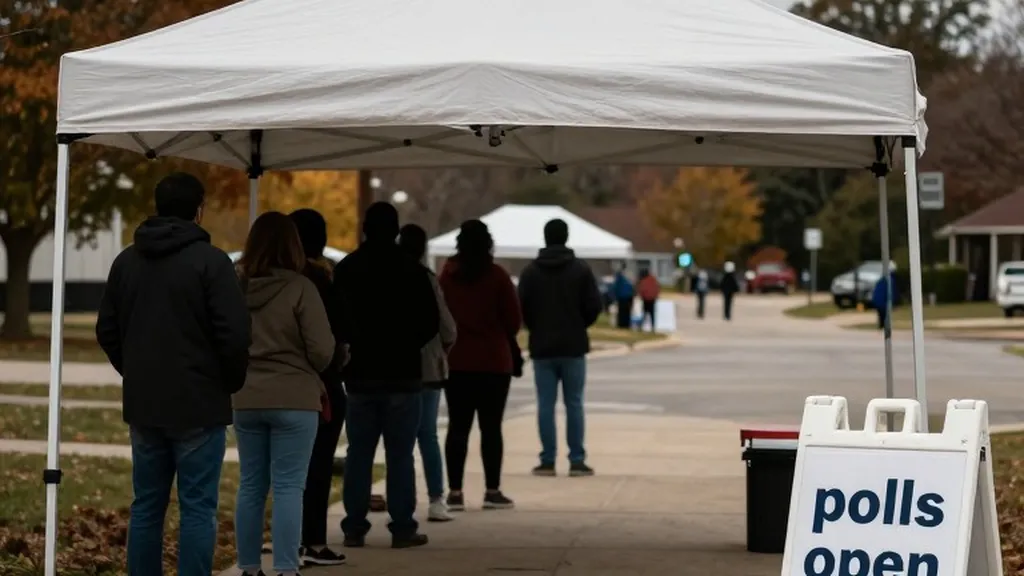
Election Day has arrived for voters seeking to decide who will lead the executive branches of 36 states. According to Ballotpedia, the governorship races present a perfectly balanced starting point, with Republicans and Democrats each holding 18 of the offices currently on the ballot. This even split sets the stage for a potential shift in national control, as Democrats would need a net gain of just two governorships to secure a nationwide majority for the first time in two decades. The stakes are high because the current administration has held a governorial majority since 2010, making this cycle a critical test for the party in the minority.
A defining feature of this election cycle is the high number of open seats. Ballotpedia reports that 19 of the 36 governor races have no incumbent on the ballot. Fifteen governors are term limited, while three others, Kim Reynolds of Iowa, Tim Walz of Minnesota, and Tony Evers of Wisconsin, chose not to run for another term. Rhode Island’s Daniel McKee also left the race after losing his primary. The absence of incumbents in nearly half of the races introduces uncertainty, as voters must weigh new faces against the established reputations of the parties they represent.
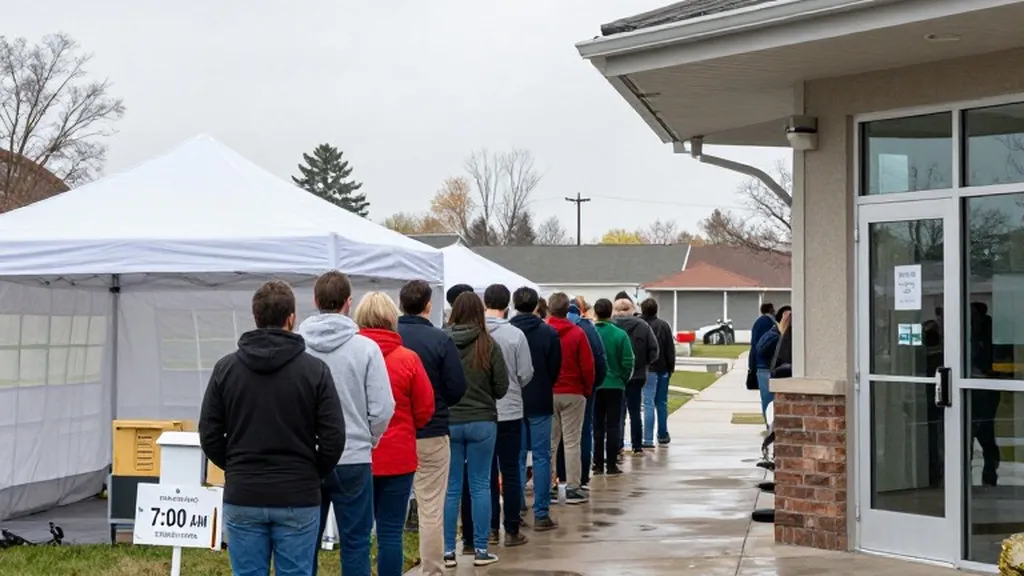
In the South Central region, Texas presents a significant battleground. The state is holding an open seat in its Senate race, where Republican Attorney General Ken Paxton, backed by President Donald Trump, faces Democrat James Talarico. For the governorship, incumbent Greg Abbott is running for re-election. The Associated Press identifies Texas as a competitive governor race, noting the intense national attention on the state. Polls in Texas are open from 7 a.m. to 7 p.m. local time, allowing residents to cast their ballots throughout the day. The outcome in Texas will be closely watched as it reflects broader trends in a state that President Trump won by a wide margin in 2024.
Oklahoma offers another open seat in the region, with no incumbent governor on the ballot. The state is also holding an open seat for the U.S. Senate. Ballotpedia indicates that polls in Oklahoma are open from 7 a.m. to 7 p.m. local time. The open nature of both major races in Oklahoma makes the state a key indicator of how voters are responding to the national political climate. With no incumbent to defend the record of the previous administration, candidates must rely on party branding and their own platforms to win support.
Louisiana and Arkansas provide additional context for the South Central region. Louisiana is not holding a governor race this year, but it is deciding an open Senate seat. Polls in the state operate on a split schedule, with Tuesday elections running from 6 a.m. to 8 p.m. and Saturday elections from 7 a.m. to 8 p.m. In Arkansas, polls are open from 7:30 a.m. to 7:30 p.m. The state has incumbents for both major races, with Senator Tom Cotton and Governor Sarah Huckabee Sanders seeking re-election. The presence of incumbents in Arkansas contrasts with the open seats in neighboring Texas and Oklahoma, highlighting the varied dynamics of the region.
Nationally, the governor races include nine official battlegrounds identified by Ballotpedia: Alaska, Arizona, Georgia, Iowa, Kansas, Michigan, Nevada, Ohio, and Wisconsin. Democrats are defending five governorships in states that Trump won in 2024, including Arizona, Kansas, Michigan, Pennsylvania, and Wisconsin. Republicans are defending two governorships in states that Kamala Harris won, New Hampshire and Vermont. These matchups represent a test of the parties' ability to hold ground in states that voted for the opposing presidential candidate four years ago.
The Associated Press describes the election as a referendum on the president's second term, with voters struggling with high prices and angry over an unpopular war with Iran. AP-NORC polling shows that 35% of U.S. adults approve of Trump's job performance, while about 7 in 10 say the country is heading in the wrong direction. Most voters blame the president for high prices. This economic anxiety is a central theme in the governor races, as candidates campaign on their records on the cost of living and health care. The mood is described as one of cautious optimism for Democrats, who hope to capitalize on voter frustration.
Money is playing a significant role in these races, with the 2026 elections likely to be the most expensive in history. Republican committees have outraised and outspent Democratic committees, helped by Trump-affiliated groups and Elon Musk. However, at the candidate level, Democrats have outraised their opponents. An analysis of AdImpact data by the AP shows that 88.1% of Republican general election TV ad spending went to states and districts Trump won in 2024. This spending strategy reflects a focus on defending the president's base, which includes many of the governor races in the South and Midwest.
Redistricting is also a factor in the election, with six states using new congressional maps after mid-decade redistricting. These states include California, Florida, Missouri, North Carolina, Tennessee, and Texas. Ohio is also using a new map. The new maps may affect the dynamics of the governor races, as they can change the political landscape of the state. Republicans tried to beat the midterm pattern with redistricting, but new districts in Florida and elsewhere may not vote as drawn. This uncertainty adds another layer of complexity to the election, as candidates must navigate changing electoral boundaries.