Trump's 'Pretend I'm On the Ballot' Rally Strategy Faces Midterm Test
With approval ratings at 35 percent, the president's direct campaign involvement is clashing with cautious optimism among Democrats in key South Central states.
By Ella Cox ·
President Donald Trump has made his presence in the 2026 midterm elections unmistakable, holding dozens of rallies and urging supporters to treat his second term as the central issue. In a speech in Salina, Kansas, on Sunday, he told the crowd to pretend he was on the ballot, a tactic designed to force voters to evaluate his administration directly. This aggressive campaign strategy is unfolding against a backdrop of low approval numbers, with Associated Press and NORC polling showing that only 35 percent of U.S. adults approve of his job performance. The president's schedule has been intense, including stops in Mississippi, South Carolina, and Texas, as he seeks to energize the Republican base in a year where the midterm pattern often works against the president's party.
Despite the president's high visibility, many Republican candidates have kept a visible distance from him during this final stretch of the campaign. This strategic distancing reflects a tension between the need to appeal to the broader electorate and the desire to maintain the energy of the Trump-aligned base. The Associated Press notes that the mood is one of a referendum on the second term, with voters struggling with high prices and anger over an unpopular war with Iran. For Democrats, this dynamic offers a clear narrative focused on the cost of living and oversight, while Republicans brace for a potential loss in the House and fight to hold the Senate.
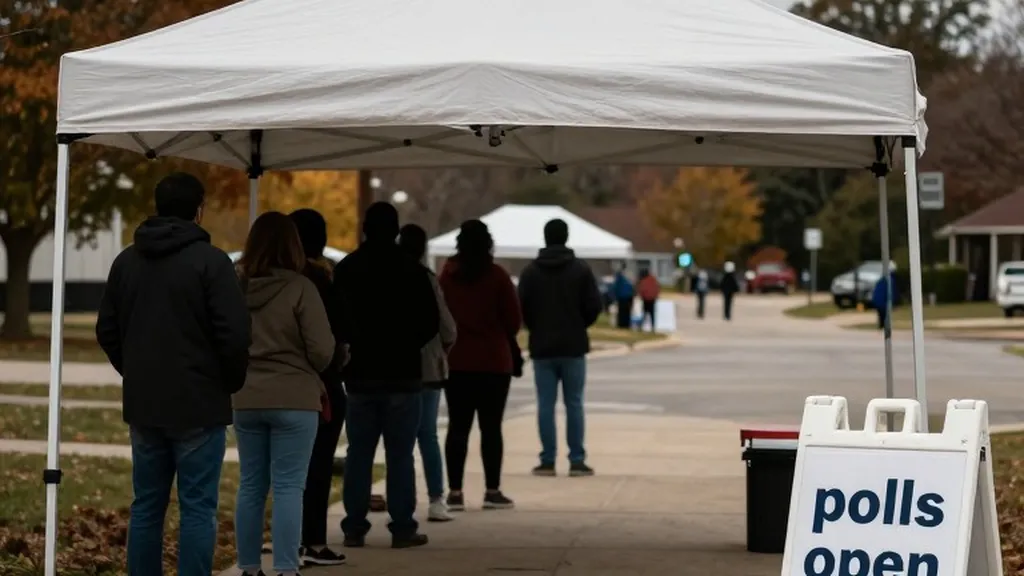
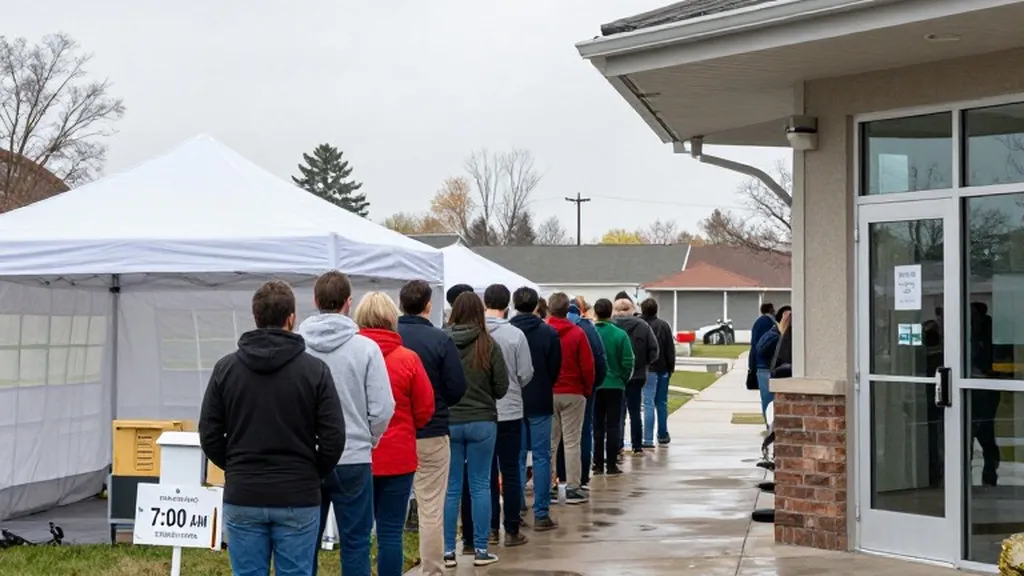
In the South Central states, the stakes are particularly high for both parties. Texas, Oklahoma, Louisiana, and Arkansas all have significant Senate and gubernatorial races on the ballot. In Texas, polls are open from 7 a.m. to 7 p.m., and voters are deciding an open Senate seat and the fate of incumbent Governor Greg Abbott. The Associated Press identifies the Texas Senate race as competitive, featuring Republican Attorney General Ken Paxton against Democrat James Talarico. Trump backed Paxton in the primary over Senator John Cornyn, a move that has intensified the focus on presidential influence in the state's electoral politics.
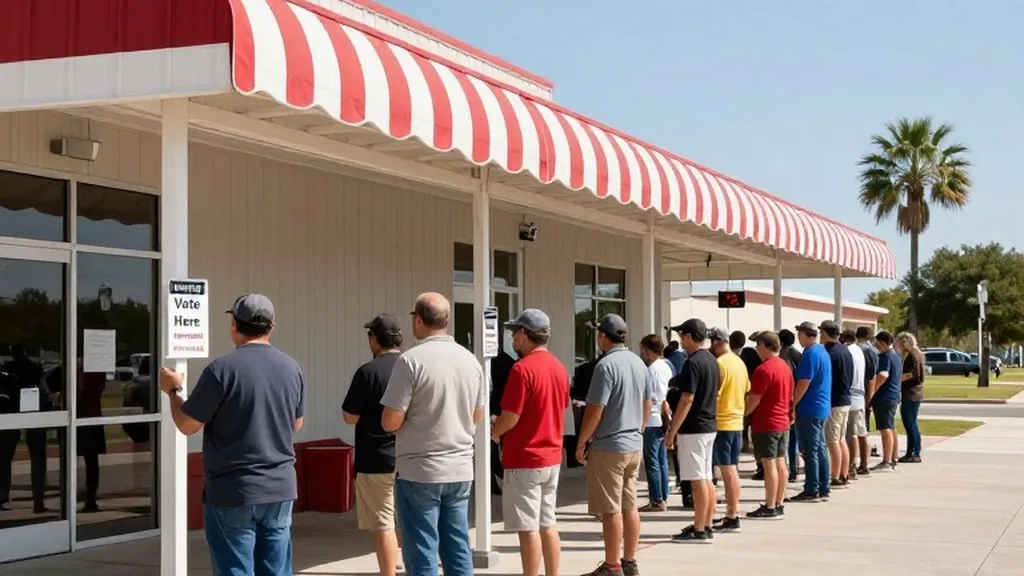
Oklahoma voters are also heading to the polls from 7 a.m. to 7 p.m. to decide an open Senate seat and an open governorship. The state's political landscape is closely watched as a bellwether for the South. In Louisiana, which uses a unique election calendar with some polls open from 6 a.m. to 8 p.m. and others from 7 a.m. to 8 p.m., the focus is on an open Senate seat. The state's long voting hours reflect a robust early voting culture, with more than 57 million people having already cast ballots as of Monday, surpassing early vote totals from four years ago in many closely watched states.
Arkansas polls open at 7:30 a.m. and close at 7:30 p.m., with voters deciding whether to reelect incumbent Senator Tom Cotton and Governor Sarah Huckabee Sanders. The presence of incumbents in these races provides a clear contrast to the open seats in neighboring states. The Associated Press reports that about seven in ten Americans believe the country is heading in the wrong direction, a sentiment that Democrats hope will translate into a net gain of three House districts and four Senate seats. Democrats need to win a majority in either chamber to initiate investigations and potential impeachment proceedings, a prospect that has made the midterm a critical test for the administration.
The financial landscape of the 2026 elections is also a factor, with the Associated Press noting that this cycle will likely be the most expensive in history. Republican committees have outraised and outspent Democratic committees, aided by Trump-affiliated groups and significant contributions from figures like Elon Musk. However, at the candidate level, Democrats have outraised their opponents, suggesting a more targeted deployment of resources in key districts. This financial edge for Republicans is most pronounced in states and districts that Trump won by wide margins in 2024, where 88.1 percent of Republican general election TV ad spending has been directed.
Voter sentiment in these key states is shaped by personal economic experiences. James Moore, a librarian in Raleigh, North Carolina, told the Associated Press that he is paying more for taxes, healthcare, and everything else. This personal grievance is a central theme for Democratic figures who are outlining agendas focused on the cost of living and oversight of the administration. In Texas, where the governor's race is considered competitive, the debate over healthcare and economic strain is likely to resonate with voters who are weighing the administration's policies against their daily financial realities.
The role of the president in the election has also been complicated by his continued claims about voting fraud, including assertions that noncitizens vote in large numbers. His administration has filed lawsuits in Alaska and California, and Democrats fear interference and intimidation as the Justice Department threatens to prosecute local election officials. A federal judge temporarily barred the administration from carrying out a plan to prevent noncitizen voting on Monday, a move that critics say risks disenfranchising eligible voters. These legal battles add a layer of uncertainty to the election process, particularly in states with complex voting rules and high levels of mail-in ballots.
In Texas, the new congressional map resulting from mid-decade redistricting is a key obstacle for Democrats, who need to win enough districts to gain a majority. The Associated Press notes that new districts in Florida and elsewhere may not vote as drawn, challenging the Republican strategy of using redistricting to secure long-term advantages. For Democrats, the path to a majority requires a net gain of two governorships to take control of the executive branch for the first time in two decades. This goal is complicated by the fact that Republicans have held a majority of governorships since 2010, making the current cycle a critical opportunity for a shift in power.