New Federal Rules Would Mandate Cyan Lights on Driverless Cars
Federal regulators have proposed a new rule that would require autonomous vehicles to use cyan lights to show they are operating without a driver.
By Ella Cox ·
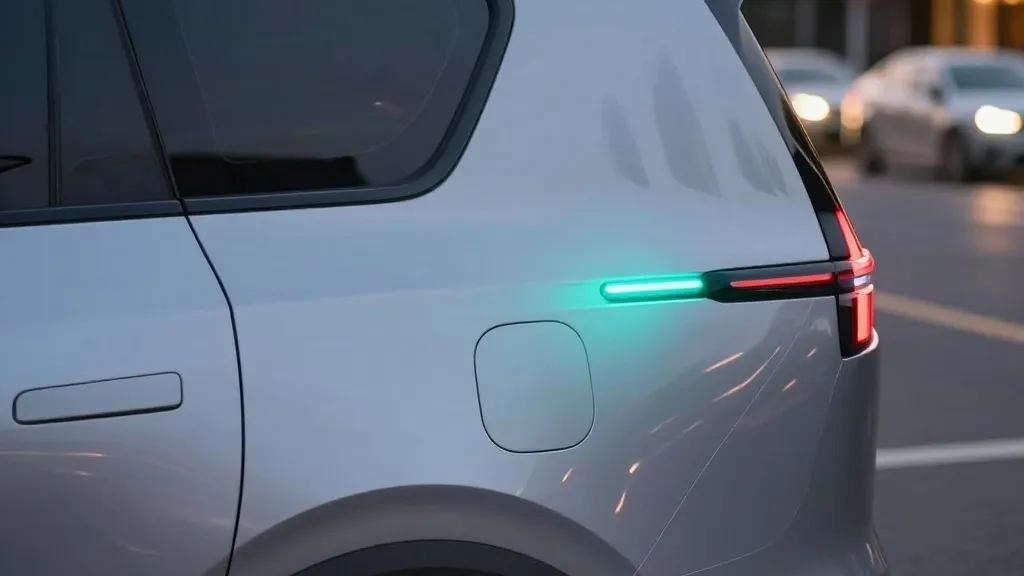
The long-running debate over how driverless cars should announce their presence on the road, a discussion that has included flashing text and audio alerts, has a clear answer from federal regulators: cyan. For years, there has been no uniform method for indicating an autonomous system is at the wheel, leading to a patchwork of ideas. Now, the National Highway Traffic Safety Administration has stepped in to provide a single, standardized solution for all self-driving vehicles.
The agency has proposed changes to Federal Motor Vehicle Safety Standard No. 108, a move designed to both streamline regulations for vehicles built without human drivers and establish a clear communication method. Specifically, NHTSA is proposing the use of cyan-colored marker lamps for a distinct purpose. As the agency states, these lights would be used “to clearly and consistently signal to law enforcement and other road users when an automated driving system is operating the vehicle.”
The choice of this specific blue-green color is a practical one. The visual space on a vehicle is already crowded with other colors that signal critical information. Red is used for brake lights, amber for turn signals, white for headlights, and flashing blue and red for emergency vehicles. By selecting a new and unused color, NHTSA aims to fill a visual gap without creating confusion for other drivers or pedestrians on the road.
The proposal is also about creating a single, national standard for the entire industry. The idea of using a blue-green light is not entirely new, and there is some precedent for it. Mercedes-Benz previously received state-level approval for turquoise lights on its Level 3 Drive Pilot cars, though the automaker has since abandoned that system. Now, NHTSA wants to establish a uniform federal standard that all companies can follow, including robotaxi operators like Waymo, Nuro, and Zoox, as well as automakers like GM and Mercedes.
Under this proposed rule, the cyan marker lights would be optional for manufacturers to install. However, the core of the proposal is to create official federal standards for their color, brightness, and location. This ensures that any automaker who chooses to add them will use a consistent and legally defined setup, preventing a confusing mix of different colors and signals from appearing on the road.
The proposed rule also includes a significant amount of deregulation for autonomous vehicle design. NHTSA is moving to eliminate several current lighting requirements that are irrelevant for a car without a human driver. This includes removing mandates for physical hazard switches, manual beam shifters, and turn levers inside the vehicle. The agency is also proposing to update the 12.8-volt testing standard to accommodate modern LED lighting systems and is considering removing rules that dictate the physical placement of high-beam and low-beam lights.
This update is part of a broader administrative push by the Department of Transportation to make it easier for automakers to build and deploy autonomous vehicles. The goal is to streamline the process for creating cars that do not have traditional controls like steering wheels and pedals, which are only necessary for vehicles operated by human drivers.
While regulators work to ease some rules, they are also actively enforcing the standards that are currently in place. Last month, NHTSA opened an audit query into the Tesla Cybercab to examine the data the company used to certify the vehicle for sale. The inquiry focuses on the vehicle's lack of certain required features, including sideview mirrors, pedals, and a steering wheel, all of which are mandated under the existing Federal Motor Vehicle Safety Standard.