Anthropic's Massive Compute Bet Faces Scrutiny Ahead of IPO
With nearly $900 billion in infrastructure commitments and Nvidia acquiring Hugging Face, questions about the sustainability of trillion-dollar AI valuations are intensifying.
By Robert Ward ·
Wall Street has spent the last few years convincing investors that artificial intelligence represents the greatest financial opportunity of our lifetime. While the technology is undeniably transforming industries, a growing body of evidence suggests that the financial structures supporting this revolution may be as fragile as they are ambitious. The central tension lies in the gap between the astronomical costs of running these systems and the revenue they currently generate. As one of the leading companies in this space prepares for a public listing, the details of its financial obligations are coming into sharp focus.
At the heart of this debate is Anthropic, the company behind the Claude model. Early market expectations suggested a valuation potentially reaching $2 trillion. However, pricing proposals for its November 10 IPO point to a more conservative figure between $1.3 trillion and $1.4 trillion. That remains a staggering amount, but it raises a critical question for every investor and subscriber: what exactly is being purchased with that capital?
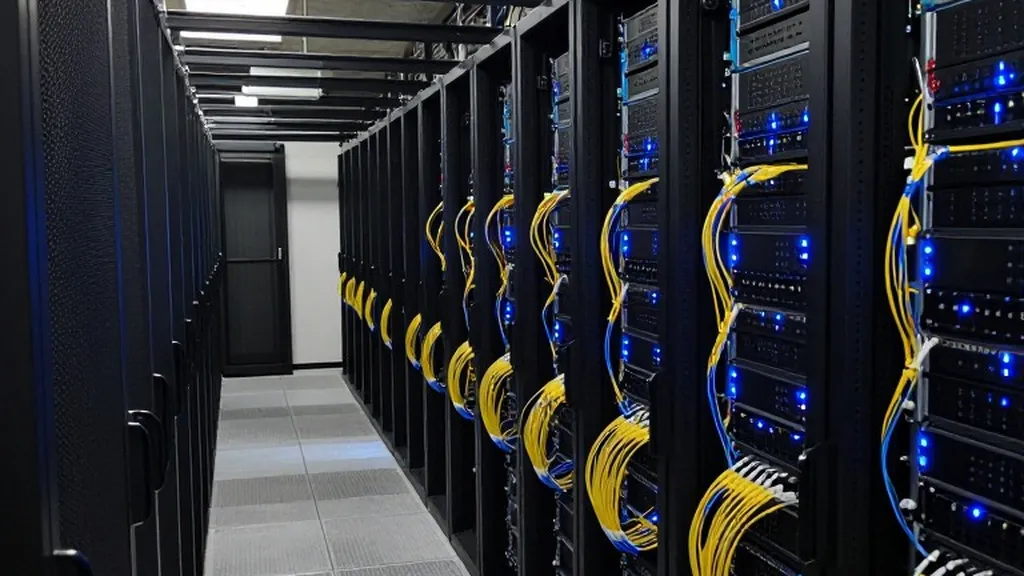
The answer lies in the sheer scale of Anthropic’s infrastructure commitments. Recent disclosures reveal approximately $900.9 billion in purchase commitments and lease agreements, primarily for computing power. Of that total, roughly $451.6 billion is expected to be incurred before the end of 2030. Another $70.7 billion is due within the 12 months following September 30, 2026. These are not speculative projections but contractual obligations outlined in the company’s own securities filings.
While these commitments are not the same as immediate debt, they represent a massive future financial burden. Anthropic’s revenue is growing rapidly, with an annualized run rate reaching approximately $81 billion in October. This figure far exceeds the less-than-$20 billion annual revenue often cited in earlier discussions. Yet, revenue is not profit. Even if the company eventually generates $100 billion in annual sales, it must still cover the costs of computing, research, personnel, electricity, and facilities. A trillion-dollar valuation requires the belief that extraordinary profits will follow. That belief may prove correct, but it is not yet a fact.
To understand the economic pressure, consider the cost of the hardware. A single high-end GPU can cost around $20,000. If that unit serves 15 to 20 light users paying $20 each per month, the monthly revenue is $400. It would take 50 months to recover the cost of that single chip, assuming all revenue went toward it. This calculation ignores servers, cooling, electricity, and labor. If the wholesale cost of the GPU drops to $4,000, the recovery period shortens to 10 months, but the underlying economics remain tight. Heavy users running intensive coding tasks consume far more resources, potentially making them less profitable than casual users. The key metric is not the number of customers, but the profit generated per user after accounting for the cost of serving them.
This hardware dependency creates a powerful position for Nvidia. The company supplies the accelerators that power the industry. When demand outpaces manufacturing capacity, prices rise and delivery times lengthen. Large tech firms can secure supply years in advance, creating a barrier to entry for smaller developers. This imbalance benefits Nvidia regardless of which AI model wins the market. The situation becomes more complex when considering recent strategic moves by the hardware giant.
In September 2026, Nvidia announced an agreement to acquire Hugging Face for approximately $12.93 billion. The deal, expected to close in 2027, includes an equity-based employee retention component. Hugging Face is not just a startup; it is a primary distribution platform for open-source AI models. Millions of developers use it to find, test, and share machine learning models. By acquiring this platform, Nvidia would control a significant part of the ecosystem where new models are discovered and distributed.
Nvidia already dominates the accelerator market through its CUDA software platform. The acquisition suggests a strategy to control both the hardware and the distribution channels. While Nvidia promises that Hugging Face will remain open and that developers will retain freedom to choose competing hardware, these assurances need enforceable safeguards. Questions remain about whether competing chipmakers will get fair access and whether the platform will remain neutral toward models that reduce demand for expensive proprietary infrastructure.
Meanwhile, the rise of open-weight models is challenging the premise that customers must rely on expensive centralized services. Projects from companies like DeepSeek, Alibaba, and Xiaomi have demonstrated that advanced AI capabilities can run on privately controlled infrastructure. These models can be downloaded, adapted, and operated locally. For a developer or a business, this means less dependence on a single provider’s API and pricing.
A key technology enabling this shift is quantization. This process reduces the precision of model weights, allowing large models to run on less memory. A model with 200 billion parameters requires about 400 GB of memory at 16-bit precision. At 4-bit precision, that requirement drops to approximately 100 GB. This makes it possible to run powerful models on cheaper hardware, from Mac Studios to workstations with older datacenter GPUs. While quantization involves trade-offs in speed and quality, it significantly lowers the barrier to entry.
The accessibility of these models threatens the pricing power of proprietary services. If a capable alternative can run locally for a fraction of the cost, the value of a $200-per-month subscription becomes harder to justify. This dynamic is already influencing how companies view their AI strategies. Some are exploring the use of open-weight models for internal tools, reducing their dependence on external vendors.
This shift has political implications, particularly regarding Chinese-developed models. In October 2026, lawmakers introduced the China FIREWALL Act, H.R. 10670, which proposes restrictions on Chinese AI models in federal systems. While national security is a valid concern, broad restrictions could shield domestic companies from competition. A locally hosted model that makes no external network requests presents a different risk profile than an overseas cloud service. Treating them as identical may be technically careless. If restrictions expand to the private sector, the economic impact could be substantial, preventing small businesses and hospitals from using legally available tools.
Anthropic’s leadership, including CEO Dario Amodei, has frequently warned about the risks of advanced AI. These concerns deserve attention, but they also raise questions about incentives. When the companies building the most powerful systems also advocate for regulations, the public should scrutinize whether those rules protect consumers or primarily benefit large incumbents. Safety regulations can impose compliance costs that small startups struggle to absorb, potentially limiting competition.
Another issue gaining attention is the treatment of individual customers. Developers increasingly rely on AI assistants for core tasks. When providers suspend accounts for vague reasons or lack clear appeal processes, it can disrupt workflows and business operations. As AI becomes essential infrastructure, basic standards of accountability become more important. Customers need specific explanations for suspensions and the ability to export their work.