Young and low-income voters helped Democrats take back the House
A survey of over 100,000 voters shows that voters under 30 and those with incomes under $50,000 shifted heavily toward Democratic candidates in the 2026 midterms.
By Ibrahim Howard ·
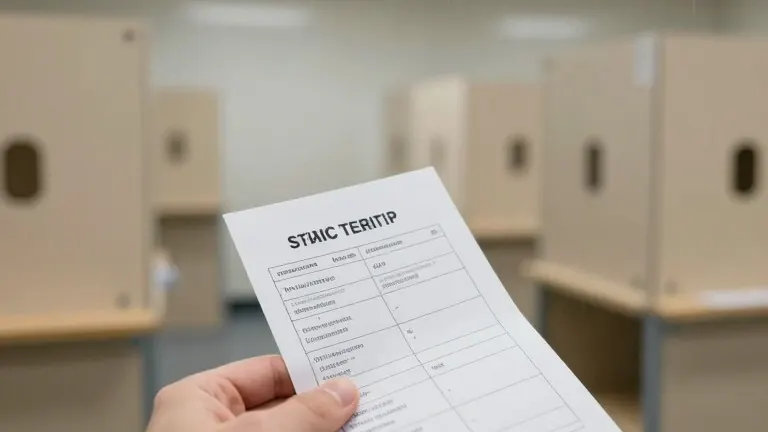
The 2026 midterm elections saw a notable reversal in voting patterns among several key demographic groups that had leaned toward President Donald Trump in 2024.
According to The AP Voter Poll, a survey of more than 100,000 voters across all 50 states, Democratic candidates gained ground with young voters, Hispanic voters, Black voters, moderates, and those with lower household incomes.
Voters under the age of 30 provided the most dramatic shift. While this group was roughly evenly split between Trump and Vice President Kamala Harris in 2024, approximately seven in ten under-30 voters supported the Democratic candidate in their local U.S. House race in 2026. Only about three in ten voted for the Republican. This group represented about one in ten voters in the national electorate, which limited the total numerical impact of the swing.
Young voters cited frustration with current leadership as a primary motivator. About half of voters under 30 described themselves as angry about the direction of the country, a higher percentage than the one-third of voters aged 65 and older who felt the same. Additionally, roughly six in ten young voters said opposing Trump was a major reason for their House vote. This demographic shift contributed to Democratic wins in Senate races in Texas, Kansas, Iowa, Ohio, and North Carolina.
Hispanic voters also moved away from Republicans, particularly in Texas. Approximately six in ten Hispanic voters nationally supported the Democratic House candidate, compared to the roughly four in ten who backed Trump in 2024. In the Texas Senate race, about six in ten Hispanic voters chose Democrat James Talarico over Republican Ken Paxton. In Florida, less than half of Hispanic voters supported Republican Ashley Moody, despite her narrow reelection victory.
Black men showed a sharp return to the Democratic Party. Only about one in ten Black men voted for the Republican House candidate, down from the roughly one-quarter who supported Trump in 2024. About nine in ten Black voters overall supported the Democratic House candidate. In Georgia, about nine in ten Black men voted for Keisha Lance Bottoms, who became the state's first Black woman governor. In Florida, however, about one-quarter of Black men voted for Republican Byron Donalds, the state's first Black governor, over Democrat David Jolly.
Moderate voters provided a critical base for Democratic upsets in competitive Senate races. Roughly two-thirds of moderates supported the Democratic House candidate, up from the six in ten who backed Harris in 2024. About eight in ten moderates said Congress was not doing enough to check presidential power. In Kansas, Democrat Adam Hamilton won about seven in ten moderates. In Iowa, Democrat Josh Turek won about two-thirds, and in North Carolina, Democrat Roy Cooper won about three-quarters.
Economic hardship drove voting behavior among lower-income households. More than half of voters with a 2025 household income under $50,000 voted for the Democratic House candidate, a shift from the even split seen in 2024. About three in ten U.S. voters fall into this income bracket. These voters were more likely than higher-income peers to cite the cost of living as a major factor. About six in ten voters with incomes under $50,000 said the cost of living was crucial to their vote, compared to about half of voters earning $50,000 or more.
Source: KXAS-TV