NTSB begins Learjet crash probe
Investigators are searching for wreckage and voice recorders to determine why the plane broke apart in Florida.
By Ibrahim Howard ·
The National Transportation Safety Board has opened an investigation into the crash of a Learjet that killed nine people in Florida.
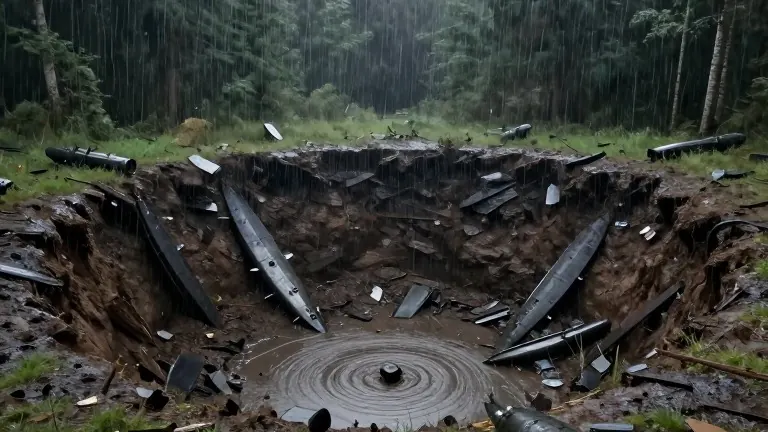
The aircraft was traveling to the Bahamas when it encountered a thunderstorm. The plane slammed into the ground with enough force to create a crater and shatter the fuselage. Officials expect the full process to take more than a year.
Teams are currently gathering physical evidence from the crash site. Investigators located fragments of the tail elevator, a control surface that manages the nose angle, more than a mile from the main impact point. This distance confirms the plane began to disintegrate in the air before it hit the ground.
The NTSB is prioritizing the search for the cockpit voice recorder. NTSB member Tom Chapman stated that the device could provide crucial details about pilot communications. The co-pilot radioed air traffic controllers that the plane was being thrown up and down by more than 700 feet. She requested a better route through the stormy area.
Heavy rain in Florida has complicated the work. Water filled the crater, likely submerging parts of the plane. Investigators also had to remove a utility pole from the site. The board has asked the public to report any found debris to the agency.
Retired pilot John Cox noted that the jet descended from a cruising altitude of 41,000 feet to 35,000 feet while approaching the storms. He said that staying at the higher altitude would have offered a better view and kept the plane above the worst of the turbulence. The NTSB will analyze the weather radar data to see what the pilots saw on their screens.
Investigators will review maintenance logs and interview staff from the operator, Upper Jets. They will also speak with air traffic controllers and personnel from the Texas airport where the flight originated. The team will examine bystander videos and surveillance footage to reconstruct the final moments of the flight.
The NTSB typically releases a preliminary report within a month. That document will describe the facts of the crash but will not include a final cause. The agency has about 400 staff members working on more than 1,200 active cases. The final report will outline probable causes and offer safety recommendations to the Federal Aviation Administration and Congress.