Wildfire Hardening Efforts Yield Minimal Insurance Discounts
Residents of Paradise, California report that paying for fire-resistant upgrades has resulted in only slight reductions in their premiums, while insurers pull back from high-risk zones.
By Robert Ward ·
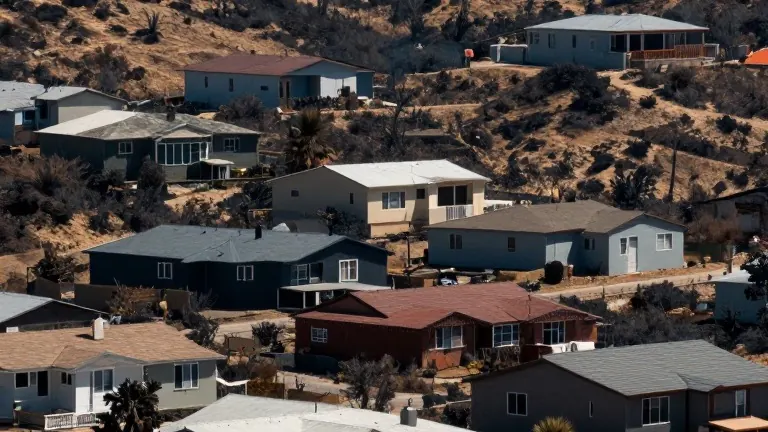
Homeowners in Paradise, California, have invested heavily in fire-resistant upgrades for their properties, but they report receiving only tiny discounts on their insurance bills.
The issue was highlighted in a two-part Planet Money series by Alexi Horowitz-Ghazi. The reporting details how insurers fund research into building resilience while offering limited financial incentives to homeowners who make their own properties safer.
Researchers at a destruction lab in South Carolina test structures against fire, hail, and hurricane-force winds. Major insurance companies fund this work to determine which designs limit damage and reduce future payouts.
This practice follows a long industry history of risk assessment. In the early 20th century, Underwriters Laboratories tested electrical wiring to prevent fires. The Insurance Institute for Highway Safety performs similar crash tests to improve auto safety.
Economists identify a problem known as moral hazard in this dynamic. When an insurer covers the cost of a total loss, homeowners may have less incentive to spend money on preventive measures like metal roofs or ember-resistant vents.
If a homeowner upgrades their house but their neighbors do not, the overall risk in the area remains high. Insurers argue that the small discounts reflect the actual reduction in expected claims, even if the premium itself continues to rise.
Coverage availability has tightened in California and other Western states. Insurers have stopped renewing policies in fire-prone areas, forcing families onto the FAIR Plan, the state's insurer of last resort.
UC Berkeley economist Nancy Wallace argues that California's regulatory system contributed to the market collapse. Proposition 103, passed in 1988, required state approval for rate hikes. This rule forced insurers to base prices on historical losses rather than forward-looking catastrophe models.
Wallace told Planet Money that the system kept premiums artificially low, encouraging construction in high-risk zones. When large payouts became necessary, the economics no longer worked, and insurers exited the market. She stated that regulators destroyed the markets.
UC San Diego economist Judson Boomhower noted that some areas may eventually become too risky to insure at current price points. He predicted that higher prices would be a sign that the market has healed.
In late 2024, California adopted new rules allowing insurers to use forward-looking models for wildfire losses. In exchange, these companies must write more policies in high-risk areas.
Some families have moved to the non-admitted market, where companies have greater freedom to set prices. While these policies often offer better coverage than the FAIR Plan, they lack the state-mandated backstop that protects policyholders if the insurer fails.