US clocks roll back an hour Sunday, extending the standard time period until March 14
The switch concludes a period of extended daylight that began in March, marking the first clock change since the practice was codified in 1966.
By Ella Cox ·
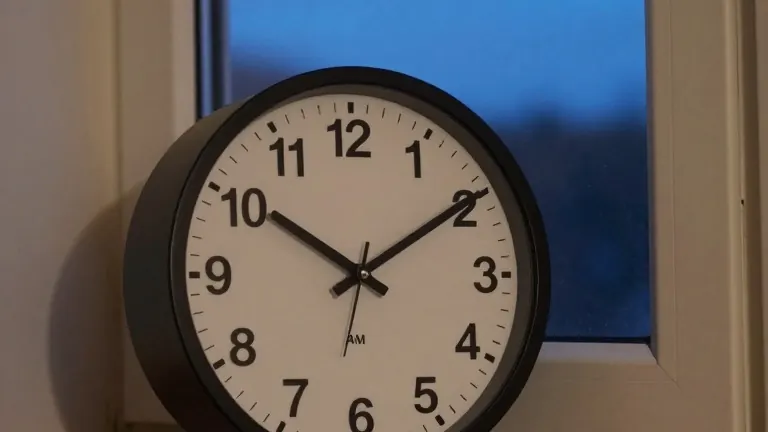
Resident clocks across most of the United States will turn back 60 minutes at 2 a.m. on Sunday, ending daylight saving time for the year. This action returns the country to standard time, a schedule that will remain in effect until the next spring transition. The change means that at 1:59 a.m. Sunday, time will jump back to 1:00 a.m., effectively giving residents an additional hour of sleep if they remain awake.
The current period of daylight saving time began on March 8. Under the rules set by the Astronomical Applications Department of the U.S. Naval Observatory, this seasonal shift has followed a fixed calendar since 2007. Daylight saving time consistently starts on the second Sunday in March and concludes on the first Sunday in November. The next end date for the practice is scheduled for November 7 of next year.
The practice originated in the Standard Time Act of 1918. The law aimed to extend evening daylight by shifting sunset one hour later. However, the measure was repealed in 1919, leaving the decision to local jurisdictions. The federal government re-established the practice during World War II, observing it continuously from 1942 through 1945. Following the war, states applied the rule inconsistently until Congress passed the Uniform Time Act in 1966. That legislation standardized the dates but allowed specific exemptions for states that chose not to participate.
President Richard Nixon attempted to make daylight saving time permanent in 1974. The experiment resulted in darker mornings, which critics linked to an increase in vehicle accidents involving students. Congress reversed the move after Nixon resigned later that year. Today, Hawaii and most of Arizona do not observe the change, along with the U.S. territories of American Samoa, Guam, Puerto Rico, the U.S. Virgin Islands, and the Northern Mariana Islands.
Legislative efforts to end the twice-yearly clock change have intensified in recent years. According to the National Conference of State Legislatures, 19 states have passed bills or resolutions to adopt a permanent time standard in the last seven years. These state measures cannot take full effect without a federal law, as current statutes require a congressional act to make the shift permanent.
The Senate passed the Sunshine Protection Act in 2022, a bill designed to make daylight saving time permanent. That legislation did not advance in the House. A new version introduced in January 2025 stalled in the Senate during the summer. In early October, President Donald Trump urged Senate Republicans to move the bill forward. He posted on Truth Social that the changing process costs the country a fortune, increases crime, and stresses people, sports, and other sectors.
Health and sleep experts have debated the merits of a permanent schedule. Some studies indicate that year-round daylight saving time could reduce traffic accidents and crime rates. However, many researchers oppose the permanent extension of evening daylight. They cite the danger of dark mornings, particularly for children walking or driving to school. Sleep specialists generally prefer the current back-and-forth schedule to a permanent shift, arguing that aligning clocks with the sun reduces health risks.
The global application of time changes varies by location. Most countries in the Northern Hemisphere, particularly in Europe and North America, follow schedules similar to the United States. Countries in the Southern Hemisphere reverse their dates because their seasons are opposite. According to the Pew Research Center, only about one-third of all nations currently observe daylight saving time. Approximately half of all countries adopted the practice at some point but have since discontinued it.
Source: NBC News