Supreme Court Weighs Assault Weapons Bans
Justices will hear arguments on whether state restrictions on AR-15-style rifles violate the Second Amendment, a ruling that could reshape gun laws nationwide.
By Ella Cox ·

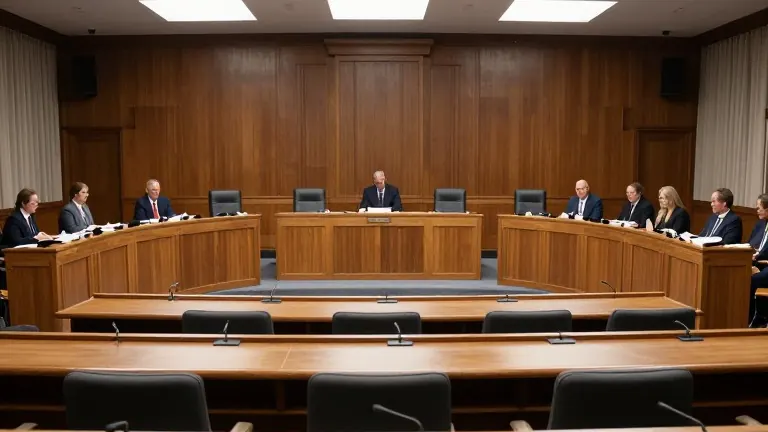
The Supreme Court will hear oral arguments Wednesday on whether state and local bans on assault weapons violate the Second Amendment. The case pits Connecticut and Illinois against a Trump administration that argues the restrictions are unconstitutional. Nicole Hockley, who lost her son Dylan in the 2012 Sandy Hook Elementary School massacre, is traveling to Washington to support the states. She co-founded Sandy Hook Promise and believes the ban has prevented further mass school shootings.
Bill Sack, senior director of legal operations at the Second Amendment Foundation, called the case the "Super Bowl of gun rights." His organization argues that banning the AR-15, the nation’s most widely owned rifle, is an unconstitutional overreach. Approximately 40 million Americans own these rifles, a number that surpasses the count of Ford F-Series pickup trucks, according to a 2026 survey cited by challengers. The administration contends that while machine guns have been banned historically, there is no basis for restricting weapons in common use by law-abiding citizens.
About a dozen states have enacted similar bans, covering major cities such as New York, Los Angeles, and Chicago. A separate challenge to a Cook County ban is also before the court. The federal assault weapons ban expired in 2004, leading to a sharp rise in the popularity of these rifles. Gun retailer data shows sales of AR-15-type weapons now rank second only to semiautomatic handguns. These firearms have been used in high-profile attacks in Uvalde, Texas, Las Vegas, and Highland Park, Illinois.
Sheila Gutman, wounded in the Highland Park parade shooting in 2022, testified to the physical toll of the weapon. A single round created a wound the size of a baseball on her foot, and she has undergone 17 surgeries. James Alan Fox, a Northeastern University criminology professor, noted that semiautomatic rifles are involved in fewer mass shootings overall but result in nearly twice the average death toll compared to other weapons. He stated that while these rifles do not change the likelihood of a crime, they increase the level of carnage.
Adam Winkler, a UCLA law professor, suggested the decision may not have a large impact on overall public safety. However, the ruling could influence other gun laws. The Court’s conservative majority expanded gun rights in 2022 by requiring firearm restrictions to be rooted in history. This decision has led to numerous challenges to existing regulations. Lower court judges have expressed confusion over how to apply the new historical test to current laws.
Attorneys for Connecticut and Illinois argue that the rifles were designed as weapons of war and remain especially dangerous. They state that high-velocity rounds cause catastrophic damage to the human body. The lawyers argue that widespread ownership does not prevent democratically elected lawmakers from regulating the weapons. A decision is expected by the end of June.