Abdul El-Sayed wins Michigan Senate race to become first Muslim senator
The Democratic candidate defeated Republican Mike Rogers, overcoming significant anti-Muslim campaigning to secure a pivotal victory for the party.
By News Media House Staff ·
Abdul El-Sayed has defeated his Republican opponent, Mike Rogers, to claim the United States Senate seat in Michigan. The Democratic candidate won the election on Tuesday, a result that positions him to become the first Muslim senator in the history of the United States. He is scheduled to be sworn into office on January 3.
The victory marks a significant political achievement for El-Sayed, who faced a rigorous campaign of anti-Muslim attacks led by President Donald Trump. Maya Berry, the executive director of the Arab American Institute, noted that Republicans utilized anti-Arab and anti-Muslim tropes as a central strategy against the candidate. Despite these efforts, Berry stated that the electorate rejected the bigotry, a development she described as tremendous for the nation's inclusive democracy.
El-Sayed’s path to the general election was challenging. He won a hard-fought primary in August after the American Israel Public Affairs Committee spent more than $30 million against him. Following that primary, the former public health official faced a wave of accusations from Trump and other Republicans, including claims that he was a jihadist. El-Sayed campaigned on expanding government-funded healthcare, reducing the influence of money in politics, and addressing the country's affordability crisis.
The Democrat also took strong positions on foreign policy, accusing Israel of carrying out a genocide in Gaza. He advocated for redirecting funds currently allocated to foreign wars toward fixing local issues. In the final days of the campaign, the race was further complicated when Democratic Congresswoman Haley Stevens, a former primary opponent and staunch supporter of Israel, endorsed Republican candidate Mike Rogers.
The outcome helps the Democratic Party regain control of the Senate. For many supporters, however, the win signifies more than just a single seat in the upper chamber of Congress. Throughout Election Day, voters in Michigan expressed that the election would determine the direction of the state and the country for years to come. Democrats viewed the vote as a way to reject the president's agenda and the racist rhetoric promoted by his allies.
Republicans also attempted to exploit tensions between Arab and Black communities to shift African American voters away from the Democratic coalition. Trump specifically claimed that any Black or Jewish person supporting El-Sayed was crazy. However, early results indicated that El-Sayed performed well with Black voters in Detroit. Gary Colbert, a voter on the west side of the city, dismissed the president's comments and criticized the administration's impact on people's lives, particularly regarding rising gas prices due to the Iran war.
In Southwest Detroit, a volunteer named Frank Espinosa highlighted the importance of protecting immigrants from the administration's enforcement tactics. The Trump administration has deployed Immigration and Customs Enforcement officers to arrest allegedly undocumented migrants, a move that has led to dozens of shootings and several deaths, including American citizens. Espinosa said that getting ICE out of the streets is a top priority for local voters, alongside ending foreign wars and improving affordability for groceries and gas.
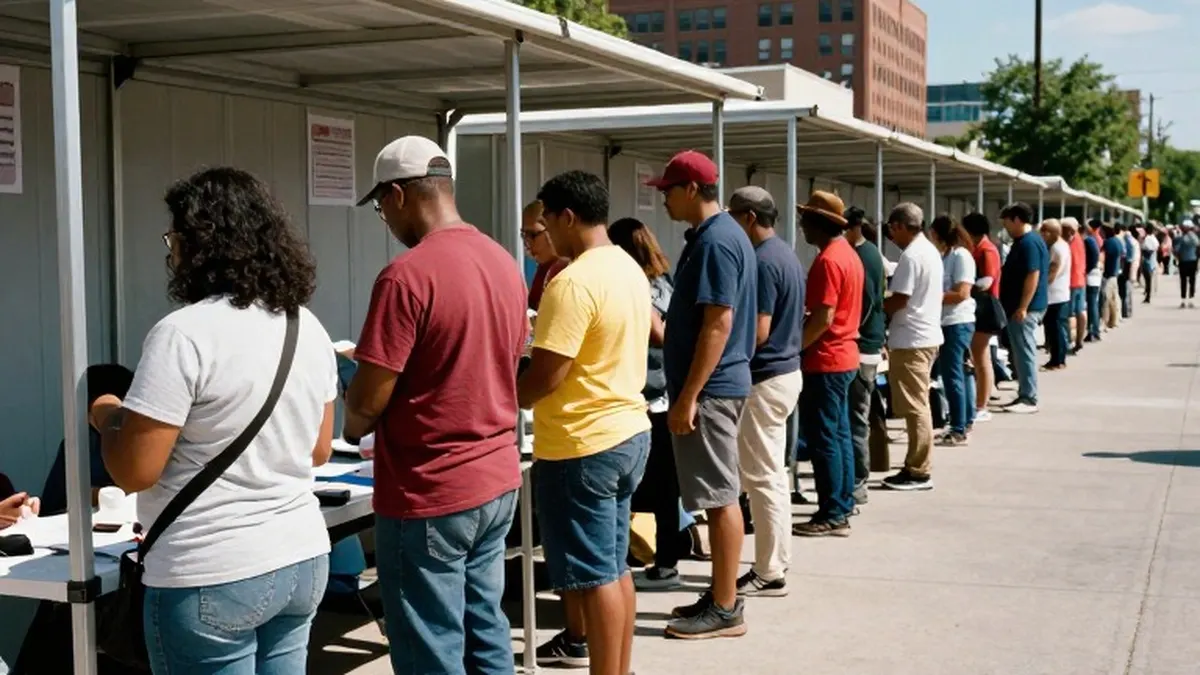
In Dearborn, a suburb often called the Capital of Arab America, the election was seen as a test of belonging. Ali Baleed Almaklani, a leader in the Yemeni American community, said the anti-Muslim campaign motivated the community to increase political participation. He noted that the Democratic candidate focused on healthcare and the economy, while the opposition focused on terrorism and baseless accusations. High voter turnout was observed in the area, with long lines at polling stations.
Sally Howell, an emeritus history professor at the University of Michigan-Dearborn, stated that El-Sayed’s victory demonstrates a desire for change among the American people. This change includes a rejection of anti-Muslim hate and a recognition of the value of Palestinian lives. For the Arab community in Michigan, the win means their contributions to the political body will be acknowledged and their voices heard.
Originally published by News Media House · Source: Al Jazeera