Polls show Democrats ahead in 218 House seats
Recent survey errors and a shrinking pool of undecided voters complicate the path to flipping Congress.
By Ella Cox ·
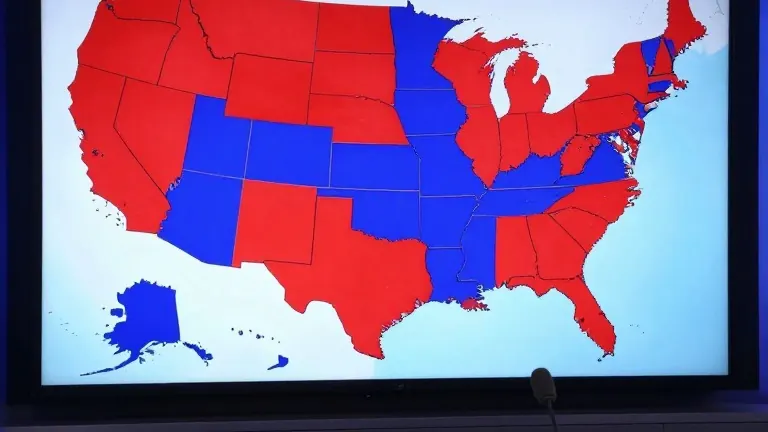
Polls indicate that Democratic candidates currently lead in more than 218 House districts. That number represents the threshold required to take control of the lower chamber of Congress from Republicans.
Surveys also show Democrats tied or slightly ahead in critical Senate races. A recent New York Times poll placed the South Carolina Senate contest at a tie. That state was won by President Donald Trump by 18 percentage points in 2024. CNN surveys show Democratic leads in Texas, Kansas, and Maine.
The current polling environment differs from recent presidential cycles. In 2016 and 2024, Trump outperformed most predictions. In 2020, he lost narrowly after many surveys suggested a larger victory for Joe Biden. Early 2026 primaries produced similar surprises. Abdul El-Sayed won the Michigan Democratic Senate primary by 1 percent, despite polls showing a double-digit lead. A Wisconsin gubernatorial race saw a candidate with a 20-point polling lead lose by a fraction of a percent.
Clifford Young, president of Ipsos Public Affairs, notes that reaching American voters is becoming harder. Fewer people answer landline phones, and many screen unknown callers. Young says that conservatives, particularly those on the far right, are often anti-establishment and reluctant to participate in surveys. This reluctance can skew data if models do not account for systematic undercounting of Republican voters.
Voter turnout unpredictability contributes to these errors. Trump’s supporters often include individuals who do not vote regularly. When they turn out in higher numbers than expected, it shifts results. In 2022, midterm polls proved more accurate because Trump was not on the ballot. Democrats avoided a full sweep despite low approval ratings for President Biden. They kept the Senate and lost the House by narrow margins.
Several factors suggest this year’s midterms may not mirror 2022. Many contested districts were won easily by Trump two years ago. House boundaries have also changed, reducing the number of seats that typically switch parties. Political polarization has reduced the number of swing voters. Some experts describe the electorate as calcified. Republicans also hold a cash advantage, spending hundreds of millions of dollars on attack ads in the final weeks.
Polling models attempt to capture these shifting fundamentals. Individual polls carry a margin of error based on sample size. Aggregated averages provide a more accurate prediction than single surveys. In last year’s state and special elections, Democrats outperformed most surveys. Their voters turned out in unexpectedly large numbers. This shows that polling inaccuracies can favor either party.
Trump is holding rallies in states he won comfortably in 2024. Democrats hope this activity indicates internal Republican polling shows conservative candidates in trouble. However, voters can change their minds until election day. Undecided voters remain a key segment in many races. Late shifts can alter the dynamics of a close contest.
Young believes pollsters are improving their methods. He acknowledges that dealing with humans creates inherent uncertainty. Managing that uncertainty is part of the polling process. The election is scheduled for Tuesday, November 3.
Source: BBC News