Democrats seize Congress control, setting stage for new fight over Iran, Gaza, and Ukraine
With a 54-44 Senate majority and 242 House seats, the new majority will test Trump's vetoes on war funding and foreign aid starting in January.
By Ibrahim Howard ·
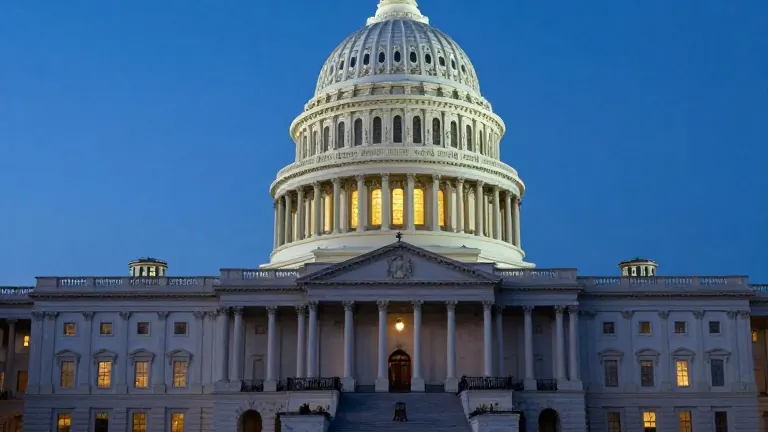
Democrats took control of both chambers of the US Congress in the midterm elections held on Tuesday, marking a decisive shift in power that will reshape foreign policy decisions regarding Iran, Gaza, and Ukraine starting in January.
The party now holds 54 seats in the 100-seat Senate, leaving Republicans with 44 seats and two pending declarations. In the House of Representatives, Democrats secured 242 seats, a margin well above the 218 needed for control, while Republicans captured 151 seats. On the state level, Democrats hold governorships in 28 states compared to 20 for the Republicans, with two races still undecided.
Several firsts defined the Democratic sweep. Abdul El-Sayed of Michigan became the first Muslim senator. Keisha Lance Bottoms became the first Black female governor in Georgia. Gina Hinojosa became the first Latina governor in Texas, and Deb Haaland became the first female Native American governor in New Mexico.
President Donald Trump acknowledged that the US war on Iran, which began in February, contributed to the Republican losses. The conflict closed the Strait of Hormuz, causing fuel prices to rise and costing taxpayers an estimated $47 billion. Trump told reporters that while gasoline prices rose, he would repeat the decision to prevent Iran from obtaining a nuclear weapon. His approval rating stood at 32 percent in a Reuters/Ipsos poll conducted before the election.
Senator Chuck Schumer, the new Senate leader, stated that Democrats will use their control of spending to end the war. He cited the power of the purse as a tool to deter a president who engages in conflict without congressional consent. However, analysts note that cutting funds while troops are deployed may prove difficult. James Boys, a research fellow at University College London, said restricting funding could be seen as risking American lives. The War Powers Resolution, which limits military action to 60 days without a declaration of war, is unlikely to succeed because Trump can veto it, and Democrats lack the two-thirds supermajority needed to override such a veto.
In Gaza, newly elected progressive Democrats have pledged to press for changes in US support for Israel. Abdul El-Sayed, who defeated a campaign backed by the pro-Israel AIPAC super PAC, vowed to push for the withdrawal of US aid. In a move to appease voters, Trump announced on Fox News that Israeli Prime Minister Benjamin Netanyahu had suggested the US cease its $4 billion annual aid package by the end of the year. Netanyahu’s office did not comment on the remark.
Ukraine expects renewed support as the new Congress convenes. Trump has suspended sanctions on Russian oil and called for President Volodymyr Zelenskyy to resign, blaming Ukraine for strikes on Russian oil facilities that raised global diesel prices. Zelenskyy told German broadcaster ZDF that Democrats speak clearly about supporting Ukraine and renewing ties with Europe. He expressed hope that a new balance of power in Washington will bring more assistance to Kyiv.
European leaders welcomed the results cautiously on Wednesday. They view the Democrat-led Congress as a potential avenue to mend transatlantic ties and restore Washington’s support for Ukraine, which has waned under the current administration.