Democrats Seize Both Chambers, Texas and South Central Races Decided
With control of Congress and key governorships in the region now in Democratic hands, new leadership prepares to audit the administration and reshape federal funding.
By Ella Cox ·

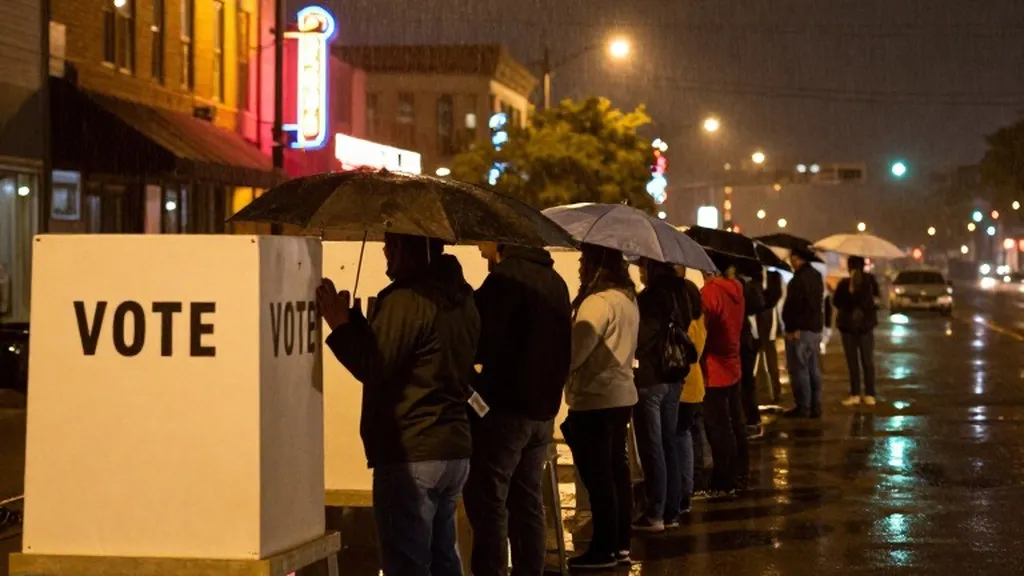
Democratic voters delivered a decisive shift in power on Election Day, securing majorities in both the U.S. House and the U.S. Senate in a result that signals a new era of oversight for the Trump administration. According to Ballotpedia, Democrats picked up at least 43 House seats and seven Senate seats, all of which were previously held by Republicans. As of 4 p.m. on November 6, the party holds at least a 250-157 majority in the House and a 54-44 majority in the Senate. This net loss of seven Senate seats for Republicans places this election among the top 20% of election years in terms of seat swings against a sitting president's party, a threshold often defined as a wave election.
The results in the South Central region align with this national trend, with Democrats gaining critical ground in states that have long been considered Republican bastions. In Texas, where polls were open from 7 a.m. to 7 p.m., the outcome of the open Senate seat and the governor's race, where incumbent Greg Abbott faced voters, has been determined by the national wave. The party now controls a majority of governorships for the first time since before the 2010 elections, a structural change that will impact state-level policy and federal relations in the region.
In Oklahoma, where polls closed at 7 p.m., the open Senate seat and the open governor's race saw significant shifts that contributed to the Democratic trifecta gains across the country. Similarly, in Louisiana, where Tuesday polls were open from 6 a.m. to 8 p.m., the open Senate race became a key battleground. Arkansas, with polls open from 7:30 a.m. to 7:30 p.m., saw incumbent Senate candidate Tom Cotton and incumbent governor Sarah Huckabee Sanders face the challenge of a unified Democratic opposition in the new Congress.
With these new majorities, Democratic leaders are immediately preparing to use their oversight powers to scrutinize the administration's actions, particularly regarding the war in Iran and the dismantling of federal agencies. Rep. Bobby Scott of Virginia, the top Democrat on the House Committee on Education and the Workforce, has pledged to leave no rock unturned in investigating the administration's handling of the U.S. Education Department. He sent a letter to federal agencies just a day after the election, reminding them to preserve records for congressional review, signaling that the audit process begins immediately.
The new congressional leadership also plans to use the power of the purse to rein in administrative overreach. Sen. Chris Van Hollen of Maryland, a member of the Senate Appropriations Committee, described the strategy as a way to establish guard rails and prevent abusive practices, particularly in areas like federal student loans and higher education funding. He noted that while it is harder to rebuild dismantled entities through appropriations bills, Democrats can prevent further damage and seek to reverse the harm already done by the previous administration's policies.
In the immediate aftermath of the election, the focus has also turned to the Department of Defense, with House Democratic Leader Hakeem Jeffries supporting an impeachment resolution against Defense Secretary Pete Hegseth. Rep. Thomas Massie of Kentucky, a Republican, moved to force a vote to impeach Hegseth, citing his role in military actions in Iran, Yemen, and Venezuela. Jeffries endorsed the push, stating that Hegseth must stand trial before the Senate, a move that underscores the new level of accountability the Democratic majority intends to enforce on the executive branch.
President Donald Trump has already reacted to the shifting balance of power, lashing out at the impeachment threat and the new congressional leadership. However, the President's party now faces a more organized opposition in both chambers, with Democrats holding the majority in the House and the Senate. This control allows the party to pass legislation and conduct investigations with greater ease, particularly on issues such as the cost of living and health care, which were central to the Democratic platform during the campaign.
The regional implications for Texas and the South Central states are significant, as the new federal majority will influence how federal funds are distributed and how national policies are implemented in these areas. The shift in governorships in the region, combined with the federal control, creates a more unified Democratic footprint that can coordinate on issues like infrastructure, energy, and education. This alignment provides a stronger platform for advocating for state-specific needs within the federal budget process.
As the new Congress prepares to convene in January, the focus will be on translating the election mandate into concrete policy changes. Democrats are expected to prioritize investigations into the administration's use of federal resources and its approach to international conflicts. The preservation of records and the appointment of new committee chairs are already underway, ensuring that the transition of power is managed with a focus on accountability and transparency.
The results of the 2026 midterm elections mark a turning point for the political landscape in the South Central region and the nation. With Democrats holding both chambers of Congress and a majority of governorships, the administration faces its most significant challenge since taking office. The new leadership is committed to using every tool at their disposal, from subpoenas to appropriations riders, to ensure that the next two years of governance align with the will of the voters who delivered this decisive shift in power.