China's elderly dependency ratio surpasses that of children
Official statistics reveal the working-age population now supports a larger share of seniors than minors, a demographic shift driven by the former one-child policy and rising life expectancy.
By Robert Ward ·
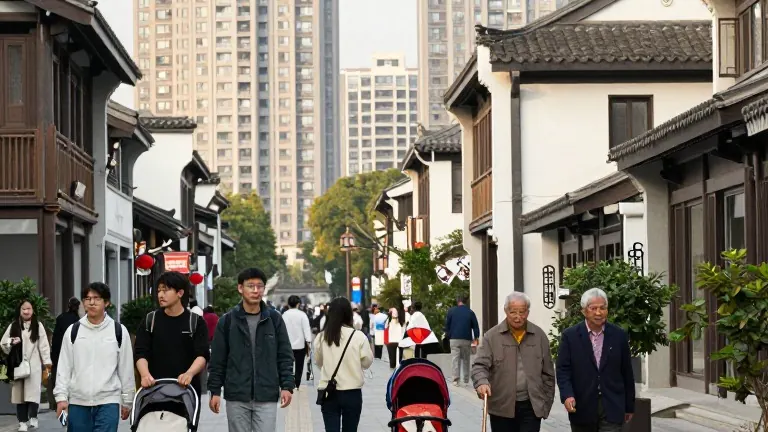
The demographic structure of the world's second-largest economy has inverted, with the burden of supporting seniors now exceeding the responsibility for minors.
Data released last week by China's National Bureau of Statistics show the ratio of dependent elderly people to the working-age population rose to 23% in 2025. This figure overtakes the dependency ratio for children, which stood at 22%. The inversion indicates that the working population must now sustain a larger base of retirees than youth.
The shift is driven by a combination of rapid urbanization and the legacy of the one-child policy, which ran from 1980 through the end of 2015. The government estimates that policy prevented approximately 400 million births, a figure that has faced contestation. Sociologist Mu Zheng from the National University of Singapore notes that the policy shrunk the younger cohort, leaving fewer adults to support a growing number of older relatives. Other factors, including rising living costs and higher education levels, have continued to pressure fertility rates despite Beijing's efforts to encourage larger families.
Current population figures illustrate the scale of the change. China now has more than 223 million residents aged 65 and above, representing nearly 16% of the total population. This exceeds the number of children aged 14 and under, which stands at about 213 million. The state-controlled Global Times attributed the transition to a "moderately ageing society" to the size of past birth cohorts and longer life expectancy.
Analysts suggest this demographic pivot will alter public spending priorities. Professor Stuart Gietel-Basten of the Hong Kong University of Science and Technology described the shift as symbolic, predicting that more government resources will move from schools and family support toward pensions and healthcare. The Global Times noted that the older generation, largely born between the 1950s and 1970s, possesses stronger purchasing power and better health than previous cohorts, creating opportunities in the silver economy.
Beijing has integrated support for the elderly into its current five-year economic blueprint. Official figures indicate that more than 53 million elderly people received senior citizen allowances and subsidies by the end of 2025. The expansion of these financial supports reflects a growing commitment to managing the costs associated with a shrinking workforce and an expanding senior population.
Some experts question the utility of the dependency ratio as a metric. Gietel-Basten argued that the statistic risks stripping agency from older people by categorizing them primarily as dependents. He noted that the measure does not account for recent improvements in healthcare or the economic contributions made by active seniors.
Source: BBC News