10.4 Million Late Votes Decide Brazil Runoff as Bolsonaro Files Challenge
Lula secures a fourth term with a nearly 4 percent margin, while his rival seeks annulment and U.S. President Donald Trump questions the tabulation process.
By Robert Ward ·
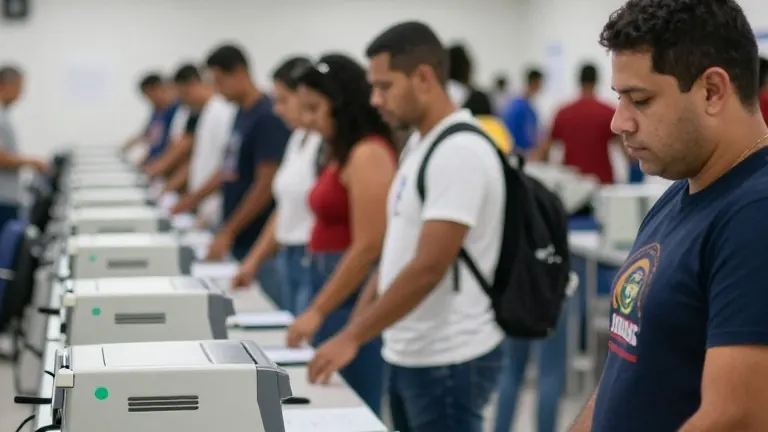
Brazil’s electronic voting system has reliably produced results within hours of polls closing since the 1990s. That speed vanished on Sunday when a last-minute decision extended voting nationwide, adding 10.4 million voters to the tally and shifting the presidential runoff to incumbent Luiz Inácio Lula da Silva. Lula won with more than 64 million votes, securing a margin of nearly 4 percent over Senator Flávio Bolsonaro, who received just under 60 million votes.
The election process began with a record number of Brazilians abstaining from the first round. The second round saw the lowest abstention rate in history, with 14.1 million additional voters casting ballots. Analysts estimate that three-quarters of these new voters supported Lula. The surge was driven largely by a digital campaign led by lawmaker André Janones, who used a WhatsApp channel called “Lula's Army” to gather almost 11 million people. This mobile operation mobilized former non-voters, those who had cast blank ballots in the first round, and supporters of third-party candidates.
The timeline of the runoff became chaotic on Sunday. A Supreme Court justice ordered a nationwide extension of voting minutes before polls were scheduled to close at 5 p.m. Lula requested the extension due to public transportation issues in São Paulo and Salvador, while Bolsonaro cited heavy rains in the southern states where he had strong first-round support. Many polling stations were already wrapping up when the news arrived, disrupting the usual rapid counting process.
On Sunday, Flávio Bolsonaro announced at a news conference that he would request an annulment of the election. His father, former President Jair Bolsonaro, is serving a 27-year sentence for a coup attempt and also unsuccessfully contested a loss to Lula in 2022. On Monday, Flávio Bolsonaro visited his father, who is under house arrest. President Donald Trump also entered the dispute on Monday, stating without providing evidence that the election looked “rigged” and had a “very bad look” during tabulation. Trump told reporters before traveling to Mississippi that elections must be indisputable.
Despite the challenge, key Brazilian institutions and regional leaders have recognized Lula’s victory. Kassio Nunes, the president of Brazil’s electoral authority, acknowledged the result on Sunday. Nunes was appointed to the Supreme Court by Jair Bolsonaro. Brian Winter, editor-in-chief of Americas Quarterly, noted that important Brazilian power brokers are closing ranks behind Lula, making an uphill battle for the challenger. Winter observed that these leaders do not appear eager to enter a truly contested election.
The social media strategy also played a role in pressuring Meta, the owner of WhatsApp and Facebook, to end alleged bias favoring Bolsonaro. Brazil’s top electoral court ruled on Oct. 15 that Meta must adopt measures to ensure equal treatment of both candidates. Juliano Cortinhas, a professor at the University of Brasília, said the campaign faced external interference from major platforms that used algorithms to amplify far-right messages while suppressing left-wing content.
Lula is expected to take office on Jan. 5, 2027, for his fourth non-consecutive term. He will serve as a counterweight to right-leaning leaders in the region who align with the Trump administration. The victory marks the first time since 1989 that a candidate came from behind in the first round to win the second. Lula’s highest gains occurred in lower-income municipalities, though voter turnout surged overall, particularly in wealthier metropolitan centers.
The political landscape ahead remains tense. Lula faces a right-wing Congress where Bolsonaro’s party holds the most seats. Bolsonaro himself remains a senator until January. Benjamin Gedan, director of the Stimson Center’s Latin America program, warned that false claims of fraud are becoming commonplace, though the quick recognition of the result by conservative leaders suggests the margin of victory will hold.
Source: ABC News