US Army Clears All National Lead Azide Stockpile in Iowa
The blast, delayed three times due to weather and safety concerns, released two white plumes visible from miles away as officials urged nearby residents to stay indoors.
By Ella Cox ·
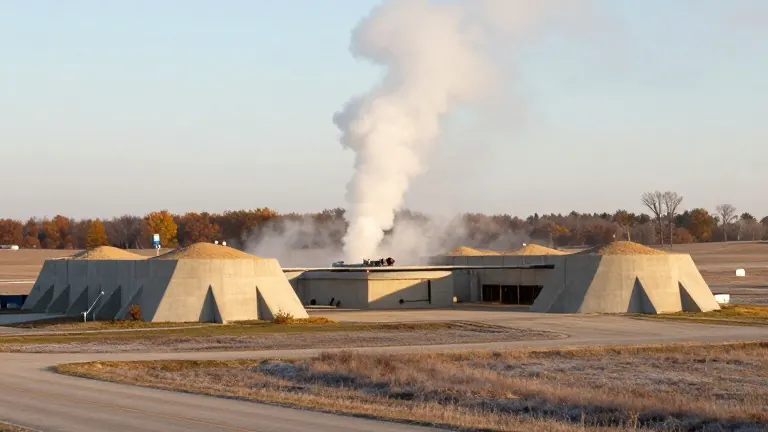
The U.S. Army detonated the nation's entire stockpile of lead azide at an ammunition plant in Middletown, Iowa, on Wednesday morning.
Officials executed the controlled blast to eliminate 5 tons of degraded bomb-making materials that posed a risk of spontaneous explosion as winter temperatures approached.
The operation had been originally scheduled for the previous Friday but was postponed three times. Army leaders cited the need for favorable wind conditions and additional time to implement safety measures. Court documents indicate that public backlash also contributed to the delays.
At approximately 9 a.m. local time, two loud booms echoed across the region. Video footage captured from several miles away showed two white plumes rising from the site before quickly dissipating. Despite warnings to remain indoors, some residents stopped their vehicles on roads upwind of the facility to observe the event.
The Iowa Army Ammunition Plant is located in southeastern Iowa. Government officials encouraged residents within a 5-mile radius to evacuate to avoid inhaling lead dust. They assured the public that barriers surrounding the blast zone would contain the majority of the plume. Forecasters predicted the wind would carry any airborne particles southwest toward Missouri, away from Burlington, a city of nearly 25,000 people situated on the Mississippi River.
Lead azide is a crystalline compound used in munitions production. The stockpile was transported to the Iowa facility from bases across the country in 2009. Stored in 68 barrels, the materials remained in reserve until a March inspection revealed they had partially crystallized. This change made the chemicals sensitive to friction and cold, creating a hazard for spontaneous detonation. Army experts determined that controlled detonation was safer than alternative methods such as thermal treatment or chemical neutralization.
Environmental groups had filed a lawsuit to halt the plan, arguing that the blast could release toxic lead dust into the air and soil. A federal appeals court ruled on Monday that the plan proceeded, finding that the U.S. Environmental Protection Agency had incorporated adequate safeguards to minimize dispersal. The EPA deployed air monitors around the plant, which reported no detectable lead in the air for the first 15 minutes following the detonation. The agency stated it would continue testing during and after the event.
The Army constructed a defensive perimeter around the bunkers to contain the explosion. Concrete and sand barriers, two stories high, surrounded the materials. The service planned to use ballistic gels and foams to absorb lead dust and douse the site with more than 100,000 gallons of water to suppress the plume. Acting Secretary of the Army Adam Telle told the public not to panic, while Maj. Gen. Eric Shirley, the operation's leader, stated that inaction was no longer an option. President Donald Trump posted on social media that early reports showed the Army's mitigation efforts had far exceeded expectations.
Local life paused for the detonation. Schools that had not already closed for the Thanksgiving holiday canceled classes. A gas station near the site posted a note on its door indicating it would reopen once conditions were declared safe. Residents reported sealing windows and doors as a precaution. Lucy Giehl, a resident of West Burlington, expressed concern that the lead danger would persist and noted that the issue might have been addressed sooner.
The blast occurred one day before Thanksgiving. While some residents expressed frustration with the timing, many acknowledged the necessity of the action. The Army's release of a video showed the bunker encased by an earth berm and sand-filled blocks, illustrating the layers of protection put in place for the 5-ton detonation.