Ukraine clears 15km of buried Soviet pipeline in seven-month underground advance
Troops from the 13th Khartiia Brigade advanced through a one-meter diameter tube to bypass drone saturation in the Kharkiv region, killing over 100 Russian soldiers.
By Ibrahim Howard ·
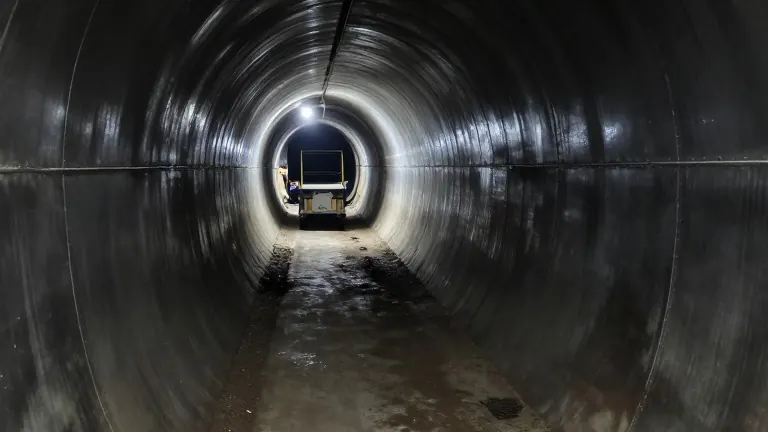
Ukrainian forces have cleared 15 kilometers of a Soviet-era gas pipeline in the north-eastern Kharkiv region over the past seven months. The tunnel, which has a diameter of just over one meter, serves as a new front line where troops crawl through confined spaces to avoid the drones that now saturate the skies above the battlefield. Operation Veles began in April and has turned this buried infrastructure into a primary avenue for military movement.
The push underground was driven by the difficulty of advancing on the surface. Zanuda, who helped plan the tunnel operation, described going below ground as the only option. He noted that while surface combat allows for maneuvering, the pipe forces troops to engage the enemy head-on. The journey to the subterranean battleground involves a high-speed vehicle move across open fields followed by a long march across muddy ground, with soldiers keeping their weapons ready to shoot down incoming drones.
Inside the pipeline, the air carries a lingering smell of gas and fetid waste. Both Ukrainian and Russian forces use breaches in the ground to access the surface, where most fighting occurs. They have used welding tools to break through the thick steel to create these entry points. The Russians were the first to exploit the pipe to infiltrate the nearby city of Kupyansk in September 2025. They had previously used underground pipelines during the capture of Avdiivka in 2024 and in their bid to recapture areas of Russia's Kursk region last year.
Ukrainian troops now use a specially designed electric cart to transport personnel and supplies through the pipeline. Soldiers refer to this vehicle as the Kupyansk metro. The ride takes about 40 minutes and involves bowed heads and crossed legs due to the low ceiling. The cart travels over welded sections of the pipe, creating regular bumps. The vehicle occasionally breaks down, adding to the logistical challenges of the advance.
At a break in the pipeline where troops have built dug-outs for ammunition storage, a soldier known as Musician conducts movement operations. He has spent the past three months living underground, with only brief visits to the surface to clean up or use the toilet. He reports that artillery rounds can be heard thudding from above, indicating proximity to the line of contact. He describes the underground position as safe from direct aerial bombardment.
Vovochka, who has fought on the ground for the past three weeks, says the pipe offers comfort because drones, artillery shells, and glide bombs do not reach inside. However, the advance has been physically demanding. Soldiers from the 13th Khartiia Brigade of Ukraine's National Guard spent their initial phase clearing detritus, water, and Russian barricades from the tube. Chyzh, a soldier in the unit, said some barriers were boobytrapped or piled with Russian bodies. He said the troops had no idea what lay underneath when moving or climbing over these obstacles.
Kort, a comrade of Chyzh, described the danger of ricochets from gunfire during the push. He said the bullets could bounce unpredictably within the confined space. He noted that the unit fired continuously while pushing Russian forces back. Over the course of the operation, Ukraine reports that it killed more than 100 Russian soldiers and took 30 prisoners. Kort said he had to sleep next to the bodies of fallen enemies.
Hundreds of Colombian volunteers from the RUG 23rd Assault Regiment have also participated in the operation. One volunteer, who uses the call sign Gecko, said it took the unit 30 days to clear just 500 meters of the pipeline. He described the work as hot and fearful, but said he eventually decided to deal with the conditions and advance. Biashym, the unit's commander, keeps in regular contact with his men from a building on the surface. He admits that some soldiers have suffered panic attacks and breathing difficulties from living in such a confined space.
Russian forces have also built fortified positions inside the pipeline and continue to try to infiltrate Ukrainian lines by burrowing in and out of the tube. From a control room above ground, Ukrainian operators use drones to target Russian attempts to outflank them. President Volodymyr Zelensky has hailed the operation as a success, noting it helped retake lost territory and boosted morale. Zanuda believes this method of fighting will define future operations, stating that pipelines run everywhere due to the Soviet transit routes for oil, gas, and ammonia that once passed through Ukraine.