5,448 Fighter Jets: Xi and Trump Meet as China Presses Taiwan
US and Chinese leaders convene in Shenzhen for a third summit while Beijing intensifies military drills and arms deliveries proceed despite manufacturing delays.
By Robert Ward ·
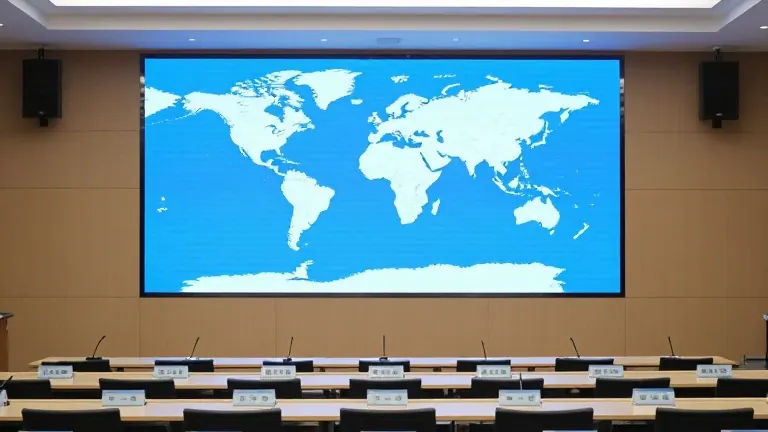
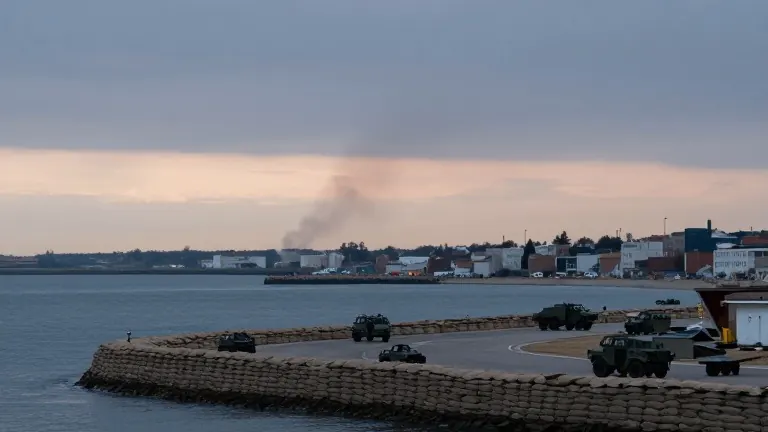
The People's Liberation Army flew 5,448 fighter jet sorties toward Taiwan in 2025, a sharp increase from the sporadic flights recorded before 2023. This escalation in military pressure coincides with the third scheduled meeting between US President Donald Trump and Chinese President Xi Jinping at the Asia Pacific Economic Forum in Shenzhen. Leaders from the US, China, and 21 other economies will gather this week in the southern Chinese city.
Experts expect the tech competition between Beijing and Washington to dominate the agenda. Recent developments, including the resignation of Nvidia's CEO and new export controls, have intensified the dispute over trade and technology. While Taiwan remains a central point of tension, Arthur Zhin-Sheng Wang of Taiwan's Central Police University noted that the current US administration does not view the island as a core issue in bilateral relations. Wang stated that the US does not formally recognize Taiwan, though it remains the island's largest informal arms supplier.
Behind the scenes, cooperation between the two nations remains active. In the summer, the de facto US embassy in Taiwan posted images of joint coast guard patrols, a rare public acknowledgment of defense ties. Kuo Yu-jen, director of the Institute for National Policy Research in Taiwan, called the patrols evidence of decades of training and cooperation. He expressed surprise at the visible coordination, which contradicts the US stance of ambiguity regarding military intervention in a potential invasion.
Arms sales continue to progress despite stalled packages. An $11 billion deal approved at the end of last year is currently moving forward. In October, Taiwan received two F-16V fighter jets, followed by three more earlier this month. These aircraft are part of a backlog of nearly $30 billion in US orders, according to the Taiwan Security Monitor at George Mason University. A separate $14 billion package remains stalled, with delays attributed to manufacturing capacity rather than political leverage. Congress approved the sale of long-range precision strike systems in December 2025, but limited supplies are creating competition. Kuo noted that the same HIMARS rockets being sold to Taiwan are in high demand for use in the ongoing Iran war.
Beijing has expanded its nonmilitary pressure through coast guard operations. In June, Chinese vessels began patrolling off Taiwan's east coast, extending their reach beyond the outlying islands closer to the main island. Wang compared this to Beijing's tactics in the South China Sea, where coast guard vessels patrol waters disputed with the Philippines. He described the shift as a move toward gray-zone tactics, such as blockading and sealing off the island, rather than firing live missiles. National Security Council chief Joseph Wu reported on Nov. 3 that China recently held unannounced military drills in the Western Pacific, deploying more than 100 vessels near Taiwan and Japan.
Public opinion in Taiwan remains divided on US support. Polls from the past five years show that roughly half of the population believes the US will send soldiers in the event of a Chinese invasion, while the other half does not. Allen Hsieh, a 28-year-old media professional in Taipei, believes the US will take action, potentially without a full troop deployment. He views Taiwan's strategic importance to the US as surpassing that of Ukraine.