Macao justice: Former legislator receives 12.5-year term
Au Kam San was convicted of subverting state power in the first known prosecution under the territory's 2009 national security law.
By Ella Cox ·
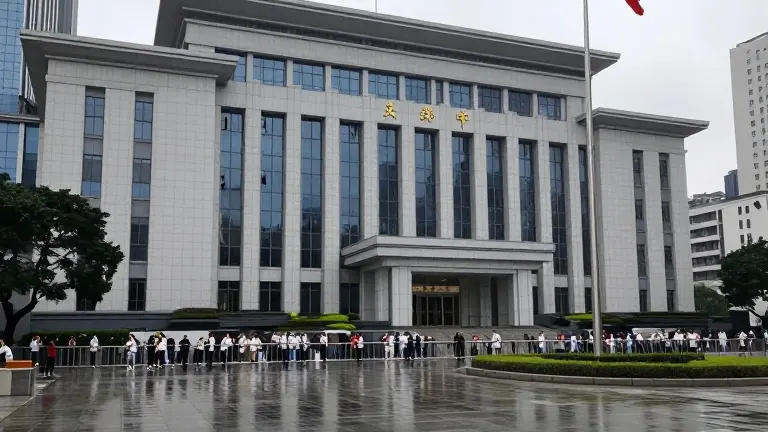
Former Macao lawmaker Au Kam San received a 12.5-year prison sentence on Friday. The verdict concludes the Chinese casino hub's first publicly known national security trial since the law took effect in 2009. The court held the proceedings behind closed doors, a decision that drew criticism from legal observers and family members.
A Macao court declared the 69-year-old guilty of subverting state power, breaching confidentiality, and maintaining contact with outside groups to endanger national security. A court statement detailed that Au assisted hostile organizations for an extended period. The statement claimed he collected and disseminated political views and false information intended to incite hatred against the central government. The court found his intent was high despite his status as a first-time offender.
The prosecution argued that Au worked to overthrow the country's fundamental system. The court determined that between 2023 and 2024, he helped overseas groups spread distorted information. This activity aimed to induce foreign hostility and undermine the 2024 city leader election. In 2021, while serving as a legislator, he leaked confidential gaming license information to these groups during closed committee meetings.
Au's wife, Virginia Cheang, called the outcome groundless persecution in a public letter. She expressed a desire for regular, unconditional family visits and correspondence. Cheang criticized the process, noting the contrast between the closed trial and the public verdict. She described the event as a political trial designed to humiliate her husband's character.
His daughter, Au Hon I, who resides in London, described her father as a peaceful family man. She stated that the prospect of him spending years in prison without criminal behavior was unbearable. Au Hon I noted that a family-appointed lawyer was previously unable to meet with him. She viewed the ruling as a new boundary for citizen rights, calling it a scary chapter for the territory.
Jorge Menezes, a Portuguese lawyer practicing in Macao, pointed out that specific details regarding the involved organizations remained secret. He argued that the court's language suggested Au confessed, even though he did not plead guilty. Menezes stated this phrasing was misleading and violated the defendant's dignity. He suggested the case serves as a warning to residents who challenge authorities and may set a precedent for neighboring Hong Kong.
Michael Polak, Au's international counsel, urged Portugal and the European Union to demand that the Portuguese citizen be allowed to leave Macao. Polak described the sentence as effectively life imprisonment for a man of Au's age. He warned that if Au remains in the territory, he could die in prison.
The Macao government supported the ruling and urged all sectors to respect the decision. The administration stated it would continue to strictly enforce the security law. Beijing's Hong Kong and Macao Affairs Office said the verdict demonstrated a firm resolve to safeguard national security. The office reminded the public to remain vigilant about risks even during stable times.
China's Foreign Ministry stated that it firmly opposes external forces using individual cases to interfere in Macao's affairs. The court approved Au's request for regular family visits. It noted that an approved lawyer represented him during the legal proceedings and that he exercised his right to a defense.
Au served in the legislature for 20 years before stepping down in 2021. He was a teacher before entering politics and organized Macao's commemoration of the 1989 Tiananmen Square crackdown. He was considered a mild pro-democracy activist who regularly criticized government measures on social media.
The trial took place in September. The judge decided against an open trial to protect national security interests. Macao has operated as a special administrative region since 1999, similar to Hong Kong. It is the only Chinese city where casino gambling is legal, with resorts run by major American gaming companies.