Filmmakers and journalists in Lagos report extortion and attacks
Demands for payment and threats of violence are raising production costs and restricting reporting in Nigeria’s largest city.
By News Media House Staff ·
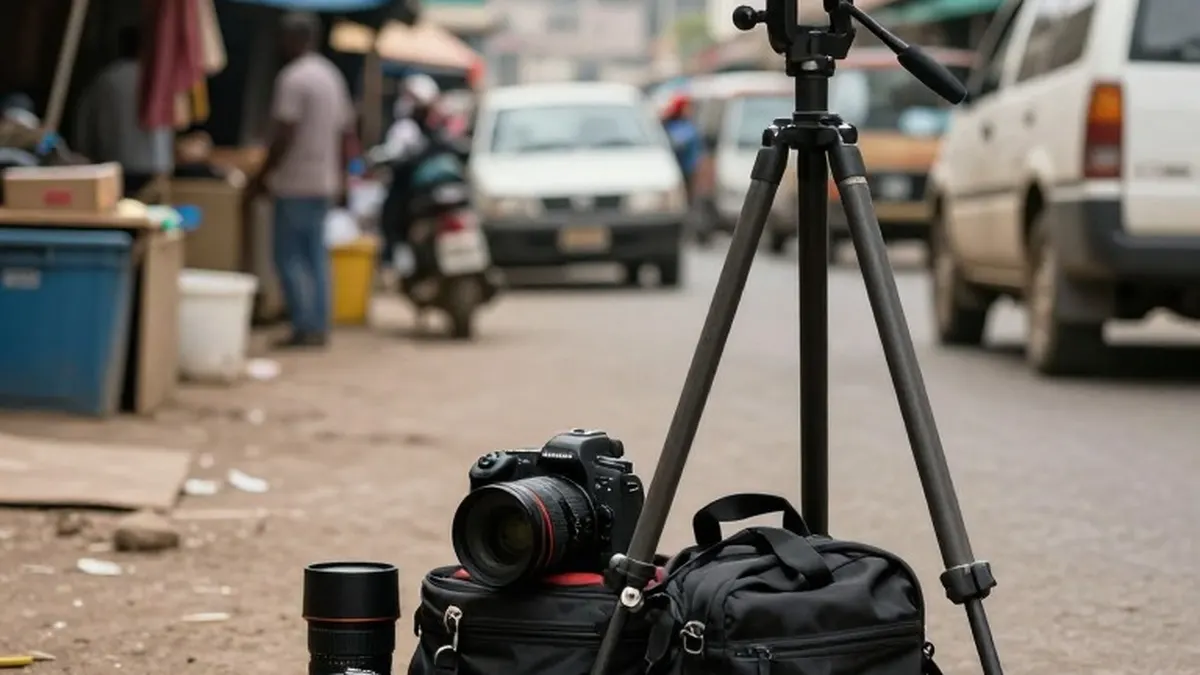
Filmmakers, photographers and journalists working in Lagos say demands for money can escalate into violence, putting crews and equipment at risk. The harassment is also shaping where they work and which stories they cover in Nigeria’s largest city and commercial hub.
Sound recordist Nurudeen Sanni, 40, said his documentary crew had been filming in Ajah for about half an hour when several men surrounded them and demanded 100,000 naira, about $75. During negotiations, a man slapped a crew member who was protecting the cameras. Sanni said a scuffle followed, the men drew knives and cutlasses, and the crew fled. One crew member suffered a serious stab wound to the neck.
Some of those accused of demanding payments are known locally as agberos, a term for street touts that also includes some people who collect levies from commercial transport operators. In August, music video director ThankGod Omori, professionally known as TG Omori, described a crowd disrupting an Ikoyi shoot at about 3am. According to Nigerian newspaper PUNCH, he said he later learned that men had forced their way through a gate and injured a security guard who refused them entry.
Actress and content creator KieKie said men confronted her after she filmed a short video in Obalende, initially demanding one million naira, about $750. She said negotiations brought the payment to approximately 700,000 naira, about $525. For another shoot around Kara, near Berger, she reported spending close to 500,000 naira, about $375, on security. Such expenses add to equipment rental, location fees, wages and transport costs.
Nabila Okino, an analyst at Africa Practice, told Al Jazeera that filmmakers’ dependence on particular locations makes them vulnerable to demands for cash because relocating costs time and money. Stanley Ikechukwu, an analyst at Lagos-based SBM Intelligence, said harassment and extortion were regularly reported by creators. He warned that the prospect of confrontation also discourages spontaneous filming.
Journalists face similar pressure. News Central camera operator Karina Adobaba-Harry said men demanded money before her crew could film while covering the demolition of Makoko in January. She said other encounters had involved threats to seize or damage her camera, and reporters sometimes paid from their own pockets or employer-provided miscellaneous funds. Many victims, she said, doubt that reporting incidents will produce action. Ikechukwu warned that intimidation could push reporters away from certain areas, depriving the public of information.
Foreign visitors have also described harassment. Chinese travel content creator Xiao Jony shared a video in September showing men confronting him at a Lagos market. He said he encountered more than 20 checkpoints demanding payment over roughly 10 kilometres, or 6.2 miles. Who operated those checkpoints, and whether any were connected to a government agency, remains unclear. Okino said such experiences could lead tourists and production companies to choose neighbouring countries.
Lagos state information and strategy commissioner Gbenga Omotosho told Al Jazeera that nobody was authorised to charge people for taking photographs or filming in public, saying police would handle such cases. Okino called for authorities to work with community leaders and local associations on clear public filming rules and opposition to extortion. Meanwhile, photojournalist Jean-Fidele E Ananou, 31, said concerns about his safety and equipment had led him to stop his daily photography outings in Lagos.
Originally published by News Media House