Chile’s Atacama Desert bursts into its largest flower display in 30 years
Exceptional winter rainfall has awakened dormant plants across the Atacama, drawing tourists and giving scientists a brief opportunity to collect seeds and study the bloom.
By News Media House Staff ·
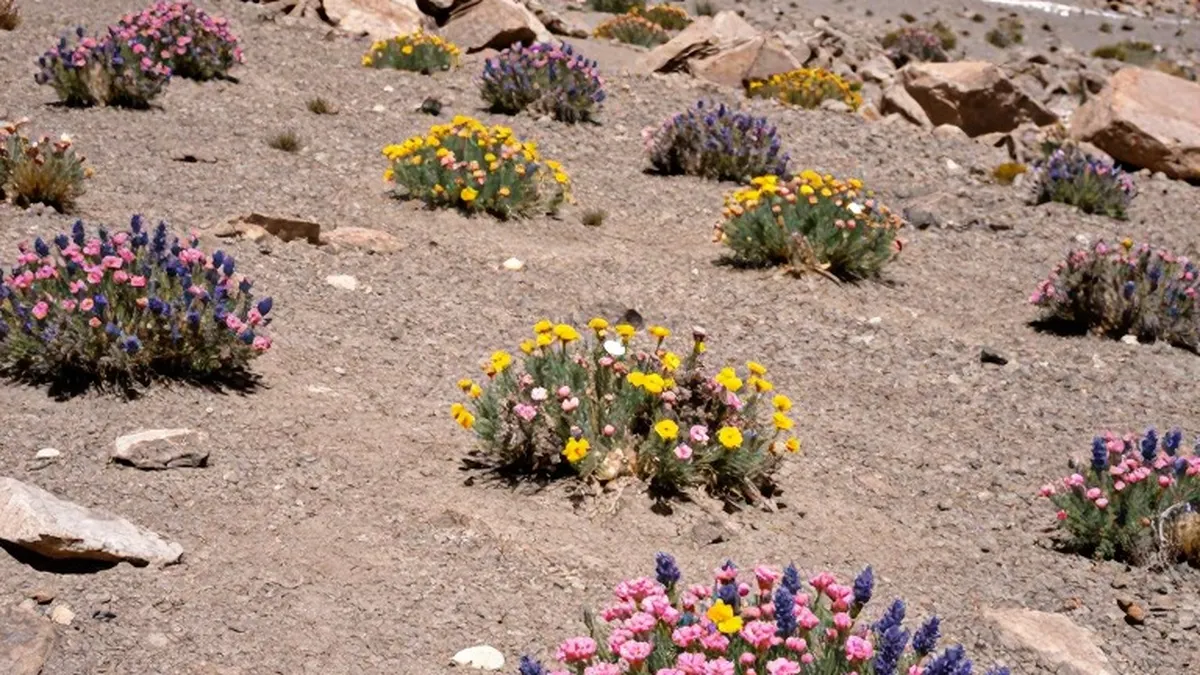
COPIAPÓ, Chile. Flowers in pink, yellow, lilac and purple are covering broad stretches of Chile’s Atacama Desert in its largest and most colorful bloom in 30 years, and possibly ever. More than 200 species are flowering across the rugged terrain, including in places where scientists say blooms have never previously been documented.
The display follows destructive winter rains brought by the El Niño super cycle. Some areas recorded their heaviest rainfall since measurements began in the 1950s. Flash floods in July and August damaged or destroyed dozens of homes and forced hundreds of residents to evacuate. Water also soaked farther into the dry soil than it had in decades, triggering the growth of millions of seeds, bulbs and tubers, many dormant for decades.
The landscape has changed color as different plants emerged. Pale yellow flowers appeared about a month ago, followed by soft purple shades as other bulbs germinated. Scientists say flowering in previously unrecorded locations suggests some bulbs had remained dormant since before detailed study of the phenomenon began in 1997. Moisés Grimberg, administrator of Llanos de Challe National Park, describes a dormant natural archive brought to life by rain. The plants have roughly two to three months to complete their life cycles.
The spectacle has brought a surge of visitors. Llanos de Challe, a 113,000-acre coastal park with white sand beaches, usually receives about 10,000 visitors annually, according to Grimberg. In recent weeks alone, 15,000 tourists have arrived. Cars line roads across the desert, and Chile’s national tourism board expects around 300,000 overnight trips in the region during the two-month bloom.
One attraction is the garra de león, whose crimson flowers hold nectar amid long, flame-like green leaves. Rain awakens this endemic plant, which grows along only a few miles of Atacama coastline and nowhere else worldwide. Flowering occurs every few years in the world’s driest nonpolar desert, though scientists say climate changes bringing unseasonal rainfall are making it more frequent. The bloom supports a temporary ecosystem as hatching insects attract lizards and bats, alongside larger mammals including guanacos.
Biologists from INIA, Chile’s national seed bank, are gathering specimens before flowering ends. Ana Sandoval collected seeds for the institution’s taxonomist in northern Chile, describing a desert that waits for suitable conditions to awaken. The work aims to preserve genetic material and adaptations that help plants endure extreme dryness. Those adaptations include fine hairs on some leaves and thick, waxy coverings on others.
Protection efforts are also expanding. A national park established in June 2023 safeguards 141,000 acres where the flowers periodically emerge. Atacama regional governor Miguel Vargas is beginning a bid for UNESCO World Heritage recognition of the flowering phenomenon. He hopes recognition would strengthen special interest tourism and help diversify a regional economy heavily dependent on mining, with the aim of becoming Chile’s eighth World Heritage site within a couple of years.
This year’s flowers are expected to last until mid-November. As the display fades, scientists will continue examining whether it was the Atacama’s largest recorded flowering event and whether the millions of plants include any previously unknown species.
Originally published by News Media House