Voter Rejection of Data Center Projects Reshapes AI Market Expectations
A wave of ballot measures restricting data centers has triggered political shifts and significant volatility in the stock market, raising concerns about the sustainability of the AI boom.
By News Media House Staff ·
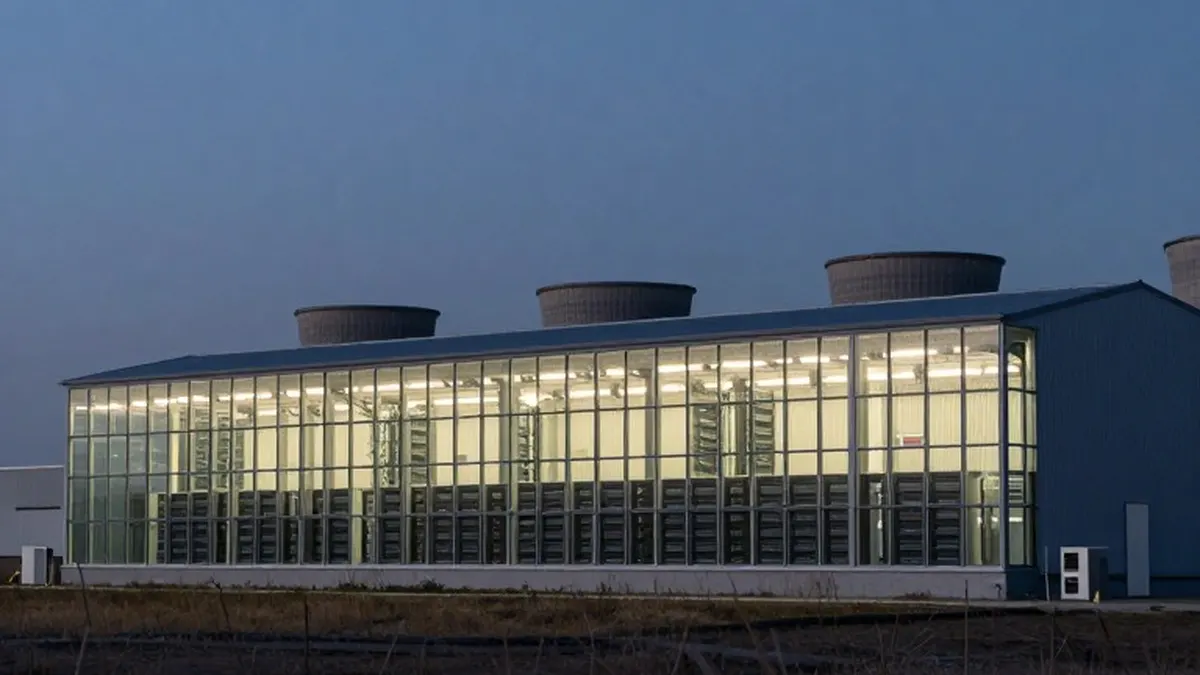
Voters across the United States have demonstrated a clear preference for limiting the rapid expansion of artificial intelligence infrastructure, with results from Tuesday's elections showing a decisive trend. At least 44 of 47 proposed measures designed to restrict data center construction were approved by the public. These proposals ranged from temporary moratoriums to outright bans, signaling a growing backlash against the industry's footprint. Although a few results were still pending at the time of reporting, the outcome suggests a lasting shift in how communities view these facilities.
The political implications of this trend are already becoming apparent in state leadership races. In Texas, Democratic gubernatorial candidate Gina Hinojosa defeated Republican incumbent Greg Abbott. Hinojosa campaigned on a platform that included stricter regulation of data centers, promising to halt new construction until appropriate safeguards are established. She noted that the industry has expanded into rural areas without sufficient rules to protect local interests. Hinojosa emphasized the need to pause current activities to ensure these protections are in place before further development proceeds.
Texas has emerged as a major hub for data center capacity, accounting for an estimated 25% to 30% of the infrastructure expected to be operational by 2030. The state currently hosts 169 active data centers, with 118 under construction and more than 500 planned for the future. Major technology firms, including Meta, Google, and Microsoft, have announced significant projects in the region over the past two years. Despite the absence of a specific ballot measure on the state's agenda, the election results reflect a broader national sentiment that is likely to influence future policy.
Similar moves are expected in Georgia, where the incoming Democratic governor signaled her intent to issue an executive order pausing new data center construction upon taking office in January. She cited the role of state incentives in driving the current build-out and indicated that her administration would review existing agreements to ensure they align with community interests. This approach mirrors the strategy adopted by other candidates who made data center regulation a central theme of their campaigns.
The market reaction to these political shifts has been swift and severe. Stock prices experienced a sharp decline on Thursday, causing the tech-heavy Nasdaq index to enter a bear market and erasing post-election gains. By Friday morning, stocks showed signs of recovery after the previous day's plunge. Analysts are watching closely to determine if this shock will derail the ongoing AI equity boom. Joe Maher of Capital Economics suggested that the recent developments strengthen the view that the current market cycle is nearing its end, presenting a clear headwind for firms directly involved in the infrastructure build-out.
In response to the backlash, OpenAI announced new initiatives on Thursday to build trust with local communities. The company stated it would stop using controversial nondisclosure agreements with public officials and would provide residents with access to construction plans. This move is part of a broader effort to address public concerns and integrate local stakeholders into the development process more effectively.
The AI sector has previously driven the stock market to record highs, meaning that reversals in this sector could impact millions of Americans' retirement savings and consumer spending. Consumer spending accounts for roughly two-thirds of U.S. economic activity, making the stability of this sector crucial for the broader economy. Nigel Green, CEO of deVere Group, noted in a research note that while investors are rightly asking about returns, dumping an entire sector may be an overreaction. He observed that tech stocks had become the most crowded trade globally, making the market vulnerable to rapid exits.
President Trump expressed strong support for the industry, stating he is fully in favor of AI and plans to collaborate with states that wish to leverage it for economic growth. He described the technology as a source of wealth, suggesting that only poor leadership would reject the riches it brings. His comments highlight the potential tension between federal enthusiasm for AI and local resistance to its physical infrastructure.
CBS News business analyst Jill Schlesinger explained that the initial post-election gains were driven by general election results, while the subsequent losses reflected investors digesting the specific impact of the data center ballot measures. She noted that the anxiety over AI limitations affects not just AI companies, but also those building data centers, providing chips, and financing the sector. This interconnectedness has caused the entire tech index to drop, with effects spilling over into other market indices.
Schlesinger warned that investors should expect continued volatility. She described the current situation as a repudiation of the AI narrative, pointing out that while the technology is transformative, it is not yet profitable. The heavy reliance on borrowed money and inter-company investments has raised questions about the true value of these firms. She advised retirement investors to stick to their long-term plans and avoid making impulsive decisions based on short-term market swings.
Originally published by News Media House
More News · National news · Report a business · Got a Story?