US skips UN human rights review after Trump administration exit
The United States became the first country to fully ignore a scheduled universal periodic review by the UN Human Rights Council on Tuesday.
By Robert Ward ·
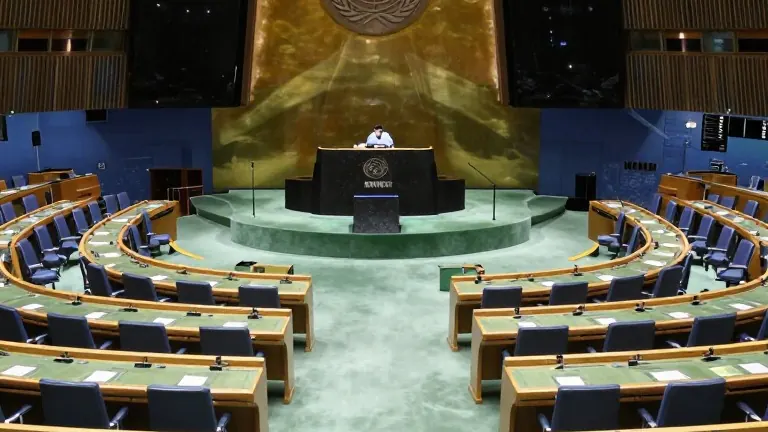
The United States did not send a delegation to the United Nations Human Rights Council in Geneva on Tuesday. This marks the first time a member state has fully skipped a scheduled universal periodic review since the council was established 20 years ago.
The review process examines the human rights records of all 193 UN member states roughly every four to five years. The United States had originally been scheduled for its review in November 2025. Officials delayed the session until Tuesday in hopes that Washington would change its mind. The administration did not.
The Trump administration formally withdrew the United States from the council last year. The government cited an alleged anti-US and anti-Israel bias. It also claimed the body failed to uphold the values it promotes. The administration specifically pointed to the council's failure to condemn other major human rights violators.
A State Department spokesperson sent an email to The Associated Press stating that the agency gives no credibility to the body. The spokesperson called the council irredeemable and said it makes a mockery of human rights by pushing anti-American rhetoric. The email noted that the administration believes the council consistently fails to uphold its own stated values.
Critics argue the walkout sends a strong message to other nations. Jamil Dakwar, director of the ACLU's human rights program, spoke to reporters in Geneva on Monday. He said the administration is telling the world it does not care if its rights record is reviewed. Dakwar stated the government intends to continue violating human rights unabashed.
The ACLU and its allies have asked the UN human rights chief to present an update on US rights conditions early next year. This move aims to keep the US rights record under scrutiny despite the absence of a formal review. Civil society groups are pushing for this alternative assessment to maintain public awareness.
Eric Tistounet, a visiting professor at the Geneva Graduate Institute and the council's first secretary, warned that the US absence could hurt the credibility of the review system. Tistounet noted that the US is the predominant global power and has always claimed to adhere to human rights norms. He said that when this power does not show up and does not justify its absence, the council is in big trouble.
The council stated that the review process requires the participation of the country in question. If no national representatives are present, the review cannot proceed. The session will now conclude without a formal US presentation or the exchange of recommendations from other national envoys.