Tulane Museum Unveils First Louisiana Exhibit of Lynda Benglis' Career
New show pairs the artist's 1969 'Contraband' with early Newcomb College works, tracing how Gulf Coast roots shaped her sculptures.
By Ella Cox ·
Tulane University’s Newcomb Art Museum will open a major retrospective of Lynda Benglis’ work on January 21, 2027. The exhibition, titled “Lynda Benglis: Elemental,” runs through May 20, 2027. It marks the first time the artist’s landmark pieces have been displayed in her home state of Louisiana.
Benglis, a 1964 graduate of Newcomb College, was born in Lake Charles, Louisiana. The show features nearly 40 works created between 1961 and 2024. The collection spans six decades of her career and includes pieces from her personal studios in New York and Santa Fe, New Mexico.
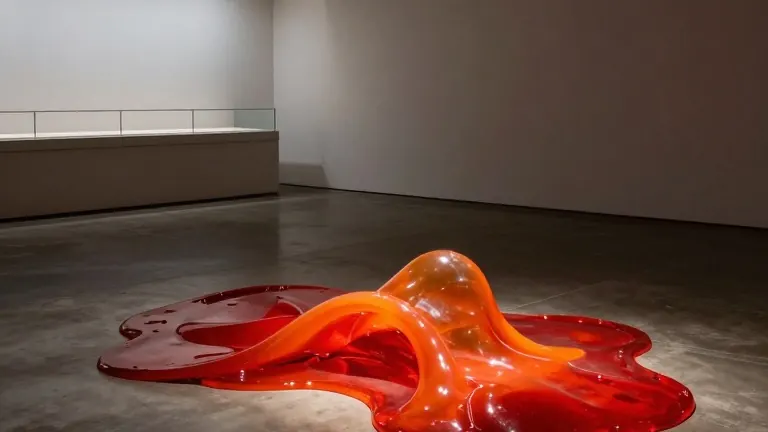
The centerpiece is “Contraband,” a 1969 sculpture made from fluorescent-pigmented latex. The Whitney Museum of American Art in New York City is lending the piece. It has never before been shown in Louisiana. The work is a monumental “fallen painting” that defines Benglis’ early experimental phase.
Maurita N. Poole, the museum’s executive director and chief curator, said the show coincides with the 30th anniversary of the museum’s location in the Woldenberg Art Center. She stated that the institution is reflecting on its historical role in forming artists. “‘Lynda Benglis: Elemental’ offers an extraordinary opportunity to explore that legacy while also examining how New Orleans and the Gulf South helped shape one of the most influential artists of our time,” Poole said.
The exhibition traces how Benglis’ family background influenced her practice. Her mother had roots in Mississippi, while her father had connections to Southwest Louisiana and Greece. Curator Laura Blereau, who organized the show, said the exhibit looks closely at the formative years that turned a young woman from Lake Charles into a pioneering sculptor. “Presenting this story at the Newcomb Art Museum is especially meaningful because Benglis began her artistic journey here, in this very building,” Blereau said.
Benglis has described New Orleans as a place of indulgence that aided her artistic development. “Being in New Orleans is like a dream. I would have seen things differently at another school,” she said. She noted that the city encouraged the creativity that became central to her career.
The show documents her use of diverse materials, including latex, video, paper, metal, glass, and ceramics. Recent archival photographs and documents provide context for her early years. The museum also displays works and books by artists who taught Benglis in the early 1960s, including Hal Carney, Pat Trivigno, Ida Kohlmeyer, and printmaker Jim Steg. Benglis recalled that these teachers were “real artists” who encouraged her to create.
A catalog for the exhibition will be published by Dancing Foxes Press in 2027. It will include essays by Blereau and art historians Adrian Anagnost, Alex Landry, and Tina Oldknow. Benglis has received a Guggenheim Fellowship and two grants from the National Endowment for the Arts.
Her work is held in major public collections, including the Museum of Modern Art and the Guggenheim in New York, the Tate in London, and the National Gallery of Art in Washington, D.C. She also created “The Wave of the World” for the 1984 World’s Fair in New Orleans. That sculpture now stands in the Big Lake at New Orleans City Park. Additional works by Benglis appear along the Poydras Street corridor and in the collections of the New Orleans Museum of Art and the Ogden Museum of Southern Art.