Texas builders fence in job sites to stop ICE agents from entering without warrants
Construction owners in San Juan and Brownsville are installing barriers to assert private property rights as they report increased detentions and fear among their workforce.
By Robert Ward ·
Construction industry leaders in southern Texas report that they are modifying their job sites to stop federal immigration agents from entering the premises without a judicial warrant.
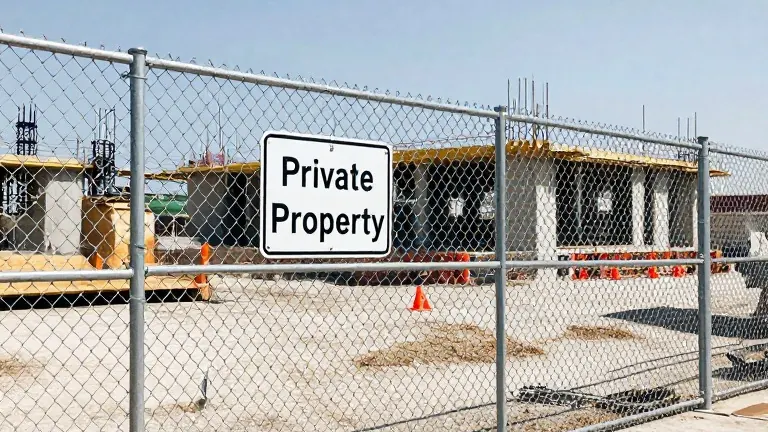
Business owners are installing wire fencing and posting signs that designate the land as private property. These physical barriers serve as a notice to law enforcement that entry is not automatic. The goal is to prevent agents from walking onto active construction sites during enforcement operations.
Benigno Meléndez, a construction business owner in San Juan, Texas, explained the logic behind the new fencing. He stated that without a fence and a sign reading 'no entry,' authorities do not consider the space private. Meléndez noted that the measures are designed to stop agents from entering sites without a judge's order.
He questioned the willingness of workers to show up to jobs if they fear being interrogated or physically threatened. Meléndez referenced a specific incident in Brownsville where an ICE agent pointed a gun and a pepper spray cylinder at a worker. The worker had identified himself as a United States citizen during that encounter.
Yahaira Martínez, a construction company owner, said the fear is not limited to workers without immigration documents. Employees who are legally permitted to work in the United States also express hesitation about going to work. Martínez said the general atmosphere surrounding immigration enforcement is causing staff to stay home regardless of their legal status.
N+ Univision documented the changes in San Juan, showing how builders use these fences to shield their properties from migration operations. The construction sector is not the only one feeling the pressure. Restaurant owners and hospital administrators report similar issues with staff availability. Agricultural landowners also face challenges because their workforces rely heavily on immigrant labor.
Mario Guerrero, the CEO of the South Texas Builders Association, said federal guidance pushed builders to completely enclose their properties. He quoted the government's position that a property is not private if it is not closed off on the front, back, and sides. Guerrero argued that even a house does not qualify as private without such boundaries.
Builders have asked the federal government for help with what they describe as indiscriminate arrests. The industry faces a double burden: losing current employees to detentions and struggling to find qualified replacements. The shortage of skilled labor makes the situation more difficult for firms trying to maintain their project schedules.
Ronnie Cavazos, president of the South Texas Builders Association, criticized the current approach to immigration law enforcement. He argued that the system needs structural repairs before strict enforcement begins. Cavazos said the current method is reversed, with laws being enforced on a broken system rather than fixing the system first.
Industry leaders view the fences and signs as one of the few practical steps available to protect their businesses. They aim to reduce uncertainty for their workers and limit the reach of federal agents on private land. The construction, restaurant, and hospital sectors continue to operate under these new physical and legal constraints.
Source: KUVN-DT