Drone strikes become leading killer of civilians in Sudan's civil war
Unmanned aircraft now account for the vast majority of civilian deaths in Sudan, with mass casualty attacks on markets and transport hubs reshaping the conflict.
By News Media House Staff ·
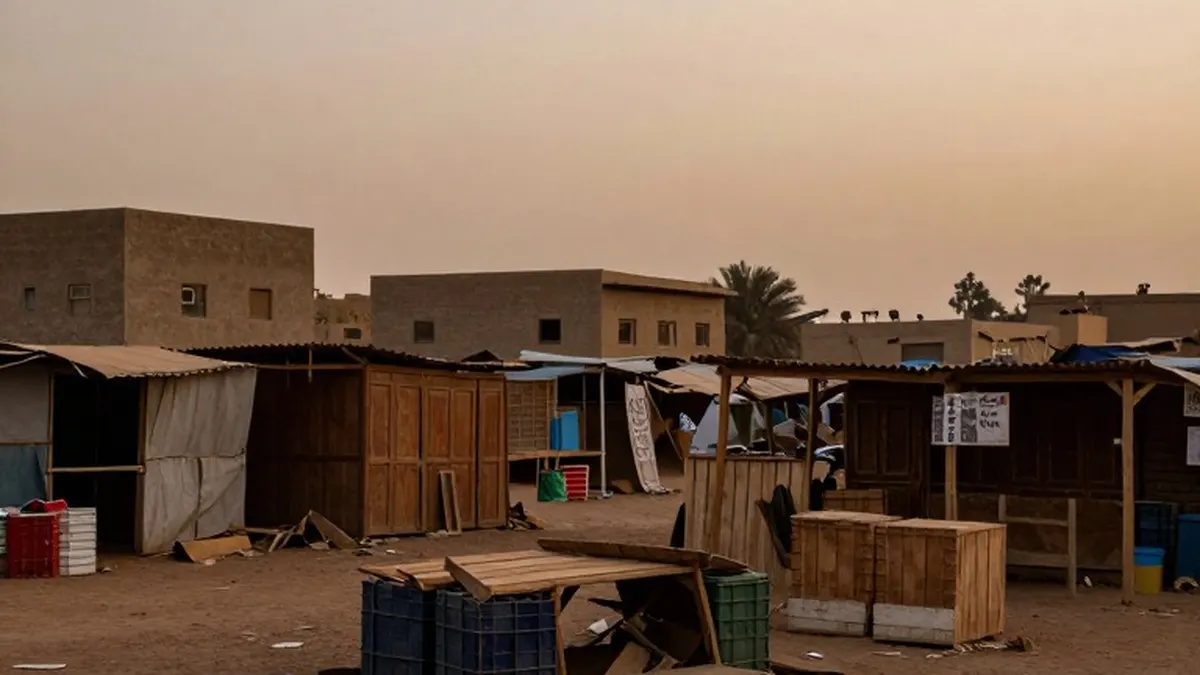
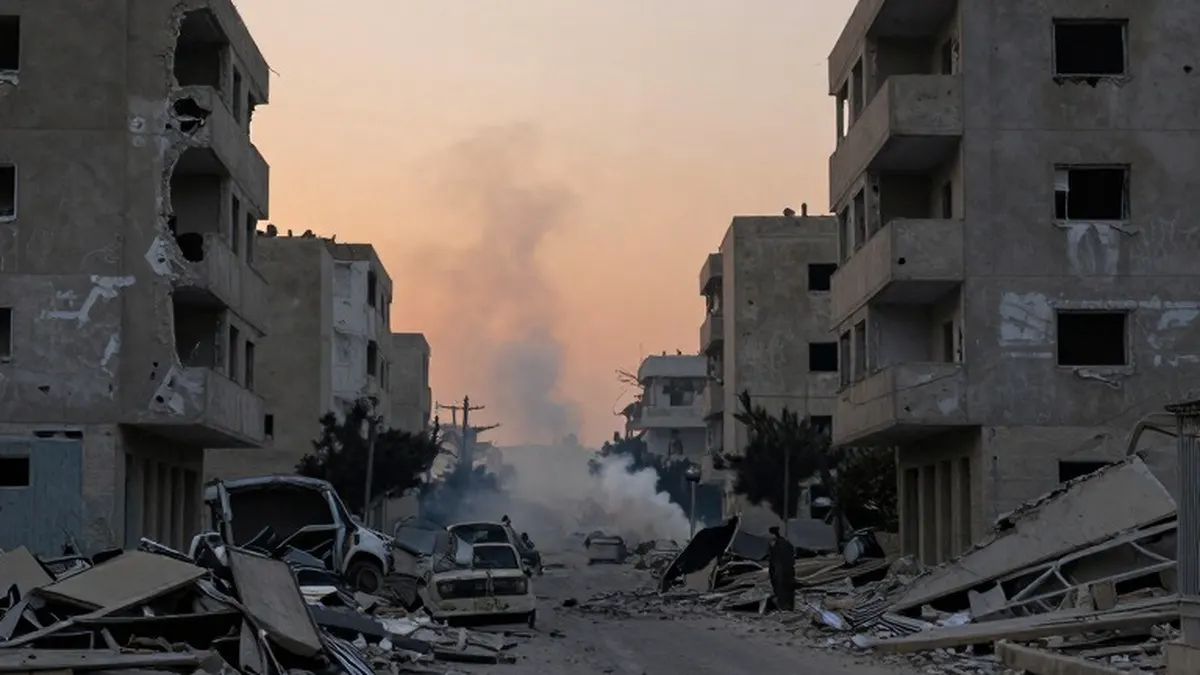
A double strike on a crowded transport hub near a market in Al-Dibab, in Sudan's West Kordofan state, killed at least 139 people on the evening of 18 October. Hundreds had gathered to board trucks home when the first drone hit, and a second struck the same site ten minutes later in what is known as a double-tap attack, a tactic that maximises casualties by hitting emergency responders, volunteers and bystanders.
Eight days later, a drone hit a busy market in Nyala, the capital of South Darfur. Emergency Lawyers, a rights group tracking violence in Sudan, put the death toll at 103. "I lost my 19-year-old son," a Nyala resident told Agence France-Presse. "We buried him alongside more than 70 bodies in a single site."
The two attacks form part of a relentless series of mass casualty drone strikes in recent months. According to the UN, drones killed at least 306 people and injured hundreds more in the first three weeks of October alone, making unmanned aerial vehicles the leading cause of civilian deaths by far in the civil war that erupted in Khartoum in April 2023 between the armed forces and the paramilitary Rapid Support Forces. Estimates of the overall death toll range from 150,000 to more than 400,000, with millions displaced and vast numbers facing acute food insecurity.
The character of the fighting has shifted over 42 months. The army initially relied on fighter jets, attack helicopters, tanks and long-range artillery, while the RSF depended on pick-ups mounted with machine guns. The Centre for Information Resilience, which conducts open-source investigations, first documented weaponised drones in the conflict in July 2023. "Now you hear about a drone strike nearly every day," a Sudan investigator at the organisation said.
A CIR investigation published last month identified 21 unique UAV models used in Sudan since the war began: 10 flown by the RSF and aligned forces, manufactured in Belarus, China and Russia, and five used by the army and aligned forces, made in Iran, Sudan and Turkey. While small FPV quadcopters used as kamikaze drones were common earlier in the war, both sides are increasingly turning to larger, very long-range aircraft carrying precision-guided munitions.
Ali Mahmoud Ali, a Sudan analyst at the conflict monitoring group Acled, said the army generally uses drones to strike RSF bases and sever fuel and supply routes, while the militia often hits power stations, water stations, airports and hospitals "to send the message" that it can destabilise army-held regions. "The key weapon in peripheral warfare is the drone," he said. Between January and April this year, drone strikes accounted for at least 880 civilian deaths, more than 80 percent of all conflict-related civilian deaths in that period, according to the UN Human Rights Office. CIR data shows the most-struck targets are commercial spaces such as markets, residential areas and military sites.
Civilians describe living under constant threat. Ali Salih, a resident of El Obeid in North Kordofan whose name has been changed for his safety, said the most recent strike on the city killed three people. "Although we try to continue our daily lives, the repeated attacks make things difficult," he said. In early November, Denise Brown, the UN resident and humanitarian coordinator in Sudan, said the intensifying attacks were disrupting electricity, water and fuel supplies and hampering aid delivery. "People who need life-saving dialysis can't get it. Women are giving birth with no lights in the hospital," she said. James Elder, a Unicef spokesperson, said on Tuesday that two-thirds of child injuries and deaths in Sudan this year were caused by drones. "They are bringing the war to places that were once safe," he said.
The effects extend beyond Sudan's borders. On 19 October, a strike allegedly targeting an RSF fuel depot in Abyei, a region disputed by Sudan and South Sudan, killed at least 153 people when it hit a market. Sudan's foreign ministry said late last month that drones used in RSF attacks on electricity infrastructure were supplied by the United Arab Emirates and launched from Ethiopia, allegations both countries deny. Researchers say drones have also "muddied the water of attribution," letting combatants strike across vast distances without warning.
Nathaniel Raymond, executive director of the Humanitarian Research Lab at the Yale School of Public Health, said the RSF's mass killing in El Fasher last year, which the UN said bore "hallmarks of genocide," was made technically possible by drones. "What we are seeing here is the coming attraction of the future," he said. "What is happening in Sudan this year with drones will redefine the next decade-plus of war more than the tank and the biplane did in the first world war."
Originally published by News Media House