Swanson's TV dinner credit shifts from salesman to female food scientists
Historians argue that while Gerry Thomas is credited with the 1953 idea, women like bacteriologist Betty Cronin performed the technical work that made the product viable.
By Ella Cox ·
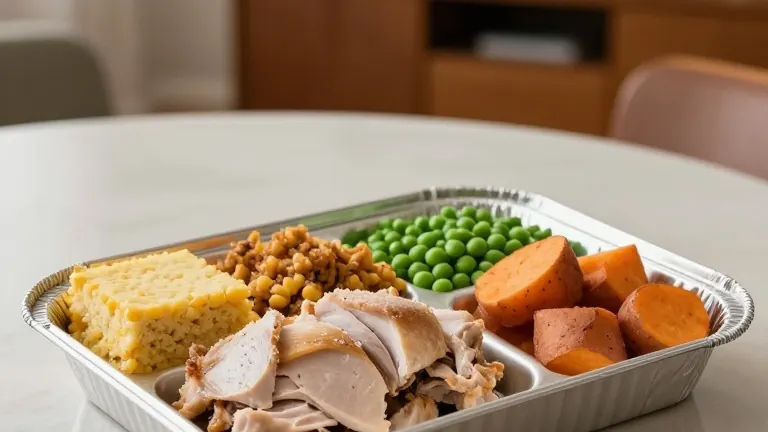
The standard origin story of the Swanson TV dinner credits company salesman Gerry Thomas, who allegedly conceived the product after seeing a tray meal on an airplane and remembering his military mess kit. However, food historians question whether a salesman possessed the technical knowledge to solve the complex problem of freezing a multi-course meal that would reheat evenly. The conflict lies in the gap between the myth of individual male ingenuity and the unseen labor of women in mid-century test kitchens.
In 1953, Swanson found itself with 260 tons of frozen turkey remaining on refrigerated railcars because the company had overestimated holiday sales. According to the Smithsonian's National Museum of American History, where a TV dinner tray is displayed opposite Julia Child’s kitchen, curator Megan Elias notes that men typically held creative marketing roles while women in lab coats handled the actual food science. Elias argues that the origin story is too tidy, suggesting that a generation of home economists and food industry workers provided the necessary expertise to turn surplus meat into a stable product.
Culinary historian Laura Shapiro agrees that the narrative of a lone salesman is plausible but likely incomplete. She points out that post-World War II machinery existed for processing food, but the specific challenge of making frozen dinners taste good was a technical hurdle. Shapiro notes that Swanson leveraged its status as a national company to launch a massive advertising campaign called Operation Smash, ensuring the product reached every household. The name itself was designed to project an image of modern convenience, aligning with the spread of television sets in American homes.
The first TV dinner sold in 1954 for 98 cents and contained turkey, cornbread, stuffing, peas, and sweet potatoes. While Thomas received the public credit, the technical work was performed by staff like Betty Cronin, a bacteriologist at Swanson. Cronin’s obituary offers few details, listing a companion of 50 years and no children, but she was the one who ensured the food was safe and that the components cooked simultaneously. In a 1989 NPR interview, Cronin confirmed that the concept was to create a dinner people could eat while watching television, acknowledging the role of the medium in the product’s design.
The product became a dominant force in the American diet, with consumers purchasing billions of dollars worth of dinners over the decades. The efficiency of the TV dinner contrasted with the traditional Thanksgiving practice of communal cooking and eating. Both Elias and Shapiro found it ironic that a product defined by speed and efficiency became a cultural icon of a holiday centered on togetherness. The legacy now involves a correction to the historical record, moving the focus from a single salesman to the collective effort of the women who engineered the meal.
More Business · Consumer Alerts · Report a business · Got a Story?