Storms disrupt Thanksgiving travel; Macy's parade pushed to Saturday
High winds and flooding delayed hundreds of flights and forced New York City to postpone its centennial parade, affecting millions of holiday travelers.
By Ella Cox ·
Severe weather disrupted Thanksgiving travel plans across the United States on Thursday, forcing airport delays and the postponement of New York City's Macy's Thanksgiving Day Parade.
AAA estimated that 81.5 million Americans would travel between Thursday and Monday for the holiday. By early morning on Thursday, hundreds of flights had been cancelled or delayed, with the heaviest impact felt on the East Coast. Most travelers planned to drive, but meteorologists warned that reduced visibility from the storm would complicate road conditions. Snow was also forecast for parts of the Midwest.
The National Weather Service Weather Prediction Center identified the East Coast system as the primary threat. Richard Bann, a meteorologist with the agency, described the event as a multi-hazard storm that would become more organized as the day progressed. He predicted considerable wind, heavy rain, and coastal flooding. Matthew Cappucci, a meteorologist for The Washington Post and MyRadar, noted that the storm's intensity was unusual for late November, stating that such conditions are typically expected in deep winter.
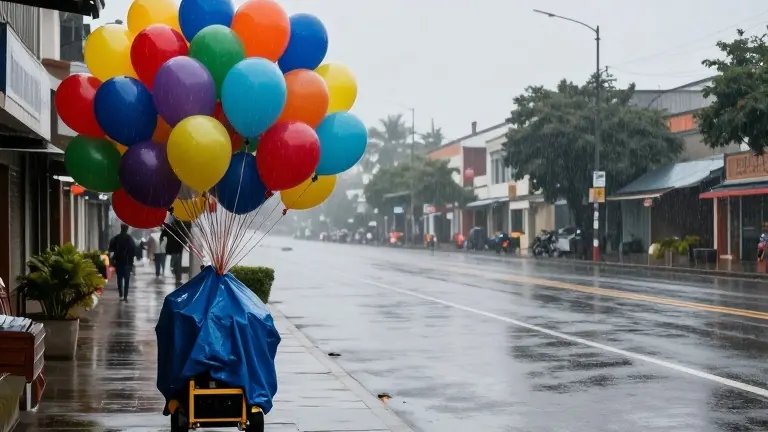
In New York City, Mayor Zohran Mamdani announced on Wednesday that the Macy's Thanksgiving Day Parade would be delayed to Saturday. Organizers had already begun inflating the parade balloons when the decision was made. The event marks the 100th iteration of the parade, and this is the first time in its history that it has been postponed rather than cancelled. Mamdani cited sustained winds of 30 to 40 mph and gusts up to 65 mph as the reason for the change. He also warned of potential floods and flash floods.
The parade features more than 11,000 participants and volunteers, including thousands of high school marching band members and hundreds of balloon handlers. In recent years, up to 2 million spectators have watched the procession. Mamdani told reporters that safety remained the top priority, acknowledging that the change would cause inconvenience for residents who have watched the event for generations. He urged New Yorkers to prepare for extreme weather conditions.
Weather impacts were not limited to the East Coast. On the West Coast, high tides flooded streets along California shorelines and damaged a section of Pacifica Pier. Authorities issued evacuation warnings in affected areas. In Philadelphia, organizers grounded all balloons for their local parade due to strong winds. The East Coast storm is expected to clear by Saturday, which should allow for easier weekend travel for those returning home.
The storm system originated in the southeast and moved into New England, bringing strong winds and heavy rain to the region. Authorities on the East Coast advised people to stay home as the weather system passed through. The combination of high tides on the West Coast and the low-pressure system on the East Coast created simultaneous disruptions for travelers in both regions.