St. Louis fire truck loses nozzle mid-fire
A reserve aerial ladder truck’s water assembly detached during a second-alarm fire in North City, leaving one firefighter suspended by his safety harness.
By Ibrahim Howard ·
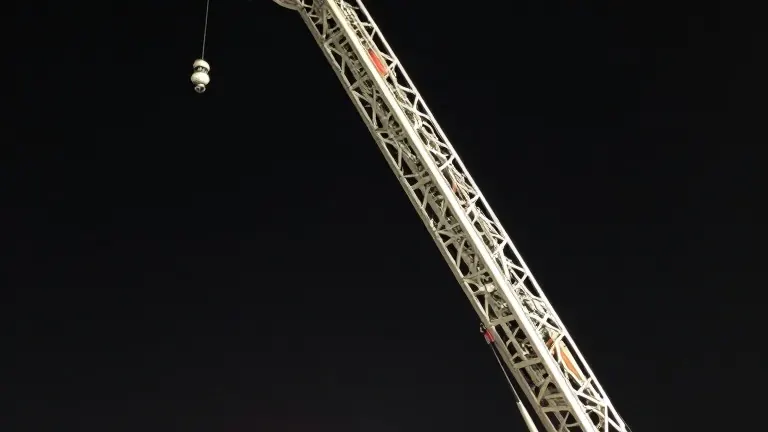
Firefighters in St. Louis responded to a second-alarm blaze at a vacant church on Kingshighway and Terry in North City Saturday night. The incident triggered an immediate internal investigation after a water-carrying pipe and nozzle assembly detached from the side of an aerial ladder truck while a firefighter operated the stream from the top.
Fire Chief Dennis Jenkerson stated that no personnel were injured. The crew was riding on Hook and Ladder 6, a 2009 Smeal aerial truck from the department’s reserve fleet. The on-scene commander requested the aerial waterway as the fire intensity increased. The crew raised the ladder, positioned the outriggers, and connected the water supply. As the firefighter at the top began flowing water, he observed the assembly shifting away from the right side of the truck. He called for an immediate shutdown. The remaining structure holding the master stream nozzle then fell away from the vehicle.
The firefighter was secured by a safety harness, standard equipment for operations at heights up to 125 feet. Jenkerson noted that the harness kept the worker stable during the detachment. The department recently completed a third-party inspection of the truck, which verifies structural integrity, outriggers, and the mainframe according to NFPA standards. The inspection process includes X-rays to detect cracks and rust. The department inspects its aerial ladders on a rolling basis, one unit at a time.
Jenkerson said the department’s shop and the deputy chief of equipment photographed the scene. A third-party investigator is currently examining the truck. Preliminary checks of the ladder itself found no rust or breaks in the area where the failure occurred. Investigators are determining whether bolts sheared or were loose when the assembly broke free. The investigation may take one to two months. It will assess both equipment condition and operational setup procedures.
The failed truck is out of service. The department has another reserve unit available for deployment. Shop staff have inspected all 125-foot aerial ladders in the fleet since the incident. They have not found issues with the corresponding assemblies or bolts on the other units.
This type of equipment failure is rare in the United States. The National Institute for Occupational Safety and Health issued a safety advisory in 2008 after a fatality. A report from that time documented 10 occurrences of similar failures. Jenkerson, who has experienced a platform malfunction at 75 feet early in his career, emphasized that mechanical equipment does fail despite routine testing and training.