Mediterranean Dialogues in Naples focus on Middle East stability
Regional and international leaders gathered in Naples to discuss security cooperation, maritime threats, and the path to stability in the Middle East.
By News Media House Staff ·
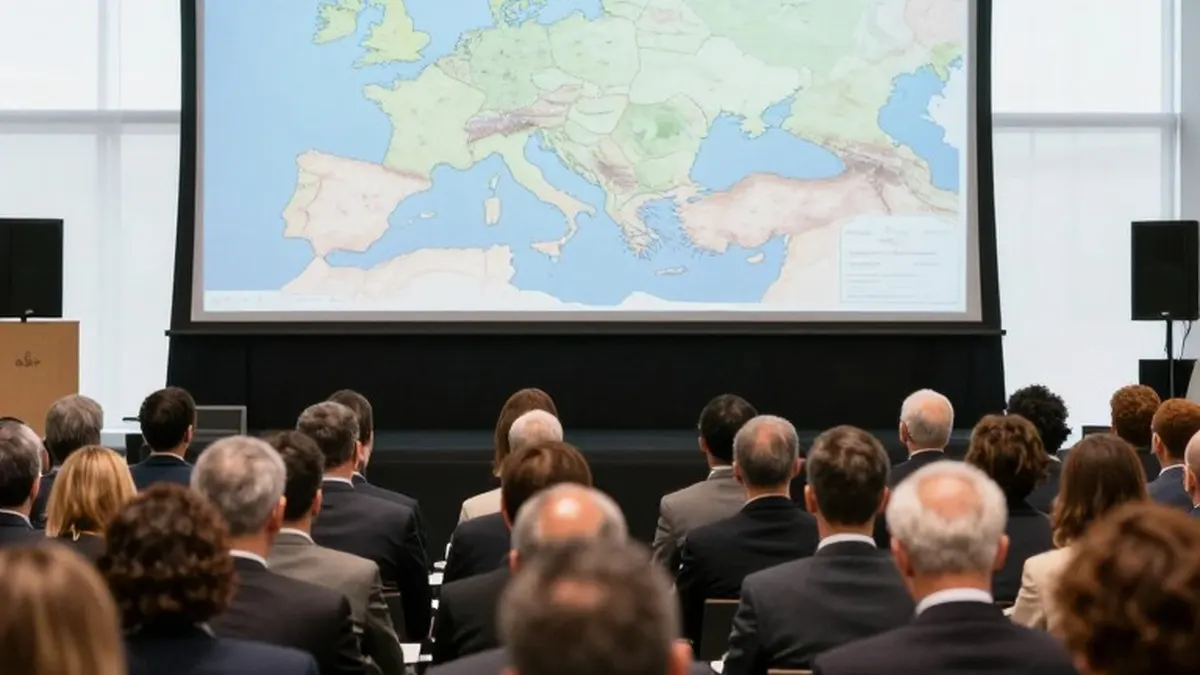
The 12th edition of the Mediterranean Dialogues concluded in Naples on November 21, bringing together a diverse group of regional and international leaders. The conference was organized by Italy’s Ministry of Foreign Affairs and International Cooperation in partnership with the Institute for International Political Studies. Delegates used the forum to address pressing issues in the Middle East, with a specific focus on security cooperation, maritime challenges, and the broader prospects for regional stability.
A central theme of the discussions was the necessity of dialogue to ensure long-term peace. Manal Radwan, the Saudi Advisor and Special Envoy to the Foreign Minister, emphasized that national security is inextricably linked to the stability of neighboring states, including Iran. She argued for the creation of mutual security guarantees that foster interdependence rather than simply ending one conflict only to see another cycle begin.
Turkey’s role in the region was also a key topic. Çağrı Erhan, the Chief Advisor to the Turkish President, clarified that the Mecca Agreement is designed to complement, not replace, Turkey’s existing alliances. He noted that the agreement aims to reinforce deterrence capabilities among the participating nations without identifying any specific regional enemy, leaving the door open for other powers to join.
Maritime security emerged as a critical area of concern, particularly regarding the Red Sea and the Arabian Gulf. Walid A. Al-Khuraiji, Saudi Vice Minister of Foreign Affairs, stated that while geography shapes these challenges, securing these vital trade routes is a shared responsibility of the entire international community. He highlighted that the global economy depends on the safe passage of trade through these waters.
Representatives from nations currently navigating complex political transitions stressed the importance of their inclusion in decision-making processes. Afrah Al-Zouba, Yemen's Minister of Foreign Affairs, insisted that Yemen must have a seat at the table whenever its future is discussed. Similarly, Varsen Aghabekian Shahin, the Palestinian Minister of Foreign Affairs, called for a renewed focus on international law, noting that the UN plays a crucial role in reclaiming legal standards from the hegemony of a few countries.
Qatar’s representative, Majed Al Ansari, outlined a strategy of deepening ties with the United States while diversifying global relationships. He argued that Gulf states must maximize their capabilities through cooperation rather than closing their borders to unfolding regional events. This sentiment was echoed by experts who noted that the Strait of Hormuz grants Iran significant geographic leverage that cannot be resolved through military force alone.
Panelists also addressed the specific humanitarian and political contexts of Lebanon and Syria. Imran Riza, the UN Deputy Special Coordinator for Lebanon, urged the international community to move beyond expecting resilience from the Lebanese people and to link humanitarian aid with long-term recovery. In Syria, Claudio Cordone, the UN Deputy Special Envoy, emphasized the need for inclusive justice and institutional development to ensure that all Syrians feel a sense of belonging in the new state.
The conference concluded with a broader reflection on the nature of regional conflicts. Aba Abdel Latif, Executive Director of the Egyptian Center for Economic Studies, reminded attendees that problems in the Red Sea are driven by human conflict rather than natural forces. She stressed that the cost of these disputes is borne by everyone, making global collaboration essential for finding solutions.
Archbishop Paul Richard Gallagher of the Holy See offered a perspective on Lebanon’s social structure, describing its religious and ethnic diversity as a source of strength rather than vulnerability. He suggested that these communities form the building blocks of a strong future for the country. The event served as a platform for these varied voices to converge on the shared goal of a more stable and cooperative Middle East.
Originally published by News Media House