Prison Tech: FCC Authorizes State Prisons to Jam Contraband Cellphones
The commission voted unanimously to allow signal blocking in state facilities, a move driven by officials who cite 25,000 devices seized annually and a 2011 riot in South Carolina.
By Ibrahim Howard ·
The Federal Communications Commission voted unanimously on Thursday to permit state prisons across the United States to jam the signals of cellphones smuggled by inmates. The decision resolves a long-standing dispute between prison officials and regulators over how to stop the flow of unauthorized devices into correctional facilities.
State prison directors have argued for the right to jam for years. They contend that blocking these signals will disrupt drug trafficking, coordinate prison riots, and prevent inmates from ordering violent acts against staff. While federal prisons have been able to use this technology for some time, state facilities required FCC permission due to a nearly century-old communications law.
The new rule does not force prisons to use the technology. Instead, facilities must conduct multiple tests to ensure that cell signals outside the prison walls remain unaffected. Prisons are also required to notify officials if they move their jamming devices. Commissioner Anna Gomez, the sole Democrat on the panel, voted in favor of the measure but expressed concern about potential unintended consequences.
Gomez warned that improperly calibrated jamming zones could accidentally disrupt home security systems or block emergency response calls. "I want to make sure that we don't harm public safety in the name of helping public safety," she said. She called the issue critical for the nation's correctional system.
FCC Chairman Brendan Carr spoke in favor of the measure after visiting South Carolina earlier in the week. South Carolina officials have been at the forefront of the effort to gain this permission. Carr said the technology is not a perfect solution but that it is time to stop denying the tool to state and local officials. "This itself is not going to be a silver bullet, but I think it’s time that we stop denying this tool to state and local officials," Carr said.
Carr cited the case of Robert Johnson, a South Carolina corrections officer who was nearly killed at his home in 2010. Officials said the attack was orchestrated by a prisoner using a contraband cellphone. Johnson, who has undergone nearly three dozen surgeries, described the phones as "weapons of mass destruction." He said, "No one should have to go through what I went through."
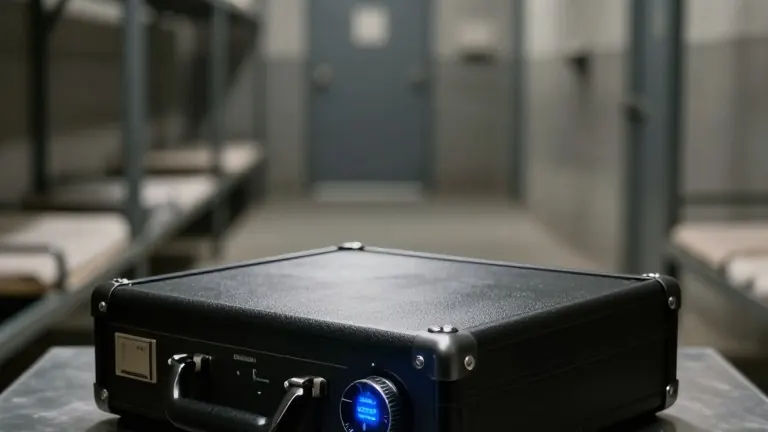
South Carolina served as the testing ground for this technology. In 2008, the FCC allowed a one-time test of a jamming system at a maximum-security prison. A briefcase-sized device emitted a frequency that shut down cellphones in an auditorium while leaving outside service intact. Another test occurred in 2019 at a different state prison. That test followed a 2018 riot in which seven South Carolina inmates died, an event officials attributed partly to gang coordination via illegal phones.
The FCC has held field hearings and meetings with various stakeholders to address the issue. Advocacy groups for inmates' rights have opposed the move, arguing that high fees for official prison phones drive inmates to use contraband devices to stay in touch with family. The telecommunications industry has also long argued against jamming, citing risks to legitimate communications.
Carr said he felt the industry's opposition was receding. He noted that many people do not perceive the danger posed by the devices, pointing to the statistic that 25,000 cellphones are confiscated in state and local prisons each year. He added, "We’re going to put a new tool in the hands of law enforcement, and it’s going to make a dramatic difference."