LSU researchers develop saliva test to detect football concussions
The study aims to replace subjective sideline assessments with objective protein markers to protect athletes from repeat head injuries.
By Robert Ward ·
Guillaume Spielmann, an associate professor of kinesiology at Louisiana State University, is leading a new effort to detect concussions through saliva. His team is collecting biological samples from student athletes to identify specific proteins that appear in the mouth after a head impact. The goal is to create a quick, non-invasive tool for sideline medical staff.
The research involves up to 60 LSU football players who will provide samples over the next several months. Spielmann works with colleagues from FMOL Health and the Pennington Biomedical Research Center. They are analyzing how brain injury changes the chemical composition of saliva. This approach offers a biological alternative to the current reliance on behavioral observations and cognitive tests.
Current concussion protocols at LSU rely on the C3Logix system and the Sport Concussion Assessment Tool 6. These methods use an iPad to track gait and stability while evaluators ask players a series of questions. Sports medicine director Micki Collins notes that every athlete has a baseline performance for comparison. However, she acknowledges that the process remains subjective. Players may hide their symptoms to stay in the game, which can lead to further injury if the diagnosis is missed.
Collins stated, "A lot of student athletes want to pretend that they're OK." She explained that without an objective marker, there is a risk of returning a player to play while they are still impaired. This is particularly difficult when symptoms are mild or overlap with normal post-exercise fatigue. Spielmann pointed out that questions about tiredness or muscle aches are often inconclusive because they are common after a football match.
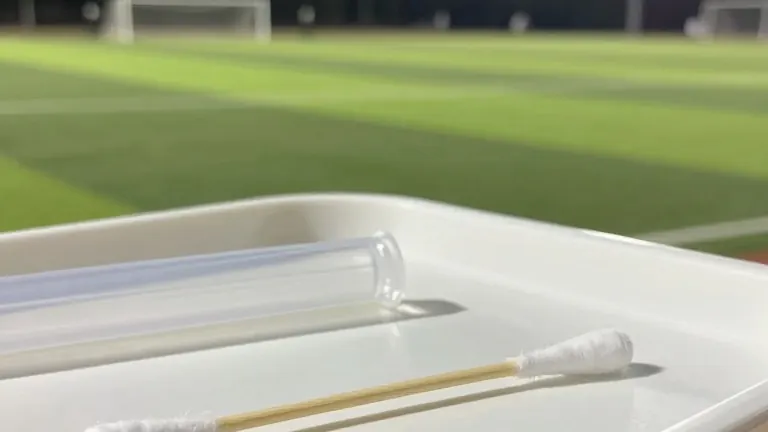
The new saliva test aims to solve this ambiguity by providing a clear biological signal. Spielmann initially focused on blood samples but found them difficult to collect quickly on a field. Saliva is easier to obtain. Players place a sterile cotton swab under their tongue for about three minutes. The swab is then processed in a lab to separate water from proteins and mucus. Spielmann noted that players prefer this method because it is not invasive.
The primary benefit of this test is the prevention of multiple concussions. Repeat head injuries can have long-term effects on brain function and mental health. Spielmann said, "There's always a concern that if you are not able to diagnose concussion optimally, it may put the athlete at risk for another concussion." He emphasized that even without a player passing out, the consequences for physical and mental health can be profound.
Data collection and analysis are expected to conclude around May 2027. Once the specific protein markers are identified, the researchers will work on developing a practical sideline test. The team aims to have a usable device ready within two years. This would allow medical staff to confirm a diagnosis in real-time during games.
The study represents a shift toward interdisciplinary science. Traditional concussion evaluation has focused on neurocognitive and biomechanical markers, often excluding physiologists. Spielmann described the previous approach as silo-based, where different scientific fields did not communicate effectively. By integrating physiology with sports medicine, the team hopes to create a more accurate diagnostic tool.
Beyond football, Spielmann plans to apply these findings to other groups at risk for concussions. This includes first responders and youth athletes. The research seeks to establish a standard for objective injury detection that can be used across various athletic and professional environments. The project is currently in the data gathering phase, with results pending until the lab work is complete.