Justice Department Defends Two-Year Kennedy Center Closure in Federal Court
The Justice Department is asking a federal judge to uphold a two-year closure of the Kennedy Center, arguing the move is necessary for cost-effective renovation and safety, while critics allege the decision is driven by political and financial motives.
By News Media House Staff ·
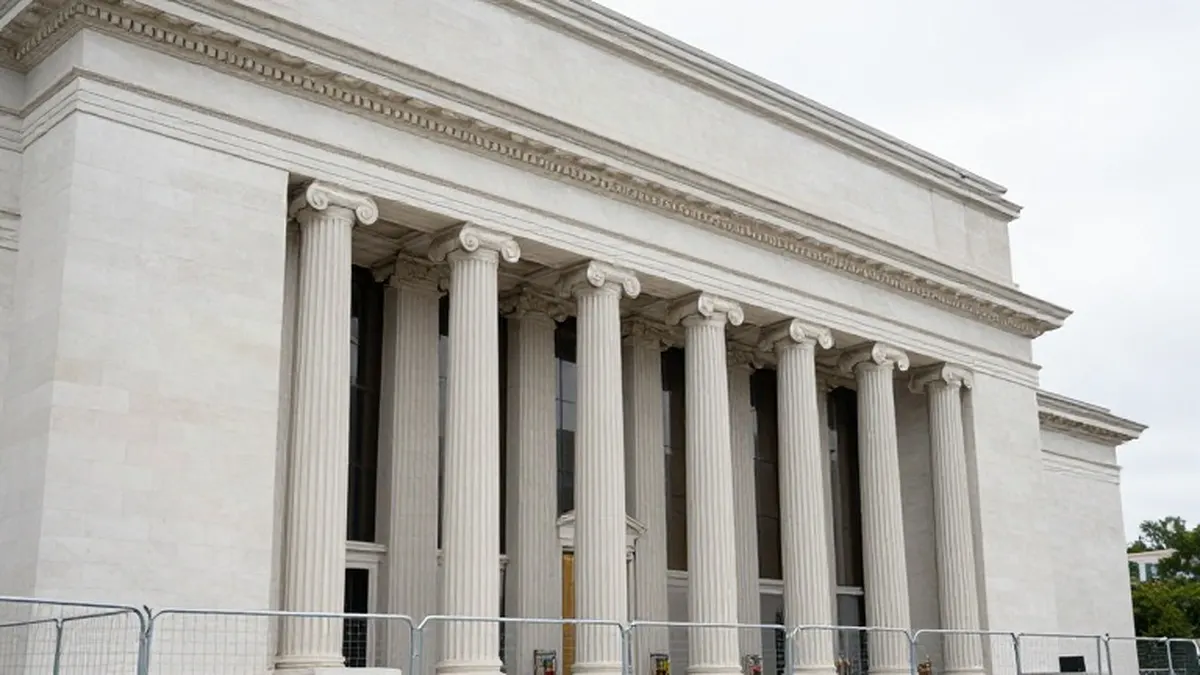
The Department of Justice defended the Kennedy Center board's decision to close the performing arts facility for a planned two-year renovation during a hearing in Washington, D.C. on Thursday. An attorney for the Justice Department's Civil Division argued that the board chose a nonphased approach to minimize both costs and operational disruptions.
Will Jankowski, the DOJ attorney, stated that the board's actions were reasonable and should stand. He noted that the board relied on independent evaluations from construction firms and real estate experts to make its determination. U.S. District Judge Christopher Cooper is currently considering a request from the administration to dissolve a preliminary injunction issued in May. That injunction had blocked the proposed closure while permitting necessary maintenance and repair work to continue.
The judge has not permanently barred the board from closing the center in the future. He specified that the board could make such a decision anew after independently balancing its obligations to the institution in a prudent manner. The board, selected by President Trump, voted in September to immediately close the main building for repairs. Officials cited dilapidated conditions that rendered the venue unsafe for visitors, leading to a temporary suspension of public access the following day.
Executive Director Matt Floca explained in court filings that the temporary closure was necessary due to acute risks to public safety caused by structural damage. DOJ lawyers maintained that this immediate action was distinct from the board's separate decision to pursue long-term renovations. In contrast, lawyers for Rep. Joyce Beatty (D-Ohio), an ex officio board member leading the opposition, argued that the closure was a cover for financial mismanagement and was predetermined to please the president.
Nathaniel Zelinsky, an attorney for Beatty, claimed that the closure was partly motivated by fiscal harms and embarrassment resulting from the facility's renaming. Several artistic partners ended their affiliations, and many performers canceled shows after the board voted in December to inscribe Trump's name on the building. The Washington Post reported in August that ticket sales and fundraising had plummeted in the months following that decision.
The legal dispute also involves a fight over records. Beatty's team seeks access to documents regarding Trump's involvement as board chair, while the White House has asserted executive privilege over some presidential communications. Judge Cooper ordered the Justice Department to submit copies of these documents by Friday for his private review. The judge appeared skeptical of arguments from both sides, questioning the practicality of keeping the venue open if no performances are scheduled.
Cooper asked whether maintaining an open but empty venue would cause further financial deterioration. The administration has not ruled out the possibility of demolishing the building if the president's name cannot be added and the closure is blocked. Trump was seen in mid-September reviewing a poster board that appeared to suggest demolition, and in a September interview with Time magazine, he stated he was not committing to anything but noted the administration should be recognized if he funded the project.
DOJ filings suggest that Trump's name is inextricably linked to fundraising efforts, a point Jankowski compared to common nonprofit practices. Zelinsky countered that the president is holding the center hostage. Judge Cooper pressed the DOJ on whether actions contrary to the trust, such as potentially clawing back donations, align with the institution's fidelity to its donors. The current closure has forced the upcoming Kennedy Center Honors ceremony to move to Capital One Arena for the first time in its history.
The ceremony scheduled for next month will honor playwright David Mamet, songwriter Paul Anka, composer David Foster, actor Andy Garcia, and singer Barbara Mandrell. Judge Cooper did not issue a ruling from the bench but indicated that he would decide the case as soon as possible.
Originally published by News Media House
More News · National news · Report a business · Got a Story?