Jensen Huang's Return Fails to Calm AI Markets, Prompting Strategic Buys
Despite a brief surge following Jensen Huang's reinstatement as Nvidia CEO, AI stocks faced renewed pressure, leading investors to capitalize on the weakness.
By News Media House Staff ·
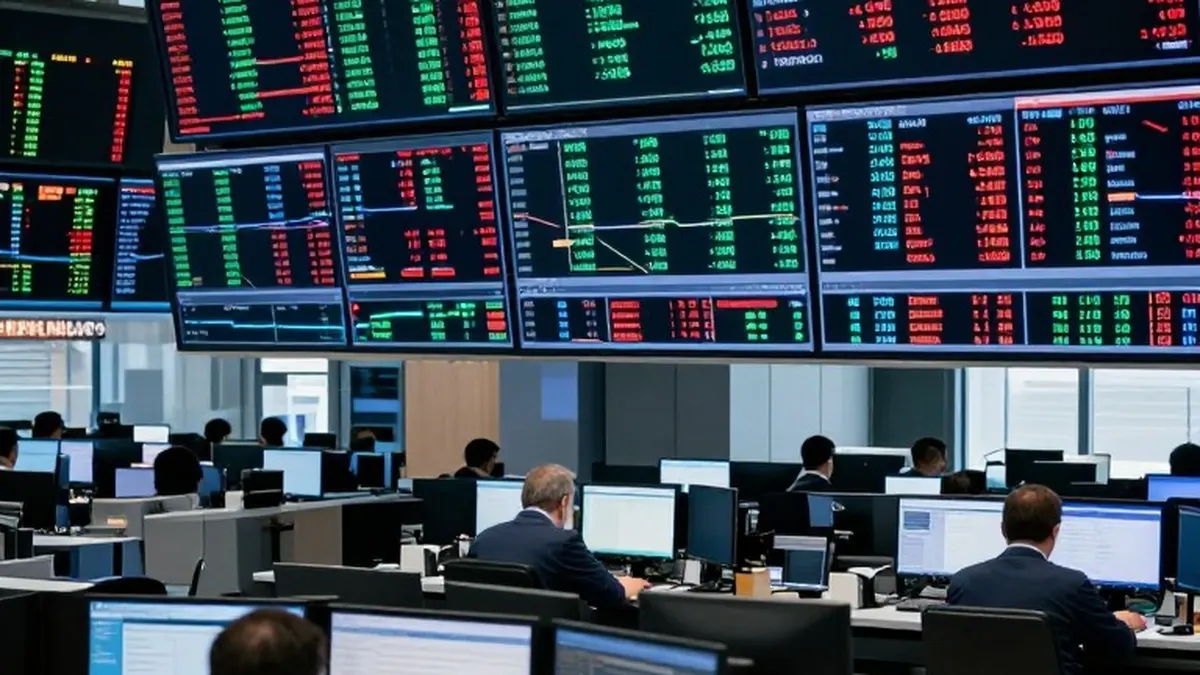
Stock markets experienced a volatile holiday-shortened week, with major indices posting significant gains that were interrupted by sharp intraday swings. The Nasdaq Composite led the advance, rising 6.6 percent for the week, while the S & P 500 gained 5.6 percent and the Dow Jones Industrial Average climbed 5.5 percent. The initial surge was driven by Monday's session, when the Nasdaq and S & P 500 recorded their best performances since April 2025, jumping 6.35 percent and 4.73 percent respectively.
The catalyst for Monday's rally was the confirmation that Jensen Huang would return as CEO of Nvidia. President Donald Trump told CNBC that he had directly intervened with Nvidia's board to facilitate Huang's return, highlighting the executive's critical role in U.S. national interests. Following news of his reinstatement, Nvidia shares surged by more than 31 percent, wiping out nearly all the losses incurred after his resignation on November 12 amid an affair scandal involving an alleged Chinese spy.
However, the relief rally lost momentum quickly. By Wednesday, selling pressure intensified, causing the Nasdaq to drop as much as 4.6 percent and the Dow to shed over 1,100 points at session lows. Although stocks staged a dramatic recovery later in the day, the Nasdaq and S & P 500 remained in negative territory as AI-related stocks continued to struggle. Nvidia shares slipped roughly 5.9 percent on Tuesday and fell another 4 percent on Wednesday, while Anthropic shares dropped below their $83 IPO price.
A deteriorating macroeconomic environment further weighed on investor sentiment. The personal consumption expenditures price index released on Wednesday showed annual inflation accelerating to 3.8 percent in October, nearly double the Federal Reserve's 2 percent target. Core inflation also came in higher than expected at 3.3 percent. Combined with the Trump administration's announcement of new tariffs on more than a dozen trading partners, these factors heightened fears of additional rate hikes. The CME FedWatch tool now indicates a 98 percent probability of a quarter-point hike at the December meeting, up from 93.5 percent the previous week.
Amid this volatility, cybersecurity firm CrowdStrike announced an all-stock acquisition of Zscaler for approximately $44 billion. This marks CrowdStrike's largest purchase to date and represents a significant consolidation in the cybersecurity sector. CrowdStrike shares fell about 9 percent on Monday, making it the worst performer in the portfolio for the week, as concerns over shareholder dilution overshadowed better-than-expected quarterly results. Zscaler shares, however, rose more than 17 percent on the news.
CrowdStrike CEO George Kurtz stated in an interview that the acquisition expands the company's addressable market by roughly $185 billion and creates cross-selling opportunities. He described the deal as a winning combination that allows the combined entity to offer more comprehensive protection against AI-powered attacks by filling a gap in network security capabilities.
Investors used the market weakness to position for future gains. Despite Monday's rally, the S & P Oscillator moved deeper into oversold territory, reaching minus 8.75 percent. Historically, readings below minus 4 percent indicate oversold conditions, and previous instances near minus 8 percent have often preceded strong rebounds. In line with this discipline, investors purchased 50 shares of Alphabet on Tuesday, upgrading the stock to a buy rating. Alphabet's valuation of just under 19 times estimated 2027 earnings was seen as an attractive opportunity, particularly as political opposition to new data centers could make existing AI infrastructure more valuable.
Additional capital was deployed on Wednesday with the purchase of 10 shares of Goldman Sachs. With shares down approximately 30 percent from their July highs, much of the concern regarding an AI-driven slowdown in capital markets activity is already priced in. Mergers and acquisitions activity remains robust, with Goldman advising Zscaler in its deal with CrowdStrike. Sanofi also announced a $41 billion deal for Insmed earlier in the week.
The week's action underscores that while Huang's return removed a major uncertainty for Nvidia, the broader AI trade remains sensitive to macroeconomic data and valuation concerns. Investors continue to navigate these challenges by identifying opportunities in beaten-down stocks that offer strong long-term potential.
Originally published by News Media House
More News · National news · Report a business · Got a Story?