Israel and Kazakhstan finalize double taxation pact after long negotiations
Israel and Kazakhstan signed a long-awaited double taxation agreement and several cooperation memoranda during a high-level economic meeting in Jerusalem, aiming to boost investment and technological ties.
By News Media House Staff ·
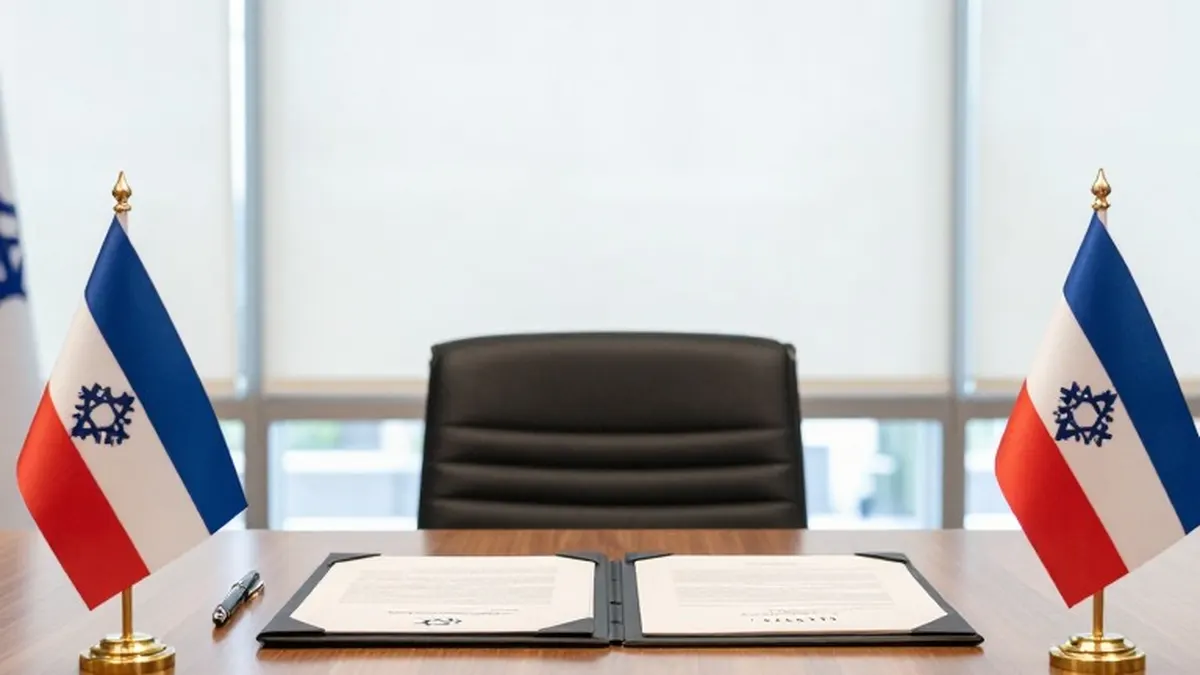
Israel and Kazakhstan officially signed a double taxation agreement on November 3, 2026, concluding a negotiation process that spanned more than a decade. The move is designed to facilitate cross-border investment and expand economic cooperation between the two nations. The signing took place during the tenth meeting of the Israel-Kazakhstan Joint Economic Commission, which was held in Jerusalem.
The event was co-chaired by Ze'ev Elkin, representing the Israeli Finance Ministry, and Zhaslan Madiyev, the Deputy Prime Minister of Kazakhstan. According to the Foreign Ministry, the meeting brought together representatives from twelve government ministries, including nine deputy ministers from Kazakhstan. In addition to the taxation framework, the countries signed memoranda of understanding covering artificial intelligence, labor, and cybersecurity, along with a joint declaration on space cooperation.
The double taxation agreement establishes a clear framework for determining taxation rights, which is expected to reduce the risk of the same income being taxed in both jurisdictions. This legal clarity is anticipated to ease the burden on companies and investors, thereby opening new economic opportunities. While the precise provisions and implementation dates have not yet been detailed publicly, the agreement marks a significant milestone in bilateral relations.
Deputy Prime Minister Madiyev, who also oversees Kazakhstan's national artificial intelligence program, is the highest-ranking Kazakh official to visit Israel in the last ten years. He led a delegation of more than 50 senior government officials and representatives from state-owned companies. His visit follows diplomatic engagements by Israeli President Isaac Herzog in April 2026 and Foreign Minister Gideon Sa'ar in January of the same year.
During the commission meetings, both sides discussed a wide range of topics, including energy, water technologies, agriculture, and critical minerals. The countries identified shared challenges related to climate change and water resource management, areas where Israeli expertise could support Kazakhstan's development goals. Consequently, the two nations established their first joint working group on water management, led on the Israeli side by the Israel Water Authority.
A bilateral business forum organized by the Foreign Ministry and the Israel Export Institute allowed Israeli companies to explore opportunities in advanced technology and infrastructure with the Kazakh delegation. Seven commercial documents were signed during these sessions. Discussions also touched upon the potential for direct air connections and visa-free travel arrangements between the two countries.
The economic agreements carry diplomatic weight as they align with Kazakhstan's recent accession to the Abraham Accords. Kazakhstan joined the US-brokered framework in November 2025, following a conversation between leaders of the US, Israel, and Kazakhstan. This membership expands the initiative's reach into Central Asia and provides an additional framework for technological and economic engagement.
Geopolitical analyst Dr. Anat Hochberg-Marom noted that Kazakhstan is Central Asia's largest and most stable economy, with a gross domestic product of approximately $301 billion. She highlighted the country's status as the world's leading uranium producer, accounting for roughly 40% of global output in 2024, alongside significant reserves of copper, zinc, tungsten, and lithium. These resources are increasingly vital for global supply chains in battery production and renewable energy.
Hochberg-Marom observed that Kazakhstan's geographic position between Europe and Asia offers opportunities for regional logistics and manufacturing. She cited investment initiatives in critical minerals and artificial intelligence infrastructure, including a reported $2 billion technology project involving OpenAI and Nvidia. These figures are based on her analysis of historical estimates and ongoing projects rather than new agreements signed during the recent visit.
Madiyev emphasized that the value of the partnership would be determined by practical implementation rather than the signing ceremonies. He stated that the cooperation should result in concrete projects, new expertise, and investments that are actively put to work in Kazakhstan, moving beyond the exchange of experiences.
Originally published by News Media House · Source: The Jerusalem Post