Residents of besieged Taiz describe daily life under Houthi siege
Residents of Taiz, Yemen, describe the deteriorating conditions and daily dangers as Houthi rebels tighten their siege on the city.
By News Media House Staff ·
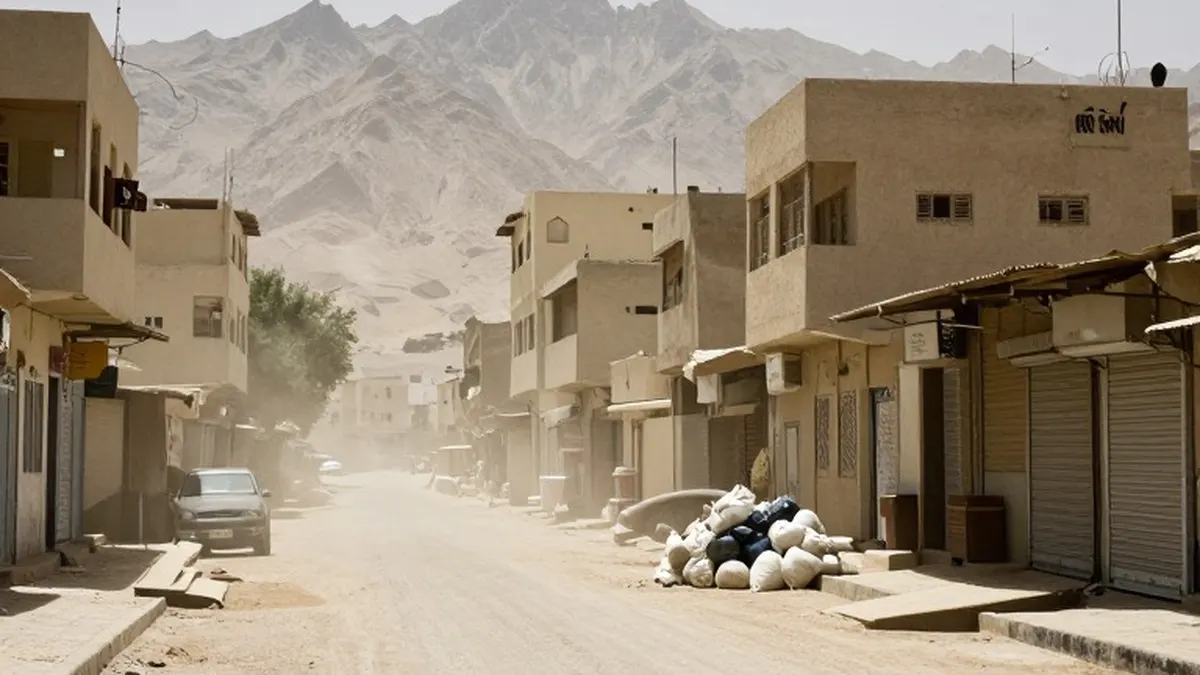
In the Yemeni city of Taiz, residents are enduring a tightening siege by Houthi rebel forces that has cut the city off from the outside world. Ashwaq, a teacher and mother of three, tells her 11-year-old son that the loud noises they hear are merely fireworks to prevent him from panicking. Although she knows he is old enough to understand the reality of the war, she tries to maintain a sense of normalcy for her family.
Houthi forces fully encircled the government-controlled city last month, trapping a population estimated between 600,000 and 1 million people. The siege has severely restricted the flow of supplies, causing the prices of staples such as rice, sugar, and cooking oil to double or even triple. Essential goods like medicine, water, and fuel are becoming increasingly scarce, leaving residents to manage with dwindling resources.
The atmosphere in Taiz has shifted from its former vibrancy to a heavy silence. Schools are closed, restaurants are shuttered, and streets that once hummed with activity are now quiet. Waste management has become a crisis, with piles of rubbish trapped inside the city limits. When residents burn this waste, the resulting toxic smoke adds to the physical and environmental strain on the population.
Medical facilities are struggling to cope with the influx of war wounded. Yaser, an emergency room doctor, reports treating multiple children who were shot by snipers, many of whom target the head and chest. He notes that the hospital is running on empty and may only have enough supplies for two more weeks. Sterilizing fluid is in short supply, and the medical staff are exhausted from the constant pressure of treating patients who often walk for hours to reach care.
Nabil Shamsan, the governor of Taiz, remains inside the city with his people. He states that hospitals have lost 70 percent of their capacity, and 120 health centers have closed. Diseases are spreading, and neonatal deaths and malnutrition are rising. Hundreds of kidney patients are missing dialysis sessions due to a lack of fuel to transport them to hospitals or because the facilities themselves are overwhelmed.
The Houthi leader, Abdul Malik al-Houthi, has denied that Taiz is under a full siege, claiming that routes for food and aid remain open. This assertion is contradicted by the government, local residents, aid agencies, and the United Nations. Shamsan argues that the Houthis aim to change the character of the predominantly Sunni city by imposing their strict religious doctrine, which he describes as dragging the city back to the dark ages.
Volunteers are defending the city alongside pro-government troops, though they often lack heavy weapons and adequate training. Akram, a 31-year-old resident who fought in the previous siege in 2015, recently purchased a rifle for about 1,200 dollars. He notes that the current conflict is more dangerous due to the Houthis' use of new technology, including drones and missiles, which allow them to wage war from the air.
Ahmad Al-Basha, a photographer, describes the nightly bombing and shelling as a tactic used by the Houthis to prevent residents from sleeping. He expresses frustration that the international community has not taken significant action to help the city. Many residents fear that if the Houthis do not simply keep the city under a chokehold, they may eventually fight their way in to settle scores with those who oppose them.
Despite the growing hunger and sense of abandonment, the people of Taiz are resisting. They view defending their city as a duty and a way to preserve their freedom and civic identity. Ashwaq pleads with the international community not to forget Taiz, emphasizing that they are ordinary families who want their children to live, study, and dream like other children around the world, rather than just being numbers in news reports.
Originally published by News Media House