Dutch Biochemist and Selective Breeding Transformed Brussels Sprouts
A combination of scientific discovery and targeted breeding efforts has eliminated the bitterness that once defined Brussels sprouts, leading to a massive surge in their popularity in the United States.
By News Media House Staff ·
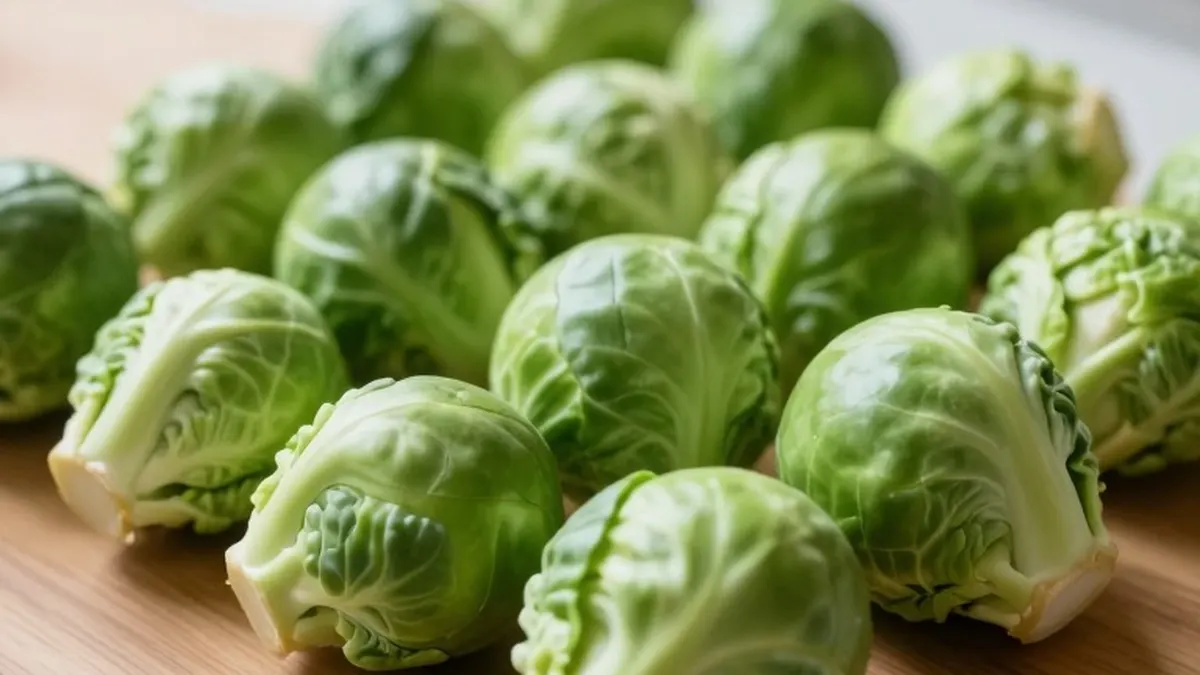
For generations, Brussels sprouts were often considered one of the least popular vegetables in American kitchens. During the era of classic television sitcoms, the vegetable was rarely a fan favorite. However, the landscape has shifted dramatically in recent years. Today, the vegetable is a culinary staple, with high-profile chefs such as Ina Garten and Gordon Ramsay frequently praising its flavor and versatility.
The transformation of this vegetable from a polarizing side dish to a widely enjoyed food item is the result of decades of scientific work and agricultural innovation. To understand the mechanics behind this change, attention turns to Salinas, California, where Gerardo van den Hoek works as a scientist for the agricultural seed company Syngenta. Van den Hoek is currently engaged in experiments aimed at developing future varieties of Brussels sprouts through the process of selective breeding.
The fundamental approach to improving the vegetable involved a methodical breeding strategy. Van den Hoek explained that decades ago, breeders began selecting sprouts that exhibited lower levels of bitterness. The process was iterative, involving the cross-breeding of parents with milder flavors. As van den Hoek described, the goal was to combine less bitter parents repeatedly, moving back and forth through generations until the resulting produce was quite pleasant to eat.
While modern breeders have continued to refine the vegetable, the pivotal breakthrough is attributed to Hans van Doorn, a Dutch biochemist. Van Doorn viewed the agricultural industry with a critical eye, noting that most crops are sold and consumed without any guarantee regarding their taste, flavor, or texture. He set out to change this standard for Brussels sprouts.
In 1988, the company that would eventually become Syngenta hired van Doorn to tackle a specific challenge: to save their Brussels sprouts. The directive from the company was straightforward. They asked him to identify the source of the bitterness and remove it. Within a year of beginning his research, van Doorn identified two specific chemical compounds responsible for the unpleasant taste. These compounds were sinigrin and progoitrin.
By 1993, van Doorn had successfully achieved his objective. He had bred the bitterness out of the sprouts. When he published his findings a few years later, the reaction was immediate and positive. Van Doorn recalled the moment with enthusiasm, stating that they held a party to celebrate. He noted that he was featured on the eight o'clock news and on the front pages of newspapers, describing the event as crazy.
The success of van Doorn’s work, combined with the emergence of new recipes that highlighted the sweeter flavor profile, led to a significant increase in consumption. In the United States, the consumption of Brussels sprouts nearly quintupled. The vegetable has moved from being a childhood aversion to a modern delicacy.
Van Doorn expressed satisfaction with the outcome of his work. He commented on the current popularity of the vegetable, encouraging people to continue eating them because they are now a nice food item. The journey of the Brussels sprout serves as a notable example of how scientific intervention can alter the trajectory of a common food crop.
Originally published by News Media House
More News · National news · Report a business · Got a Story?