Las Vegas Grand Prix Delivers Unique Racing Spectacle Amid Cold Conditions
The 2026 Las Vegas Grand Prix featured unprecedented slipstream effects and low temperatures, creating a distinct racing dynamic unlike other events on the Formula 1 calendar.
By News Media House Staff ·
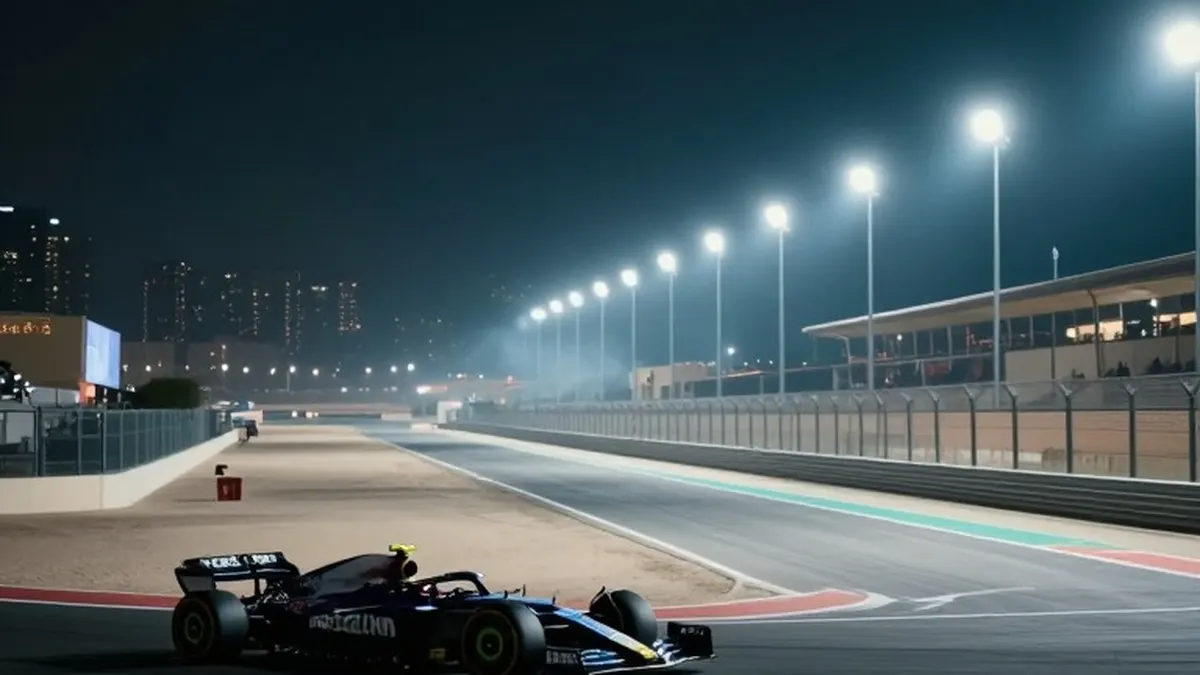
Las Vegas hosted the Formula 1 Grand Prix this past weekend, marking a significant shift in the event's character since its introduction in 2023. For the first time, the race delivered a spectacle that aligned with long-standing promises. The on-track action resembled an IndyCar oval race more closely than traditional street circuit competitions. This style of racing, defined by close proximity and slipstreaming, had not been seen in such magnitude since the eras of Monza and Hockenheim, before modern downforce regulations fundamentally altered the sport's physics.
The street circuit in Las Vegas is considered an extreme outlier within the current championship schedule. The track layout features extensive straight sections, which exacerbate the energy constraints of the current car generation. The lithium-ion hybrid batteries are still too small to sustain full power throughout the entire lap. Consequently, the vehicles quickly deplete their electrical stores, forcing them to rely on just over half power from their V6 engines without the assistance of the electric motor.
Despite the long straights, the circuit includes seventeen turns that are predominantly low speed. This characteristic eliminates the risk of cars moving through corners at demoralizingly slow paces, a common complaint in other street races where high-speed corners test driver mettle. The low-speed nature of the turns allows for more dynamic driving interactions, contributing to the overall excitement of the event.
The timing of the race in November places it in the desert during a period of significant cold. The ambient temperatures in Las Vegas were considerably lower than at any other venue on the annual calendar. By contrast, upcoming races in the Middle East may see track temperatures exceed 122 degrees Fahrenheit. In Nevada, the track temperature on Saturday night was recorded at a mere 59 degrees Fahrenheit.
The combination of cold weather and the concrete street surface resulted in low grip levels for the tires. However, these conditions provided a notable advantage in the form of reduced tire wear and a near absence of overheating issues. This stability allowed teams and drivers to push harder without the usual degradation concerns associated with high-temperature asphalt.
A major factor in the race's unique character was the enhanced effectiveness of slipstreaming. The new aerodynamic regulations this year made the drafting effect far more powerful than in previous iterations. This phenomenon was clearly visible during qualifying, which took place on Friday night. Mercedes driver Kimi Antonelli secured pole position by being the last car onto the track. He benefited from the clean air cleared by all preceding vehicles, allowing him to set a definitive time.
Conversely, the Ferrari drivers Lewis Hamilton and Charles Leclerc struggled during the session. Their lack of coordinated strategy to help each other clear the air resulted in a difficult qualifying performance. This dynamic served as a preview for the race the following night, where the interplay between drafting and strategic cooperation would be critical. The event demonstrated how specific track conditions and regulatory changes can reshape the competitive landscape of Formula 1.
The Las Vegas Grand Prix has now established itself as a distinct entity in the sport. The convergence of cold temperatures, concrete surfaces, and powerful slipstream effects created a racing environment that fans and drivers had not experienced in decades. The race highlighted the evolving nature of the sport as it adapts to new regulations and unique global locations.
Originally published by News Media House
More News · National news · Report a business · Got a Story?