Polish Debut Film Exotic Challenges Pole Dancing Stigma at Tallinn Black Nights
Director Sonja Orlewicz-Zakrzewska blends documentary elements with fiction to explore the liberating and challenging aspects of the pole dancing community.
By News Media House Staff ·
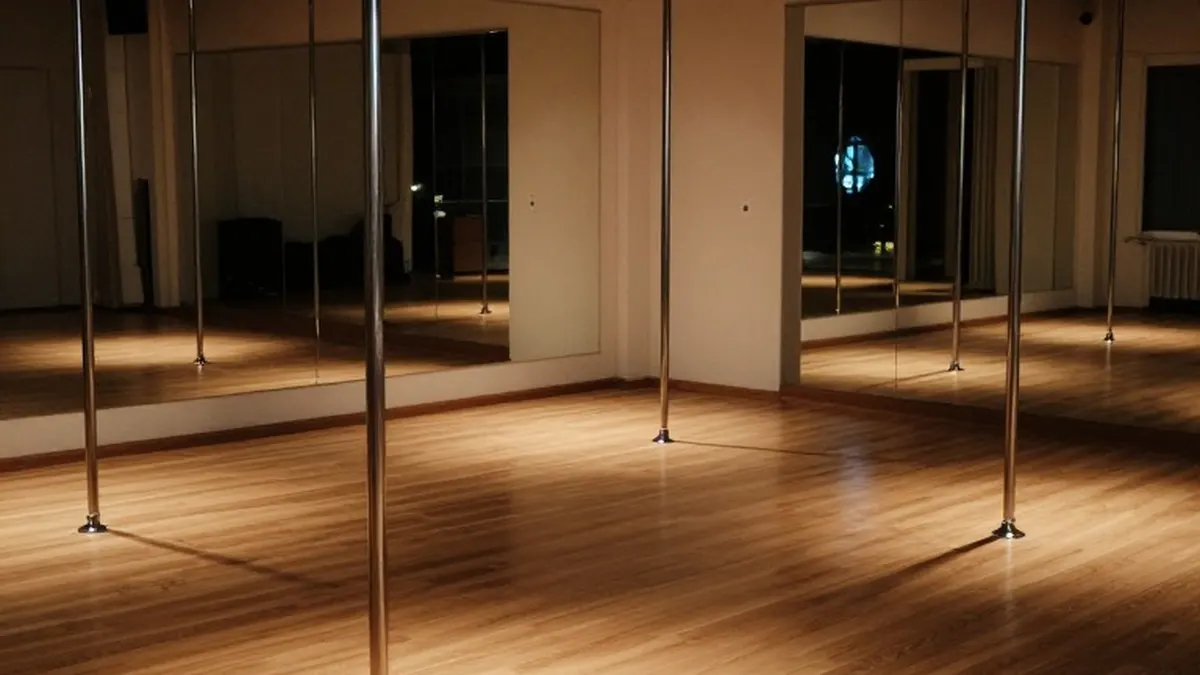
The debut feature film Exotic by Polish director Sonja Orlewicz-Zakrzewska premiered at the Tallinn Black Nights Film Festival, aiming to reshape public perceptions of pole dancing. Orlewicz-Zakrzewska, who is also a pole dancer herself, stated that the activity still surprises many people. She noted that most members of the community have faced some form of ostracism because the public often associates the sport with men's erotic pleasure rather than personal expression.
The director explained that she wanted to present pole dancing primarily as a sporting environment. While large cities typically host numerous studios, she observed that potential backers often assumed the setting was a nightclub upon hearing the project's premise. She clarified that while nightclubs and sex work are distinct from the sport, the confusion persists. The film is produced by Magdalena Sztorc and Anna Zajączkowska of Mozaika Films and was sold by Pluto Film.
The narrative follows three characters played by Jaśmina Polak, Magdalena Koleśnik, and Monika Frajczyk as they travel to a quiet beach resort for training. The location mirrors Orlewicz-Zakrzewska's own experiences, as the film was shot during an edition of the Exo Stars Camp, an event she has attended previously. She described the experience of witnessing international stars and diverse participants in such a relaxed setting as a collision of two different universes, which inspired her to return with a camera.
To achieve authenticity, the production utilized real-life participants and instructors with the assistance of camp founder Martyna Dominikowska. Although the story was scripted, the actors were placed within a documentary-style framework where classes and showcases were genuinely occurring. One notable anecdote involves a pole dancer named Gracjan, a ship mechanic who was en route to Gibraltar during filming. He convinced his employer to find a replacement and allowed him to disembark and fly to Poland to join the shoot, a story the director considers her favorite from the production.
The film's protagonist, Mila, grapples with issues of self-worth and an internal critical voice that tells her she does not belong. Orlewicz-Zakrzewska related to this struggle, noting that despite four years of training, she initially doubted her ability to identify with the community. She reflected on her past fears regarding femininity and how pole dancing helped her overcome the fear of being perceived as cheap, a sentiment she attributed to patriarchal norms.
Support systems within the film are also scrutinized. Mila's partner, portrayed by Bartosz Bielenia, is not fully supportive. The director drew this character from conversations with women in the community whose partners often appear cool with the hobby but feel threatened by the liberation it provides. This dynamic highlights the complex social adjustments required when embracing a new physical identity.
Cinematographer Adam Suzin, who has a background in acrobatics, collaborated with the director to capture the bodies in the film authentically. Orlewicz-Zakrzewska argued that filming a woman's body does not inherently constitute a male gaze if the intention is clear. She expressed a desire to witness the destigmatization of bodies in public spaces, particularly in Poland, which she described as still being constrained by Catholic traditions.
The director emphasized that the film explores how social media has distorted perceptions of the ideal body. Through the training sessions depicted in Exotic, viewers see a wide variety of physiques, including moments that are awkward and humorous. Orlewicz-Zakrzewska concluded that the core lesson of pole dancing is that attractiveness stems from self-confidence and attitude rather than perfect physical form, allowing for free expression through the body.
Originally published by News Media House
More News · National news · Report a business · Got a Story?