Ebola Kills Half of 10,000 Cases as Congo Response Stalls
With 80% of new infections outside tracked contacts and health workers striking over wages, the outbreak is spreading faster than previous records.
By Ella Cox ·
The Ebola outbreak in Congo has reached 10,060 confirmed cases, a figure that marks the fastest growth in the history of the disease.
Government data released Tuesday confirms that nearly half of those infected have died. This makes it the deadliest outbreak in the country's history. The virus, identified as the rare Bundibugyo strain, has no approved vaccine or treatment. It was declared in May and has since outpaced the 2014-2016 West Africa outbreak in both case count and death toll within a shorter timeframe.
Spread has accelerated across three regions and into five countries, including Uganda, Kenya, and Nigeria. Cases were also recorded in France, though that country currently has no active cases. Surveillance gaps have allowed the virus to move quietly; many initial cases were confirmed long after symptoms appeared or after patients traveled. The Africa Center for Disease Control and Prevention notes that for an outbreak to be considered under control, at least 95% of cases must come from known contacts. In Congo, only about 20% do, indicating active, unmonitored transmission chains.
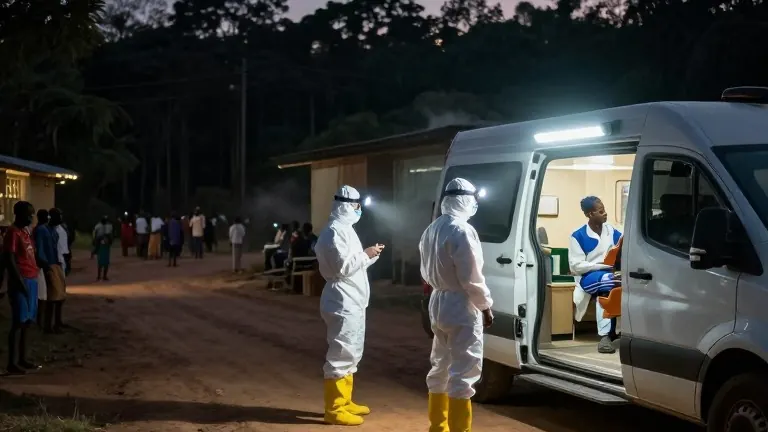
Health workers face mounting obstacles on the ground. In Ituri province, the epicenter of the crisis, staff are battling armed conflict, poor roads, and community violence born of mistrust. In the Nia Nia health zone last week, responders went on strike over unpaid bonuses that have been owed since late August. Similar pay disputes are occurring across affected localities. On Saturday, a nurse was killed and another worker severely injured while responding to an alert in Bafwasende, Tshopo province.
The strain on the healthcare system is widening. Essential services are disrupted, drawing attention away from other epidemics like cholera. Maternal mortality has doubled in some provinces as pregnant women avoid hospitals due to fear of isolation. Routine childhood vaccinations have been interrupted, and schooling has stalled for millions of children already out of the classroom.
Despite the grim statistics, 2,600 patients have recovered. In Mongbwalu, Ituri province, health workers in full protective gear were filmed dancing as the final two patients left a treatment center. World Health Organization Director-General Tedros Adhanom Ghebreyesus commented on the footage, stating that every life saved is worth celebrating.
African health ministers will hold a virtual summit on Wednesday to coordinate a continental response. Dr. Jean Kaseya, head of Africa CDC, emphasized that Ebola is crossing borders and requires stronger political leadership and solidarity.
Currently, 66 health zones across eight provinces are affected, up from three at the outbreak's start. At least half of recorded deaths occur among people who never entered a treatment center, suggesting many are still not reporting symptoms.
Source: KSAT-TV