Delhi air quality hits severe levels after Diwali fireworks
Air quality index surpassed 350 in parts of the capital as smoke from approved and unapproved firecrackers mixed with winter haze.
By Ella Cox ·
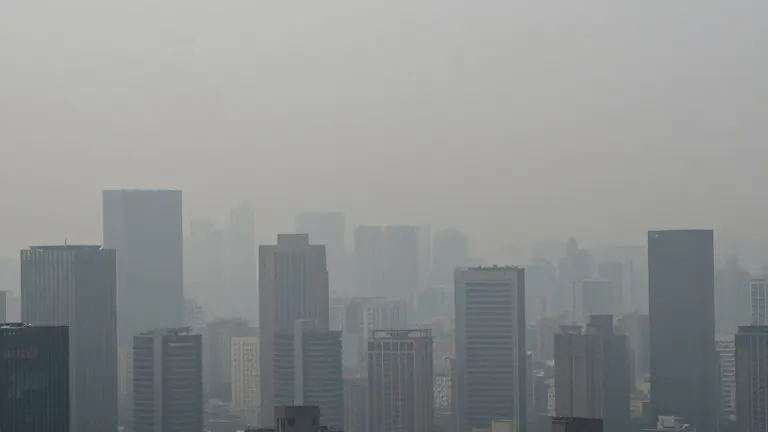
New Delhi residents faced severe air quality conditions on Monday after Diwali celebrations on Sunday evening added smoke to the city's atmosphere. The air quality index in several districts exceeded 350, a level that health officials classify as severe. This spike followed a weekend of festivities where residents launched firecrackers despite existing regulations.
The capital's air quality has deteriorated sharply over the past two weeks. In October, India's Supreme Court issued an order to limit Diwali pollution. The ruling restricted the use of conventional firecrackers. It permitted only approved green firecrackers during three-hour windows on Saturday and Sunday. Officials designed these green crackers to produce fewer emissions, though they still release particulate matter and other pollutants.
Despite the court's guidance, monitoring stations across the city recorded high pollution levels on Monday morning. A gray haze reduced visibility over streets and high-rise buildings. The smog resulted from a combination of local sources and regional factors. Farmers in neighboring Punjab and Haryana states burned crop residue after the rice harvest. The smoke from these fields drifted toward New Delhi, mixing with vehicle exhaust, construction dust, and industrial emissions.
Weather conditions amplified the problem. Cooler temperatures and low wind speeds in late October and November prevent pollutants from dispersing. This stagnant air allows the haze to linger for days. New Delhi and its surrounding metropolitan area, which is home to more than 30 million people, regularly rank among the world's most polluted regions during the winter months.
Isyad, a resident of New Delhi, reported physical symptoms from the thick smog. He described irritation in his throat and itching in his eyes. He attributed these health issues directly to the pollution levels. Many other residents reported similar discomfort as the city struggled to clear the air.
City authorities have implemented temporary measures to curb pollution. These include limits on construction activity and restrictions on diesel generators. Courts have also sought to tighten rules on firecrackers. However, these steps have not prevented the return of severe pollution levels each year. Environmentalists argue that long-term solutions are required to address the annual crisis.
Shweta Narayan, a public health expert at the Global Climate and Health Alliance, criticized the current approach. She described the government's response as knee-jerk and temporary. She stated that a lot of interventions happen only because the government is pressured or pushed in a corner to do something. The next scheduled step involves continued monitoring of air quality as the city attempts to clear the remaining particulate matter from the atmosphere.
More Business · Consumer Alerts · Report a business · Got a Story?