Chain mail from 1495 warship surfaces in Swedish waters
Archaeologists using 3-D imaging located copper-alloy armor fragments near a weapon chest on the wreck of King Hans's vessel, Gribshunden.
By Ella Cox ·
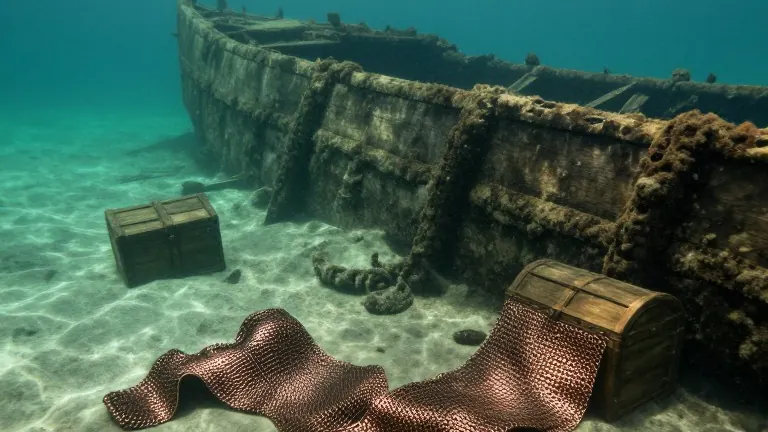
Five hundred years after an explosion sent it to the bottom of the Baltic Sea, the Danish warship Gribshunden is still yielding its secrets. This week, an international team of researchers announced the recovery of high-quality medieval chain mail armor from the vessel's remains. The fragments are made of copper-alloy and were found in a specific storage area of the ship.
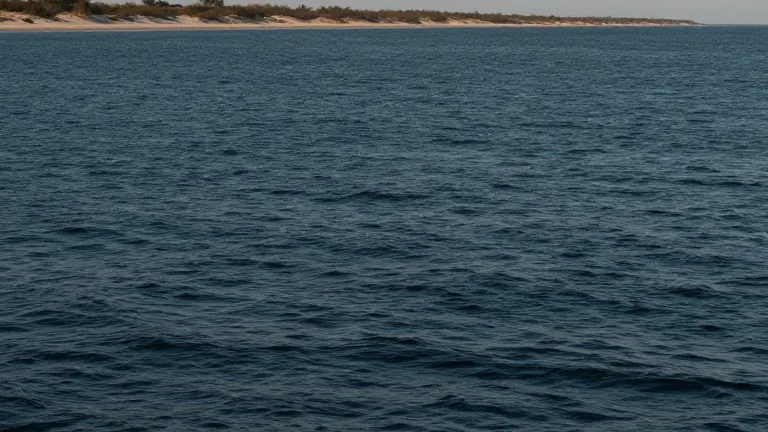
The Gribshunden served as the flagship for Denmark's King Hans in the 15th century. It was used for diplomatic missions and war. In 1495, while anchored north of Sweden's Stora Ekö Island, the ship suffered an explosion that ignited a fire. The vessel sank and remained on the seabed until divers discovered the wreck in the 1970s.
Since that initial discovery, the site has been studied regularly. The latest work was conducted by a joint team from the University of Southampton, Södertörn University, and Stockholm University. These researchers have run expeditions on the wreck since 2019. For this survey, they employed robotic technology and 3-D photogrammetric imaging to create detailed records of the wreckage.
The armor was located near a chest containing ammunition tools. This chest sat just below the forecastle, the elevated fighting platform at the front of the ship. Dr. Rodrigo Pacheco-Ruiz, a visiting fellow at the University of Southampton's Centre for Maritime Archaeology, explained that military gear was likely stored in that area. He noted that German mercenaries known as Landsknechts were aboard the ship when it sank in 1495.
"It was truly an amazing find!" Pacheco-Ruiz said in a news release from the University of Southampton. Rolf Fabricius Warming, a Ph.D. researcher at Stockholm University, added that this type of armor could be used for extended periods. He suggested the fragments might represent older equipment that was still in active service, possibly repaired or reused by other soldiers.
The team is now analyzing the manufacturing techniques and composition of the armor to determine its origin. They also sampled other weaponry artifacts and lead objects found during previous expeditions. Those lead items may be molds used to manufacture ammunition. The researchers plan to study the structural elements of the forecastle to understand how weapons were stored and how military personnel lived aboard the vessel.
The wreck is described as partly disintegrated, though its remaining pieces are very well preserved. Warming called the ship an important piece of the puzzle in the military revolution at sea. He noted that primary tactics shifted from hand-to-hand combat to heavy naval artillery fire during the Early Modern Period. The Gribshunden is comparable to other preserved wrecks, including the Mars, which has been on display in Stockholm since the 1960s.