Austin investigators subpoena records to identify ICE agent in Sept. 20 shooting
Local prosecutors rely on cell tower data and subpoenas as the Department of Homeland Security declines to confirm the identity of the officer who shot Wilber Garces-Perez.
By Ibrahim Howard ·
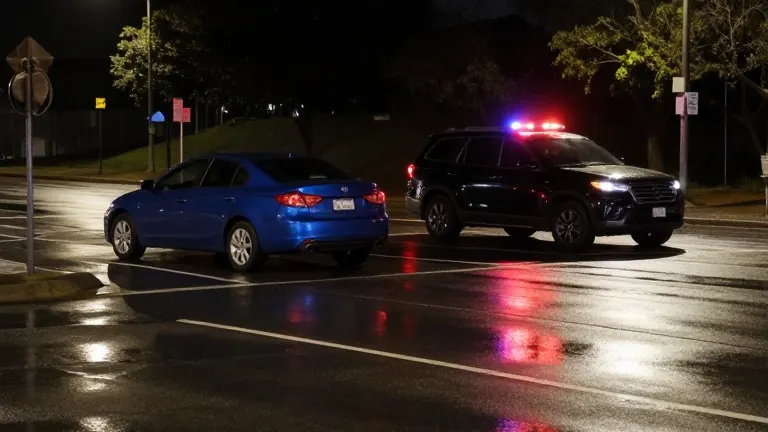
Austin police and Travis County prosecutors have turned to subpoenas, search warrants, and cellphone tower data to identify the federal agent who shot a 28-year-old Venezuelan food delivery driver on Sept. 20. Local investigators say they have determined the likely name of the officer, but the Department of Homeland Security has not confirmed the identity in a move experts describe as unusual for cases involving overlapping jurisdiction.
The shooting occurred near U.S. 183 and Anderson Lane in North Austin. Federal agents stopped Wilber Garces-Perez after he left a restaurant. Body-camera video shows Perez, who was subject to a removal order, speeding away in a blue Toyota Corolla shortly after the pull-over. A federal investigator stated that Perez’s side mirror struck an agent, an action that led to federal charges against him. After a high-speed chase, the ICE agent used an unmarked black SUV to hit Perez’s car and block it. The agent opened fire moments later, and federal officials have not explained why. Perez was shot in the back and remains in federal custody.
Local law enforcement believes the officer is 36 years old. Records indicate he most recently lived in South Florida before moving to Austin weeks before the shooting. The agent has retained Doug O’Connell, an Austin criminal defense attorney who frequently represents law enforcement officers. O’Connell declined to confirm his client’s identity or comment on the case. Federal officials also declined to provide information.
Travis County District Attorney Jose Garza wrote to U.S. Rep. Bennie Thompson on Oct. 14 that the local investigation has been diligent but has not benefited from federal cooperation. Garza noted that local officials asked to interview key witnesses and obtain video footage. He stated that such requests are customary in overlapping jurisdiction cases and are usually accommodated. Investigators have relied on cellphone tower data to determine who was near the scene. They also obtained records showing whom the potential agent called before, during, and after the encounter.
Claire Tricker-McNulty, who left ICE as an assistant director two years ago, said the federal government’s lack of cooperation is a departure from standard practice. She noted that one would hope federal agencies want their actions to have transparency. Bud Cummins, a former U.S. attorney in Arkansas, said the federal government should not conceal facts to shield its agents from accountability. He suggested that concerns about the politicization of the case may explain the reluctance to share information. Cummins said he understands why a federal agency might hesitate to expose an agent to a potentially politicized state prosecution.
Prosecutors plan to present the case to a Travis County grand jury in the coming weeks to determine if charges should be filed. The Austin American-Statesman is not naming the agent until the identity is independently confirmed or criminal charges are filed. This pattern of federal resistance mirrors investigations in other cities. Last month, Houston prosecutors charged an ICE agent with felony aggravated assault with a deadly weapon for chasing and hitting a man with an SUV. U.S. Attorney Aaron Reitz condemned that indictment, calling such cases a way to make agents political trophies.
Minneapolis prosecutors have also faced hurdles in investigating fatal shootings and injuries involving ICE agents. Sarah Davis, a deputy Hennepin County attorney, said her office filed a lawsuit in Washington to compel federal officials to release records. Davis stated that federal decision-makers are trying to delay and avoid accountability. In May, Minneapolis prosecutors charged an ICE agent with assault and falsely reporting a crime after he shot Julio C. Sosa-Celis in the leg. Investigations into other fatal shootings in Minneapolis continue despite the lack of federal cooperation.