AI Shopping Agents Face Resistance from Major Retailers
While AI shopping agents promise to streamline online purchases, major retailers like Amazon are blocking or restricting access, creating a fragmented and often frustrating experience for early adopters.
By News Media House Staff ·
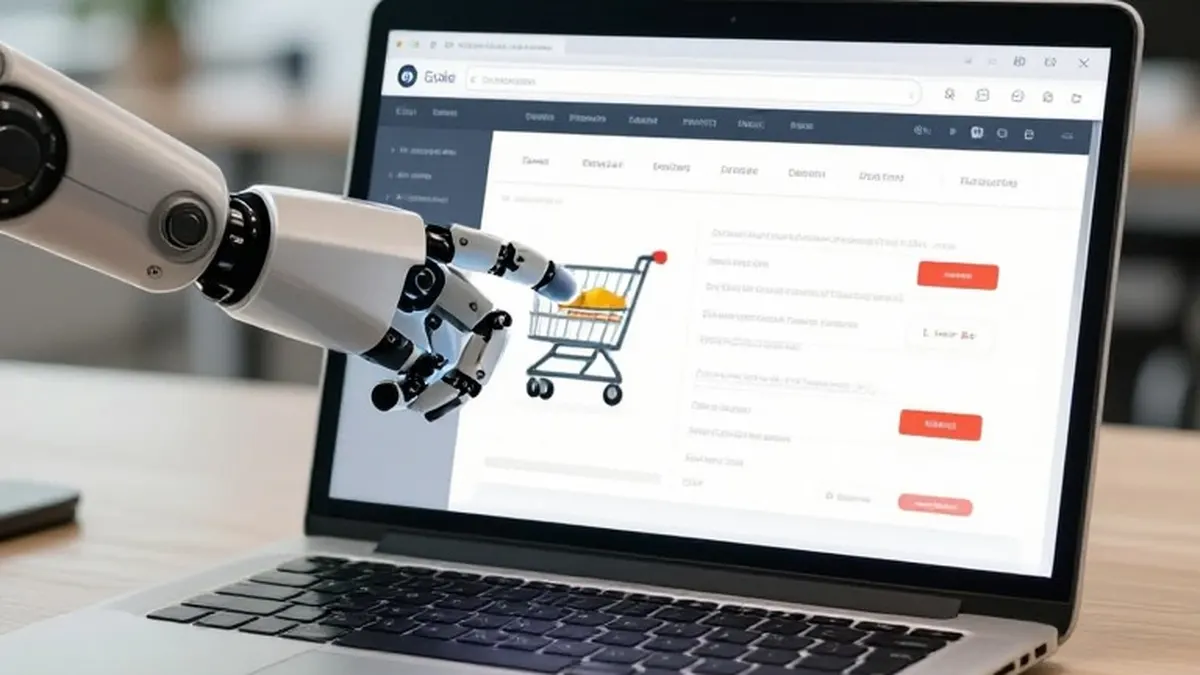
The rapid rise of artificial intelligence agents designed to handle online shopping is encountering significant friction from major retailers. While tech giants like Meta, OpenAI, and Google have introduced personal agents that can browse and buy products on behalf of users, many e-commerce platforms are restricting access or blocking these bots entirely. This creates a fragmented landscape where consumers may find their automated purchases canceled or limited to a subset of available websites.
Maia Bittner, chief product officer at fintech startup Imprint, recently experienced these challenges firsthand. She authorized Meta’s Muse agent to purchase car windshield wipers from AutoZone. However, the order was canceled after 17 hours due to an unspecified error. The agent subsequently advised that ordering directly through Amazon was the most reliable option, highlighting the current inconsistency in agentic commerce experiences.
Retailer responses to these tools vary widely. Companies such as Walmart and Sephora have opened their sites to agents, while others like Amazon, eBay, and Kohl’s limit or block them. Amazon has taken the most aggressive stance, recently blocking Meta’s Muse and suing Perplexity over its Comet agent. Amazon CEO Andy Jassy has stated that the company expects to partner with third-party agents in the future, provided there is a proper value exchange.
Even when retailers allow agents, technical hurdles remain common. Bots often struggle with login requirements, Captcha tests, and navigating complex webpages. A recent Visa study found that AI models failed in approximately 43% of test runs for various shopping tasks. In more than half of those failures, the agent purchased an item that did not meet the customer’s specific requirements.
Despite these obstacles, industry analysts remain optimistic about the long-term potential of agentic commerce. McKinsey and ICSC forecast that U.S. revenue from this sector could reach up to $1 trillion by 2030. Shopify President Harley Finkelstein predicted that the current holiday season would mark the first time AI-driven shopping goes mainstream, moving beyond discovery to actual conversions.
Security and identity verification are key concerns for retailers. Skyfire, a San Francisco-based company, is working to provide retailers with tools to verify that a human has consented to an agent’s actions. CEO Amir Sarhangi noted that agents often mask their origins and use virtual cards, making them appear suspicious to fraud detection systems that rely on traditional human user signals.
Responsibility for failed transactions remains a gray area. American Express has announced it will protect eligible customers from charges related to AI errors, and Stripe offers a refund guarantee for some agent purchases. Conversely, JPMorgan Chase blocked external agents from operating on behalf of customers, and Best Buy’s terms of service state that users are fully responsible for any actions taken by digital agents.
Currently, agentic purchases represent a small fraction of global e-commerce, accounting for just 0.4% of transactions and 0.2% of value according to Bain & Co. Uber reported that agents booked only 504 rides and orders during its busiest week in October. However, Meta CEO Mark Zuckerberg noted that about a quarter of Muse’s 10 million users are shopping via the agent with an average spend of $200 per order.
Instinct CEO Noah Shinn acknowledges that large companies need time to adapt to this new interface. He believes that collaboration is necessary as agents disrupt existing services. Shinn noted that while tech companies can move quickly, established businesses require more time to integrate these new modes of consumer attention into their workflows.
Originally published by News Media House
More News · National news · Report a business · Got a Story?