308-117: The Vote That Left America's Clocks Stuck
The House approved permanent daylight saving time with broad support, but the Senate let the deadline pass, forcing another annual time change.
By Robert Ward ·
308-117 was the margin by which the U.S. House of Representatives voted to make daylight saving time permanent, a measure that has now stalled in the Senate.
The House passed the Sunshine Protection Act on July 14. The legislation would have eliminated the practice of advancing clocks one hour in spring and setting them back in fall. Instead, Americans adjusted their devices on Nov. 1, marking the return to standard time for the second consecutive year under the current system.
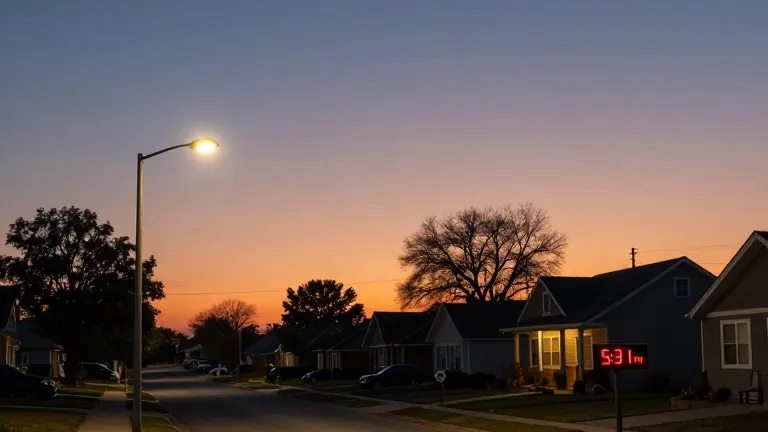
President Donald Trump addressed the legislative failure on his social media platform, Truth Social. He cited the early winter darkness as a primary reason the bill deserves passage. "It's so dark outside, so early," he wrote, noting that sunset occurred at 5:06 P.M. and full darkness set in by 5:31 P.M. Trump described the Senate's inaction as a missed opportunity, referencing a proposed bill name: the I Don't Want to Change My Clocks Anymore Act.
The president acknowledged the political timing of the fight. He stated that he avoided making the issue a major campaign topic during the recent midterm elections to prevent candidates from losing their races. "I didn't want to make a big deal out of this prior to the Election because I didn't want to have certain Senators lose their Race, in a landslide," he said. Trump emphasized that the House sent the bill to the Senate with bipartisan support, but the upper chamber did not take it up for a vote.
The debate over permanent daylight saving time centers on the distribution of daylight hours. Supporters argue that keeping clocks advanced would provide more light during the evening hours when people are typically active. Opponents counter that the change would mean commuters in certain states would not see the sun until after 9 a.m. in the winter months.
Congress has previously experimented with this concept. In 1973, lawmakers passed a law establishing year-round daylight saving time as a trial period. The experiment began in 1974 but ended early as support waned. Concerns about children walking to school in the dark contributed to the decision to revert to the twice-yearly clock change.
Trump said he would continue working to bring the bill to his desk for a signature. He noted that while the nation has larger priorities, the persistence of the issue demands continued effort from the executive branch.